 Written by
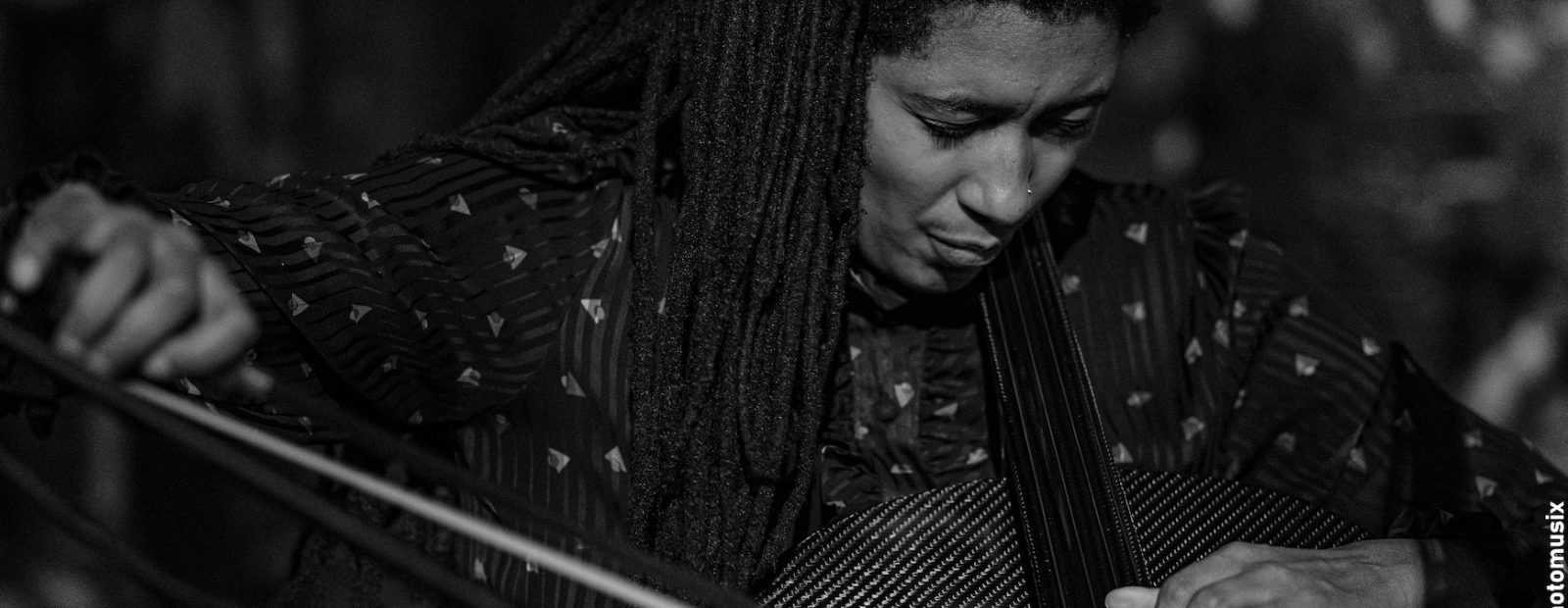
 Cellist and composer Tomeka Reid skips in public. She frolics. In public. This is arguably my favourite thing about this incredible artist. Joy is important to Tomeka. Not just her own joy, but the joy of others. In her latest album dance! skip! hop! she explores the joy of her family and the legacy she is part of. Her great grandmother Francis Elizabeth Bean, her grandmother Estelle, and her great Aunt Cece are at the forefront of this stunning album.
Tomeka Reid by Cristina Marx
Why do you skip?
I don’t know, I guess basic stuff. Sunshine? Particularly in this moment that we are all living through, it’s hard to find those moments of joy. You could go into a dark, dark place because how do we repair anything? How do we get out of this? It’s happening all over the world and it’s just so much. I’m so grateful to have music. I feel that if maybe people played instruments, they could preoccupy themselves with something else. I’m really grateful that I have music and that sound can be healing to myself and to the people that are listening to it. I have that practice. I feel like that’s what people need. People need ritual, they need practice… some people find it in organised religion or hating people… I don’t know. But I’m glad that I have music. It’s a hard path, a fun path, but it keeps me grounded and it gives me goals and gives me discipline and gives me community. And I think that’s what people are lacking and that’s why we are, I think, in this situation. We don’t know how to listen. Playing improvised music is all about listening and communicating. It’s not that I’m perfect at it, but at least it’s a part of my practice to do those kinds of things. I also got married, in the pandemic, and that brings me joy to know that I have someone to go through these challenging moments with. So, I feel super blessed about that.
During the pandemic Tomeka became the primary caregiver for her grandmother, which although obviously challenging for many reasons, allowed her the space to really reflect and consider the importance of family and legacy.
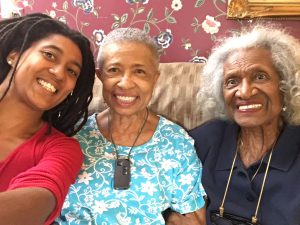
Tomeka, Aunt Cece and Grandma
It was one of the hardest things I’ve ever done in my life. But at the same time, looking back on it, I feel grateful for that experience. I’m grateful that I was able to be with her for the last few years of her life because I didn’t grow up with her. I had these photos and that is part of my new record, having these photos of this part of my family. I think they’re amazing images. On my second record (3+3), I have a picture of my biological father and his twin brother and my grandmother. I just don’t remember him, but for me, it was a joyous moment in his life. I don’t know what he had been doing and so that was part of it – who were you when you were 12? What were you thinking about before the world got to you and you made all these decisions that you made?
dance! skip! hop! Finding the joy
I went to my great grandmother’s house and it’s like a living museum with all these pictures. I didn’t grow up with my biological father and so I never thought I would know him or his family. These were just amazing and I was thinking how do these features live on? How do I share these images? Also we don’t see, I haven’t seen, many images of black people in the West – Wyoming – you don’t see those types of images. So that’s partly why I did that with the second record. And then with this one, I thought these images were so charming and I want them to live on for other people. I think they’re so beautiful. I just wanted people to see these photos, these pictures of joy. I just love the images of her, they just looked joyful and spunky and human. I often feel, oftentimes, you don’t see or at least I haven’t seen a lot of black images from that time period with that kind of energy and joy. She’s sassy and she’s just having fun and I wanted to put that on there and on the inner record.
Tomeka has taken the world by storm with her beautifully authentic and highly versatile artistry and has quickly emerged as an artist finally bringing the cello to the forefront of jazz and the improvised music scene. With her quartet, Tomeka has released four critically acclaimed albums, Tomeka Reid Quartet (2015) Old New (2019) 3+3 (2024) and now her latest album dance, skip, hop! (2026). In this new album, Tomeka – as always – shows us that the cello can do so much more than we think it can, especially in jazz where a cello is relatively uncommon.
Photo by Michael Jackson
A lot of the time when you’re playing the cello, it’s long and sustained but for this record, I wanted to invoke some kind of joy and show that the cello can also dance. It is an awesome instrument and it’s very versatile. It can function like a bass, it can function like a horn. It can be a soloist in the ensemble or comp like a chordal instrument. It’s also cool in conjunction with the double bass. That’s a really cool sound. But it can also just be a different flavour of energy – it’s super versatile.
What is especially unique about the cello, is the lack of a huge portfolio of legacy jazz cellists. This allows more space for artists to make it their own – which Tomeka absolutely does and importantly encourages others to do the same.
Tomeka launched the Chicago Jazz String Summit in 2017 to ‘encourage recognition, support and build an audience for outstanding improvising and experimental string players — past, present and future’. An inspirational community of string players are involved each year and have included Regina Carter, Janel Leppin, Olula Negre, Terry Jenoure, Zara Zaharieva, Akua Dixon and Brandee Younger.
I want the cello to be part of the conversation. I mean, there are a lot of great cellists out there. But I think some of the festivals and programmers need to listen. I have my annual string festival, and I invite innovative string players every year to Chicago to play and what’s cool about that is everyone is doing something really different. We don’t have that burden of huge lineage so everyone really brings their own unique sound to this music, to jazz and improvised music, which I think is really awesome.
As well as her playing the cello, Tomeka wrote all five compositions for dance! skip! hop! and brings the fantastic Jason Roebke (bass, cassette) Mary Halvorson (guitar) and Tomas Fujiwara (drums) with her for the quartet. The five tracks dance! skip! hop!, a(ways) For CC and CeCe, Oo long!, Under the Aurora Sky and Silver Spring Fig Tree beautifully demonstrate the depth of Tomeka’s emotional connection to not only her cello but the community she is part of. The unity and freedom is significant.
A serious tea drinker, Oo long! is named after a restaurant she visited when she was an artist-in-residence in Moers. ‘Besides the handmade soba they had the most delicious oolong tea! I still crave it sometimes, so this song is named after that’. a(ways) For CC and CeCe, is dedicated to Clarence James, who had a huge influence on Tomeka as a supporter of the Chicago music scene and to Great Aunt Cece, ‘Aunt Cece was by my side every step of the way. She really loved her big sister, who would have turned 100 this year’. Her husband, David, titled Under the Aurora Sky and the final track, Silver Spring Fig Tree, is inspired by Steve Feigenbaum of Cuneiform Records and the city where Tomeka first started playing cello.
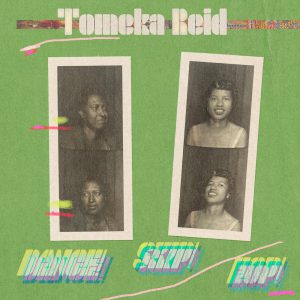 dance! skip! hop! is out now!
 This interview was first published in the March 2026 Women in Jazz Media magazine
Last modified: March 30, 2026