 Written by
 William Ellis’s One LP Project is less an exhibition of photographs than a gallery of LP selves — each one revealed through the record a person cannot live without. The project, which Ellis first brought to the attention of Jazz in Europe readers back in 2020, returns now with its most ambitious presentation yet: over 120 portraits and interviews on display at Street Level Photoworks in Glasgow, running through to the end of June alongside the Glasgow International Jazz Festival. I’ve long been among the project’s most committed advocates since Ellis first shared it with us, and this exhibition feels like the moment One LP steps fully into the cultural conversation it has always deserved.
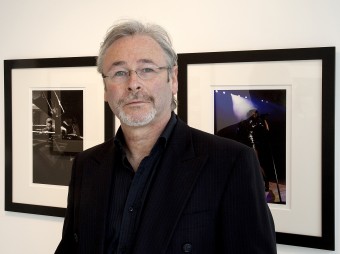 There is a question at the heart of William Ellis’s work that sounds almost deceptively simple: if you had to choose one record — just one — what would it be, and why? In practice, of course, the question is anything but simple. It requires the subject to weigh a lifetime of listening against a single choice. It asks them to locate the album that has done the most work on them — shaped a sensibility, opened a door, consoled a loss, confirmed a truth they didn’t yet have the language for. The answers, accumulated now across more than 400 subjects over fifteen years, have become something Ellis could not entirely have anticipated when he began: a visual and oral archive of how music lives inside people.
I’ve followed this project closely since my first conversation with William, and what has always struck me is how much the constraint — one record, nothing more sharpens the emotional stakes. A conventional portrait asks you to show yourself. One LP asks you to explain yourself through someone else’s art. The album becomes a mirror held at an oblique angle, catching something a direct gaze might miss. Ellis understood this from the beginning, and he built the entire architecture of the project around it.
 The project began in 2010, as Ellis has described it, out of conversations with musicians — the kind that happen after the gig is over and the bar is open, when people stop performing and start talking about the music they actually love. Those conversations kept circling back to recordings: the albums that had profoundly moved the musicians, that had changed the way they heard everything else. Ellis, a self-taught photographer whose career had been built in the jazz world, recognised that these moments of candour were slipping away as soon as the evening ended. He wanted a format that could hold them. One LP was his answer: a portrait, an album, and a short testimony that excavated, in his own words, “layers of memory, influence, being and uniqueness.”
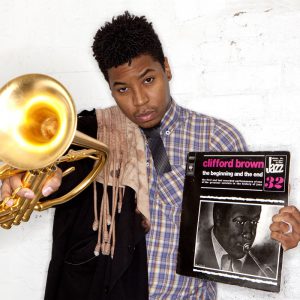
What he created was something that functions simultaneously as portraiture and as oral history. The photograph fixes the person in a moment; the album anchors them in a much longer story. Gregory Porter, photographed by Ellis in Manchester in 2012, chose Donny Hathaway Live — and his explanation of that choice reaches beyond music criticism into something closer to philosophy. He spoke of the exchange between Donny Hathaway and his audience as a human-to-human communication, not merely artistic performance. That account, preserved alongside the portrait, turns the image into something richer: not just a photograph of Gregory Porter, but a document of what Gregory Porter values most deeply about what music can do.
Multiply that across 400 subjects and you begin to understand what the One LP archive actually is. It is not a celebrity project, though many of its subjects are well-known. It is not a jazz project, though jazz is its root and Ellis’s natural home. It is something harder to categorise: a record of how creative people relate to the recordings that shaped them. The subjects now span musicians, broadcasters, filmmakers, photographers, academics, record producers, and writers. A commissioned series focused on reggae and northern soul has been presented at academic conferences in the United Kingdom, Europe and Jamaica. The premiere exhibition was held at the ARChive of Contemporary Music in New York. Dan Morgenstern, director emeritus of the Rutgers Institute of Jazz Studies and an NEA Jazz Master, described it as “a marvellous idea, superbly executed.” Time Out New York called it “truly cool.” Graham Nash simply said: “Great project.”
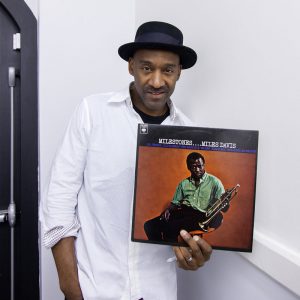 Ellis himself was born in Liverpool in 1957 and came to photography through a combination of accident and hunger — his own account of driving across the Pennines as a seventeen-year-old to see a Bill Brandt exhibition is one of those formative stories that explains a great deal about the restlessness and ambition that have driven his career. His big break came in 1989, photographing Miles Davis in Manchester for what he has described as some of the most charged moments of his professional life. That connection to jazz has never left him, and it gives the One LP Project a particular authenticity within the music community: Ellis is not an outsider documenting the scene, but someone who has spent decades inside it, earning trust and building relationships.
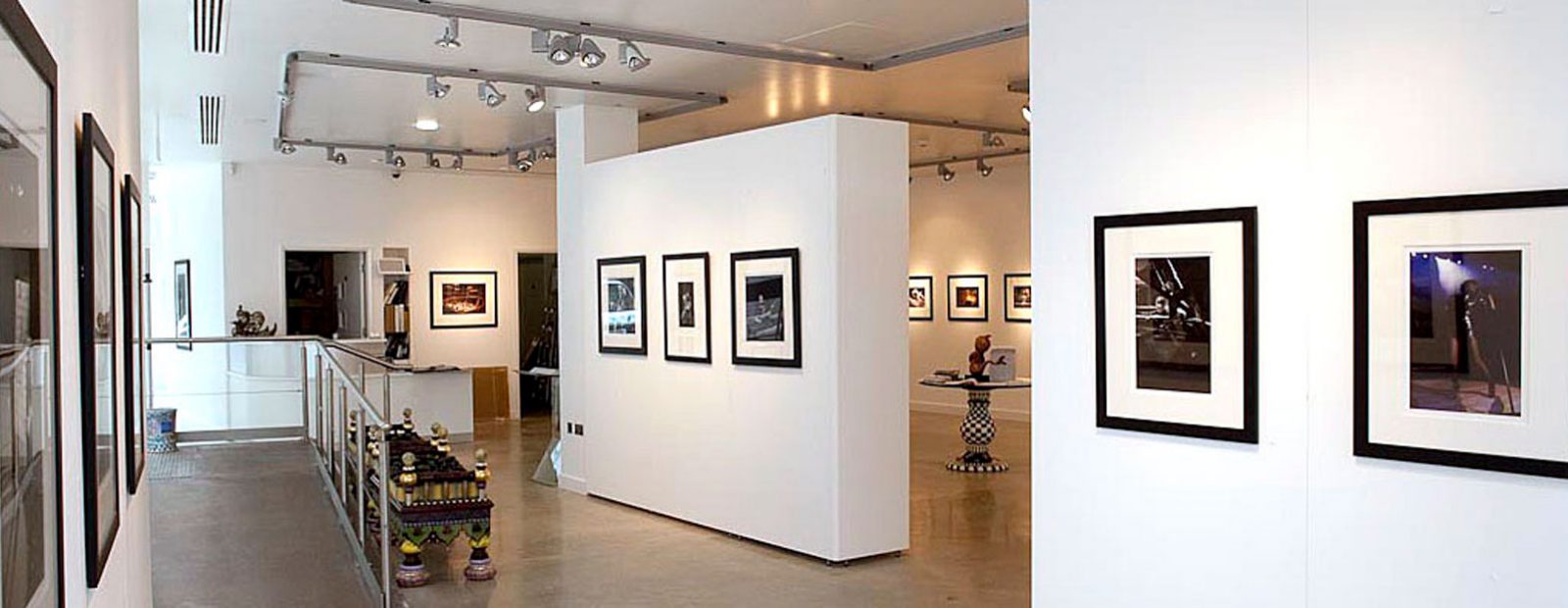
The current Glasgow exhibition carries that trust into new territory. More than 120 portraits and interviews are on display at the Trongate 103 gallery, and the timing alongside the Glasgow International Jazz Festival is apt — though the exhibition is not merely a festival supplement. Its real subject is the LP itself as a cultural object: physical, tactile, irreplaceable. In an era when streaming has made music more accessible and simultaneously more disposable, the act of choosing one record and explaining its meaning to you carries a kind of weight that feels almost political. Ellis’s subjects are not being asked about their streaming habits. They are being asked about the recording they carry inside them.
It is worth noting, too, that the exhibition arrives in the centenary year of Miles Davis’s birth, and that some of the One LP portraits featured in the Glasgow show are also included in a chapter of the forthcoming book Rethinking Miles Davis, published by Oxford University Press. That connection places Ellis’s work within a serious scholarly conversation about jazz history and legacy — a fitting context for a project that has always been, at its deepest level, about how jazz and its adjacent cultures are transmitted from one generation and one individual to the next.
We have featured the One LP Project in these pages since 2020, and I make no apology for doing so again now with particular warmth. What Ellis has built, over fifteen years of patient accumulation, is a portrait of listening culture at a specific moment in history — when the vinyl record still carries the weight of memory, when a single album can still be the answer to the question of who you are. The Glasgow exhibition is the most complete presentation of that work to date, and it deserves to be seen by anyone who cares about the relationship between music and human experience.
The One LP Project is at Street Level Photoworks, Trongate 103, Glasgow G1 5HD, from 20th May to 28th June 2026. Entry is free. A Jazz Festival preview takes place on Tuesday 9th June, 6–8pm. Further information at streetlevelphotoworks.org and onelp.com.
Last modified: May 28, 2026