 Written by
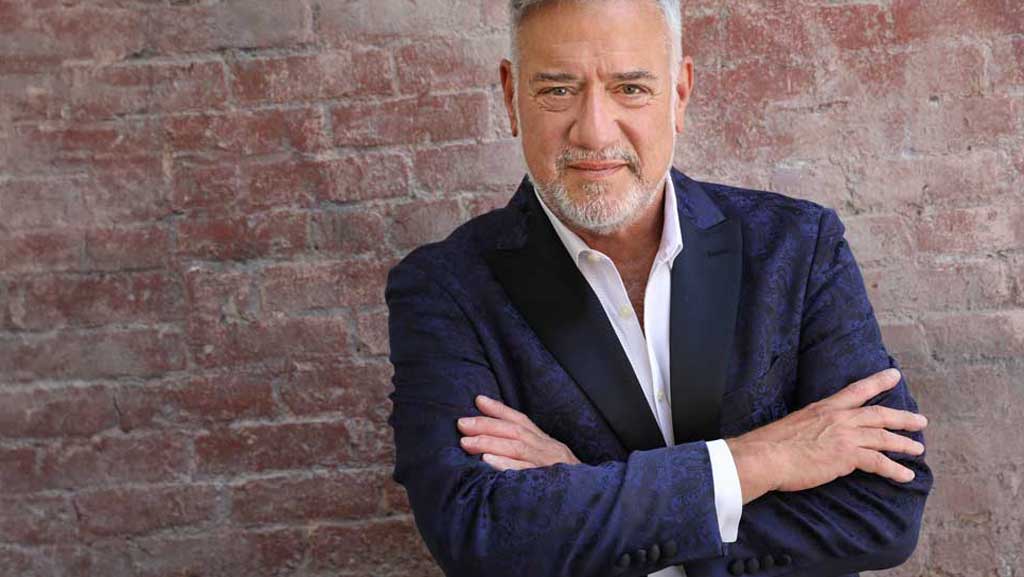
 With the 100th anniversary of Tony Bennett’s birth approaching in 2026, I heard that Philadelphia-based vocalist Eddie Bruce is planning to bring a tribute to Europe that honours the legacy of this icon of the American Songbook. Having reviewed Eddie’s last album, I’ve followed his career with interest, and with this and the release of his new album coming up this seemed a timely opportunity to reach out and learn more.
Bennett’s career crossed many phases, from the classic balladry of the Great American Songbook to collaborations that brought his music to newer generations. His partnership with Lady Gaga, notably on the album *Cheek to Cheek*, reintroduced his voice to a younger audience without compromising the style that characterised his work. Similarly, his early 1990s MTV Unplugged appearance demonstrated how his music could adapt to newer contexts while maintaining its distinctive qualities.
This ability to maintain relevance over a wide span of time has meant that Bennett’s work resonates with listeners of all ages making him stand out against other icons of that age. Bruce’s show intends to explore these aspects of Bennett’s career through a combination of music and visual elements, without seeking to embellish but rather to invite reflection on Bennett’s place in American MUSIC history. The European performances, scheduled to coincide with the anniversary in 2026 provide an opportunity to engage with Bennett’s repertoire in a setting attuned to both its historical and contemporary resonances.
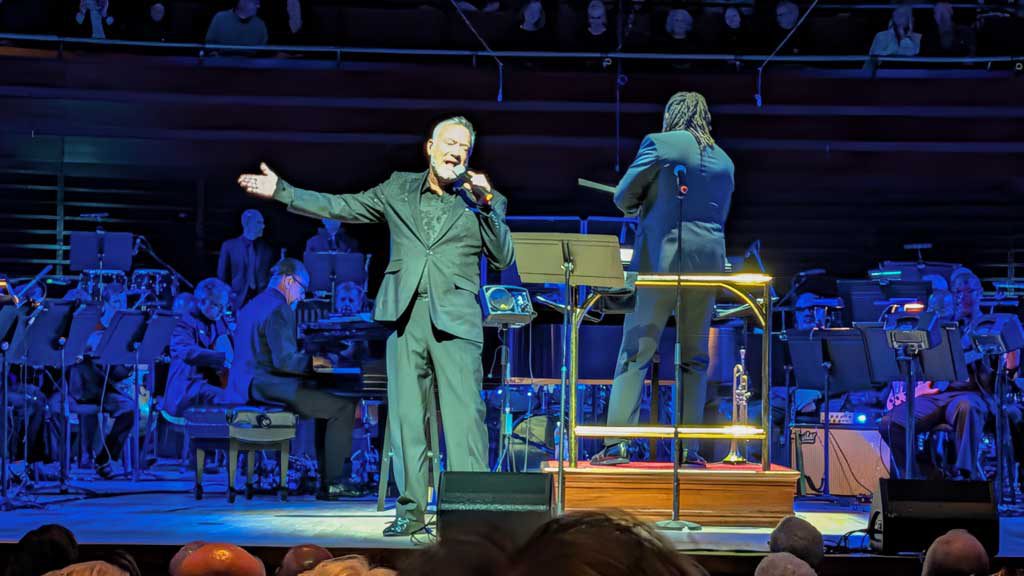
Eddie Bruce L:ive with the Philly Pops Orchestra at the Kimmel Center, Philadelphia
Steven James: Welcome, Eddie, and thanks for taking the time today. Let’s start from the beginning. Can you tell us a little about your background and how you ended up in the music business?
Eddie Bruce: Well, I’ve never done anything else. I sang in my first nightclub when I was eleven and a half, in one of the Philadelphia talent shows that clubs used to put on. Back then, they’d hold them on a Tuesday or something to get people in. Each singer would bring along an aunt, uncle, grandparents and that would fill up their Tuesdays.
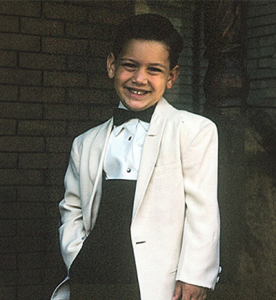
Eddie Bruce aged 4 – Doomed to Croon
Before that, I was singing in school. I went to audition for a little community talent show, and the lady running it took a liking to me. She came to my place to meet my mother and said, “I want to be his manager.” She knew about as much about the business as this phone here—nothing—but she was a housewife with a big mouth, and it worked. She started schlepping me around, singing anywhere and everywhere I could.
That first night at the nightclub, I didn’t even know what to do. I sang “More,” which was a big song in those days. There was a newspaper man in the audience who decided to write an article about me. The next day, in the Philadelphia Inquirer, there was a headline saying I was fourteen—though I was really eleven—and it read, “Young Singer, 14, Has the Poise of a Pro.” So that was my first press. Pretty cool. The only thing he said was, “You’ve got to learn some mic technique.” I didn’t realize you have to bring the mic with you when you turn your head. I figured that out soon enough. So yeah, basically it’s all I’ve ever done.
SJ: What about music education? Did you study at college or a conservatory?
EB: I went to college for about an hour and a half. As soon as I got a lottery number high enough to avoid going to Vietnam, I left college and hit the road with a band. I spent the next four and a half years as a lounge lizard, working hotels with an organ trio.
Stephan, this was the coolest. We had a B3 with two Leslies. The guy kicked bass with his left foot, trumpet with one hand, and had a Mini-Moog and even a Mellotron. It was the hippest little organ trio. That’s where I learned my chops. I learned how to sing five hours a night without losing my voice.
SJ: I can imagine. That makes sense, there was a huge Hammond tradition in Philly back then, so that doesn’t surprise me at all.
EB: Absolutely. You had Jimmy Smith, Shirley Scott, it was a real Philly thing. There was another great player we used to work with, whose name escapes me now, but he could swing like hell. We’d open the night with dinner music—Billie Holiday, Sinatra—and by the end of the night, I was doing Joe Cocker, the Allman Brothers, the Doobie Brothers, even ELO. We’d play a really cool mix of music. That was college for me. That’s where I really learned, on the road.
SJ: It’s actually the best way. Very old school!
EB: It was. You know, I’m talking about the late 1960’s and early 1970’s and that’s just the way it was back then.
SJ: Yeah for sure, learning on the job!
EB: Yeah, and we’d stay in a hotel for five weeks at a time, so we weren’t constantly moving. We did six nights a week, five hours a night—forty minutes on, twenty minutes off. It was grueling as the only singer. I had to relearn how to sing because the monitoring wasn’t great in those days. I used to lose my voice after the first set. Eventually, I went back to a vocal coach, learned proper technique, and haven’t had an issue since. It was a great learning experience—a good place to grow up.
SJ: Cool. When I was researching this interview, I found a clip—maybe from a TV program—going back to the late ’60s or early ’70s?
EB: If it’s the one I’m thinking of, it was 1968, I hate to say.
SJ: Yeah, I think that’s right. You were pretty young.
EB: It was a national TV show—sort of a precursor to Star Search, American Idol, or The Voice. It was called the Ted Mack Original Amateur Hour. It had been on radio before moving to CBS television, coast to coast. I auditioned for it three times—which probably says something—but I finally got on. It was my first time in New York City. My manager Nancy and I took the train, got off, and reported to the address they gave us. Turned out it was the Ed Sullivan Theater. Huge tradition there—I’d watched Ed Sullivan all my life, seeing the great stars. Later, Letterman and then Colbert used that same stage.
I got up for rehearsal, and they had a full orchestra. They’d arranged the chart from my audition, and it was perfect. I’d never sung with an orchestra before—it was amazing. The ironic thing is, at fifteen, I was singing “For Once In My Life”, a bit strange for a fifteen-year-old to sing, you know lyrics like “for once in my life, I had all I wanted…”, hell!, all I really wanted was a bike! But I didn’t win. Lost out to a twelve-year-old James Brown impersonator. Back then, you had to fill out postcards to vote—no digital anything. I filled out about 400, didn’t help.
SJ: Was that your first time in New York?
EB: Yeah, I was just a kid from Philly—it was a real eye-opener.
SJ: Did it bring much attention?
EB: No, not really. It was on once—no social media, no VCRs or DVRs. I never saw it again after it aired in October 1968, not until about fifteen years ago, when the show’s executive producer tracked me down. He said, “We’ve been looking for artists from the show.” The Library of Congress had commissioned the recordings, and they’d been digitally restored. He offered me a copy, commercials and all. It was something to see. My kids loved it—they couldn’t believe how I looked.
SJ: Yeah, I laughed so hard when I saw it.
EB: Yeah, I bet. The funny thing is, I use that clip in my show now. I set it up by telling the story, but I never tell the audience that there’s actually video of it. I describe it, say, “Thank God there were no VCRs back then so I don’t have to see that kid again,” and then—bang—I play it. The audience loves it. I had the Elvis lip and a big pompadour, doing the whole dramatic bit. It always gets a laugh. Then I sing the same song live, and say, “I’ve learned a little more about what it means since then.”
SJ: You have a big show coming up with the Philly Pops, right? Have you worked with them before?
EB: I do. I first performed with them about twelve years ago, right after they changed conductors. For more than thirty years they had Peter Nero—the great jazz pianist who was also an excellent conductor here in Philadelphia. But Peter never put me up there because, in his eyes, I was just local talent.
He had a thing about local talent—a bias that I think didn’t serve him well, but it certainly didn’t serve me either. So I never got the chance then. But as soon as they changed conductors, I finally got a shot. I did a short three-song set with the Pops, and it was absolutely thrilling.
Then the Philly Pops ran into some management problems and sort of disappeared for a while. The musicians, though, launched a grassroots effort to bring the orchestra back. They called themselves the “No Name Pops” for about two and a half, maybe three years, because they didn’t have the rights to the Philly Pops name.
I volunteered my services and said, “Whatever you need from me, I’ll do it. I’ll sing for free. I’ll sing anywhere you want.” I just wanted to help them come back to life. That built a new relationship with them, and as a result, now—in about a week, or by the time this interview’s out—I’ll be doing a full concert with the Philly Pops here in Philadelphia.
READ MORE …
Last modified: May 4, 2026