 Written by
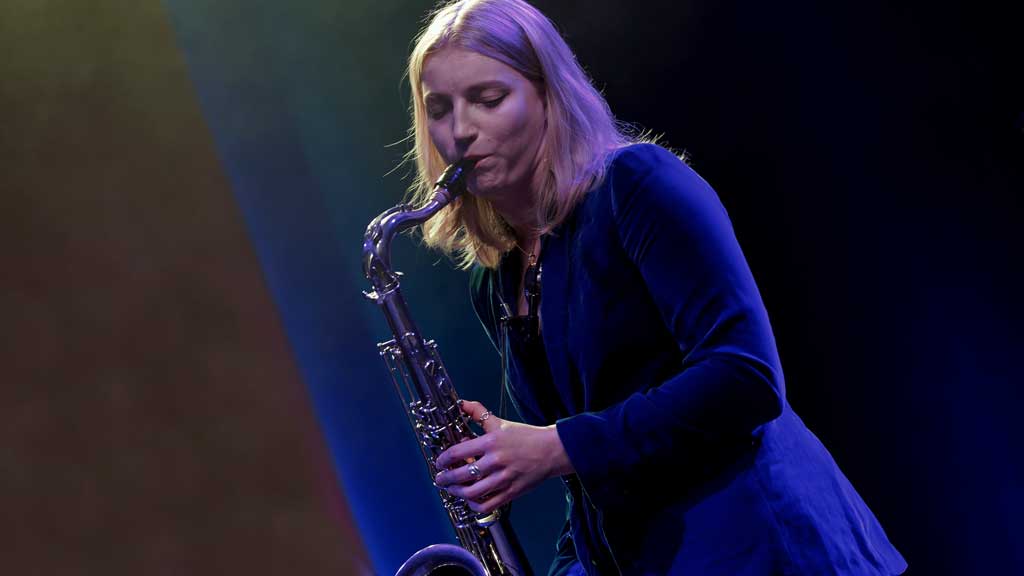
 At just 23 years old, London-based saxophonist and composer Emma Rawicz has already achieved significant recognition on both the UK and European jazz scenes, accomplishments many artists take twice as long to reach. Her live performances and recordings showcase a sophisticated compositional voice combined with dynamic, expressive playing. Drawing from a broad palette of influences spanning multiple genres, she stands out as a distinctive and accomplished artist at a remarkably young age.
With multiple awards to her name, including the 2022 Parliamentary Jazz Award for Jazz Newcomer of the Year and a recent recognition as BBC New Generation Artist, Emma’s career continues to gather momentum. Her critically acclaimed albums, alongside innovative ensemble work and international performances, underpin her reputation as one of the leading lights of her generation.
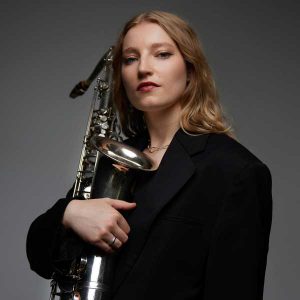
Photo by Gregor Hohenberg
I recently had the chance to speak with Emma about her journey so far and the projects that lie ahead. From her critically acclaimed independent debut album Incantation, to her current role as a rising star on ACT Records, Emma’s story is one of ambition, risk-taking, and creative growth. The conversation touches on her band projects, duo collaborations, big band compositions, and the evolving shape of her artistry. Speaking to Emma it’s clear that she is an artist in continual motion and displays a maturity well beyond her young age.
Emma’s early musical journey began in a rural corner of England, an area with limited live music but rich in quiet curiosity. “I grew up in North Devon, where there’s not a whole lot of live music going on,” she recalls. From an early age, Emma was drawn to various instruments. “If there was a piano, I tried to play it. If there was a guitar, I tried to play it.”
At school, her choice was initially between guitar and violin. The guitar appealed to her seven-year-old self, but when her guitar teacher left, Emma transitioned to violin. This shift, she emphasizes, was shaped by more than necessity. “I was really lucky to have a really fantastic violin teacher called Kate Collingham,” she says. This teacher ignited Emma’s wider passion for music and nurtured her early experiments with composition. “She also encouraged me when I said I wanted to write music… I got my first musical experience playing in school bands, community orchestras, playing violin mostly.”
Her curiosity continued across instruments, including clarinet, singing, and piano, reflecting a broad fascination about sound. “I was trying to explore different sounds, different instruments.” At around 12 years old, a defining moment occurred at the Dartington International Summer School. Attending primarily as a violinist, Emma discovered an amateur big band. The music and particularly the saxophone captivated her. “I just thought this was the most incredible sound I’d ever heard. What is that shiny one with the bendy neck?”
It took several years to persuade her parents she should take up the saxophone, but once she held the instrument, she felt certain. “I had this moment of like, ‘OK, this is the right one. I found it.’” With the support of dedicated teachers, she explored the instrument and its repertoire deeply. Studies at Junior Guildhall, Chetham’s School of Music, and the Royal Academy of Music provided foundations in technique and creativity.
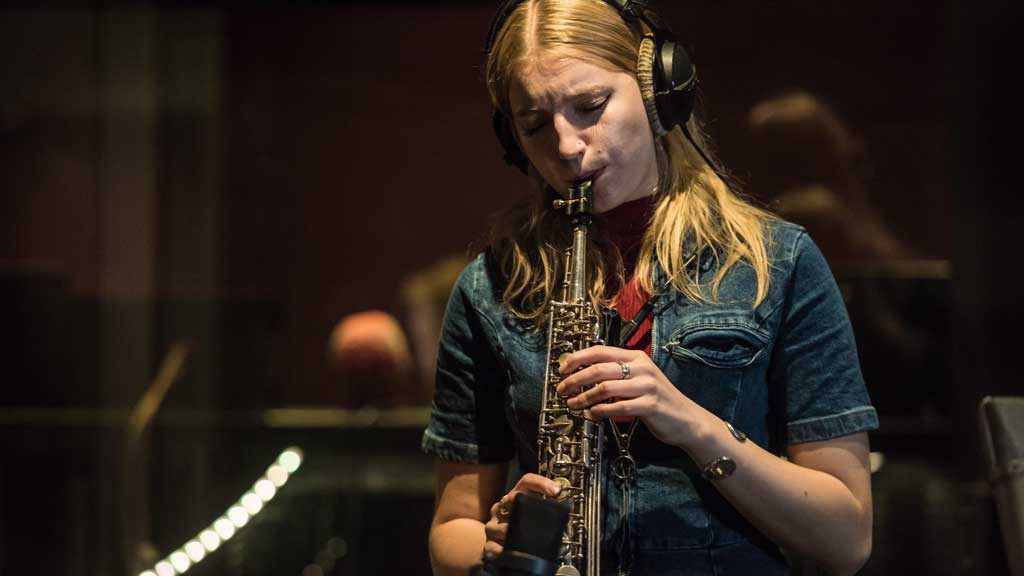
Photo by Monika S Jakubowska
Aware that starting the saxophone at 16 is “quite late” compared to many peers who begin as toddlers, Emma embraced intense focus and disciplined study. “It was roughly like seven years of pretty intense education,” she explains. The quality of mentorship she received made this possible and remains a source of gratitude. “I feel like I owe a lot to those people.”
Her initial pull toward jazz was a gradual awakening, shaped both by eclectic listening habits and pivotal mentorship. Growing up, she gravitated toward film scores, absorbing soundtracks and nurturing an early ambition to compose. In those orchestral tapestries, she often detected traces of big band voicings and jazz harmony, elements she heard but did not yet identify. “That sound appears in so many James Bond soundtracks and Hollywood blockbusters. So I think I’d heard that sound, but I didn’t really know what it was,” she reflects.
Her true introduction arrived when Mark Lockhart played her Joe Henderson’s “Double Rainbow.” Rawicz recalls, “I remember just thinking this is the most unbelievable thing I’ve ever heard.” The album’s fluid interplay between jazz and Brazilian repertoire resonated immediately, connecting back to her own experiences learning Brazilian percussion at Dartington from Adriano Adewale. Through Henderson’s recording, she encountered both the expressive power of jazz improvisation and the dialogue it could sustain with other musical traditions.
This experience led her deeper—listening soon expanded to include Sonny Rollins, Michael Brecker, Chris Potter, and more. “As soon as you get into one album, suddenly a whole new world has opened up.”
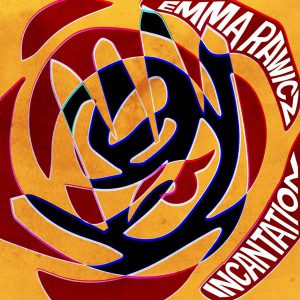 Emma first came to the attention of the UK jazz scene with the release of her debut album, Incantation. She recalls the album’s creation as a formative and exploratory period during the lockdown, a time when live performance was largely impossible. “I was just trying to figure out what was in my head, really,” she reflects. The influence of her composition teacher, Pete Churchill, was pivotal, encouraging experimentation and pushing her to write with new approaches. She describes the album as a mixture of guidance, instinct, and uncertainty, where not all technical choices were fully understood, but the emotional intent was always clear. Those early years at the Royal Academy of Music, surrounded by fresh influences and still building a personal vocabulary, gave the music its sense of openness and discovery.
Pivotal in the production of Incantation was the crucial role played by Ant Law. As a seasoned guitarist and bandleader, he acted as a mentor and collaborator throughout the project. Emma has described him as a co-pilot in the making of the album.
Her recollections of working with him go far beyond simple collaboration; she credits him with providing a steadying presence and a critical dose of creative encouragement. “He actually just reached out and said, why don’t we do some recording together? We’ll have a and remotely record some tunes,” Emma recounts of their initial online exchange. At a time when digital spaces filled the gap left by live music, Law’s openness and initiative made a deep impression. Their first live performance together at Ronnie Scott’s marked a turning point, Emma remembers the thrill and surreal quality of sharing the stage with Law at the iconic club. “I just sent Ant an email or an Instagram message being like, hello, what do you think about playing at Ronnie’s with me?” she explains. The planning for her album grew from that concert, built on Law’s practical wisdom, generosity, and ongoing encouragement: “If it wasn’t for that, then the album probably wouldn’t be out there… he was kind enough to give me some steers in the right direction.” Law’s influence remains, she says, woven into both her confidence and approach, making the music’s journey one of shared exploration.
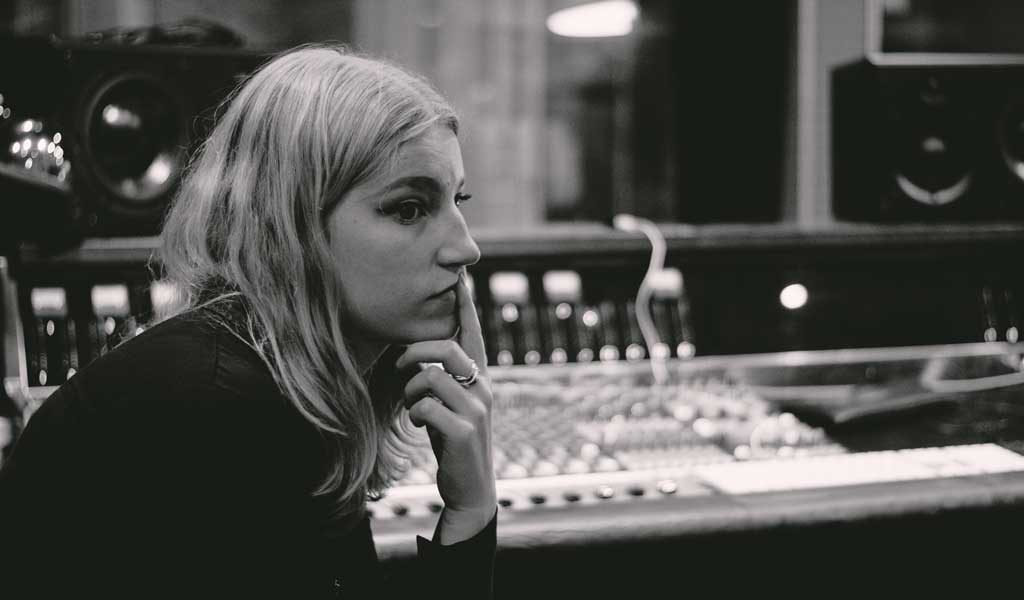
Photo by: Pedro Velasco
Speaking to how the album came about Emma recalls that the lineup for Incantation emerged from a period when the pandemic altered the usual dynamics of assembling a band. “Covid created this unique situation… we were all in masks, we weren’t really allowed anywhere, and there was no exposure for almost the first year of the degree.” The absence of regular sessions with her Royal Academy cohort meant she looked outward, enlisting experienced musicians such as Ant Law on guitar, Scottie Thompson on piano, Hugo Piper on bass, and Finn Genockey on drums. “If I found something that worked, I’d be like, OK, we’re doing that because we’ve had one opportunity to play a gig… Maybe we’re not going to play together for three months because we were all in that headspace.” The constraints produced an unexpected advantage: “Everybody had an empty diary anyway. I really think it wouldn’t have worked out in the same way otherwise.” Rawicz is candid that, though unconventional, the process resulted in relationships and lessons that have shaped her approach to music since.
READ MORE …
Last modified: May 5, 2026