 Written by
 Andrew Read: When did you start focusing on conducting and arranging? And what was your first major appointment as a conductor?
Ed Partyka: From 1999 to about 2006, I was musical director of the partly subsidized Concert Jazz Orchestra in Vienna. The band eventually lost funding and ceased, but around the same time, from 2000 to 2007, I conducted the Sunday Night Orchestra in Nuremberg, also a partly funded freelance band.
My first official contract with a full-time orchestra was with the Frankfurt Radio Big Band from 2011 to 2016. They experimented with a model where they replaced the traditional chief conductor with a team of four conductors. Later, they returned to a chief conductor model—likely influenced by traditional German conservatism.
My next big appointment was chief conductor and artistic director of the UMO Helsinki Jazz Orchestra from 2019 until May 2025. This was an old-school contract—about four months per year—but involved a great deal of responsibility. We had many memorable performances and commissioned works.
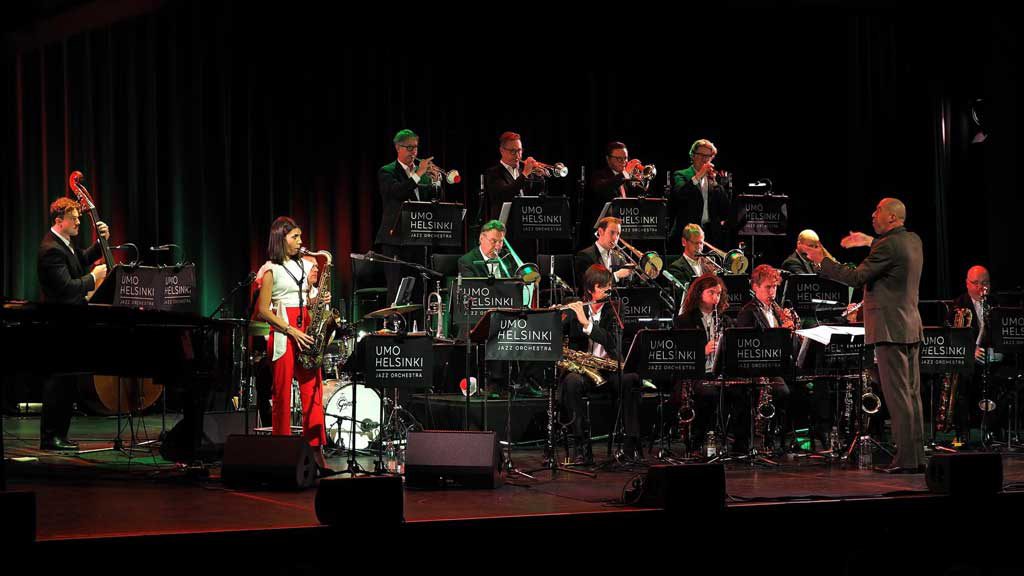
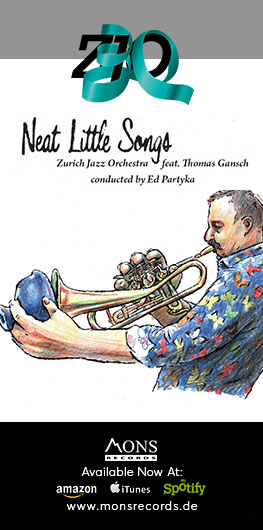
During my tenure in Helsinki, I was also asked to become musical director of the Zurich Jazz Orchestra. Unlike UMO, Zurich is a freelance orchestra. UMO rehearsed during regular office hours with weekends free, thanks to Finland’s strong musicians union.
Zurich rehearsals usually happen on weekends, which made it possible for me to manage both orchestras, though the workload was intense. For a few years, I was working seven days a week with big bands—an incredible dream come true but physically demanding. Now that my UMO contract has finished, I finally have time to exhale a bit.
Zurich Jazz Orchestra knew my background as an arranger and my work with guest artists. That was part of the reason they chose me as musical director.
Andrew Read: The Zurich Jazz Orchestra has a long history, and that band seems to always be evolving.
Ed Partyka: Absolutely. It’s part of what makes the ZJO so special. It’s always evolving because each director leaves their mark but also builds on what came before. Steffen, for example, did a lot of work with the orchestra on sound and intonation, really refining the precision of the ensemble. One of my main goals is to continue that work while also pushing the orchestra technically. I think that’s an essential responsibility for any artistic director or chief conductor.
We’ve also reached a point of natural evolution. Some of the older members, who’ve been part of the orchestra for decades, are getting to the stage where they want to hand the torch to the next generation. And I’m seeing younger players entering the international jazz scene with technical skills far beyond what we had at that age. Music education has changed dramatically; kids are coming up incredibly well-prepared.
My job is to encourage that development—to create an environment where young, talented players can grow and also bring their ideas into the rehearsal room. That’s something I really enjoy—working with musicians who aren’t just playing the charts but actively contributing to discussions about repertoire and artistic direction.
In that sense, I’ve always followed what Bob Brookmeyer used to do. He had this habit of collecting young musicians, finding the right voices for the sound he wanted. I do something similar with the Zurich Jazz Orchestra. When we need substitutes, or when the time comes to bring in a new member, we’re looking not just for brilliant players but for people with imagination—those who will engage artistically, be curious, and help shape the next era of the band.
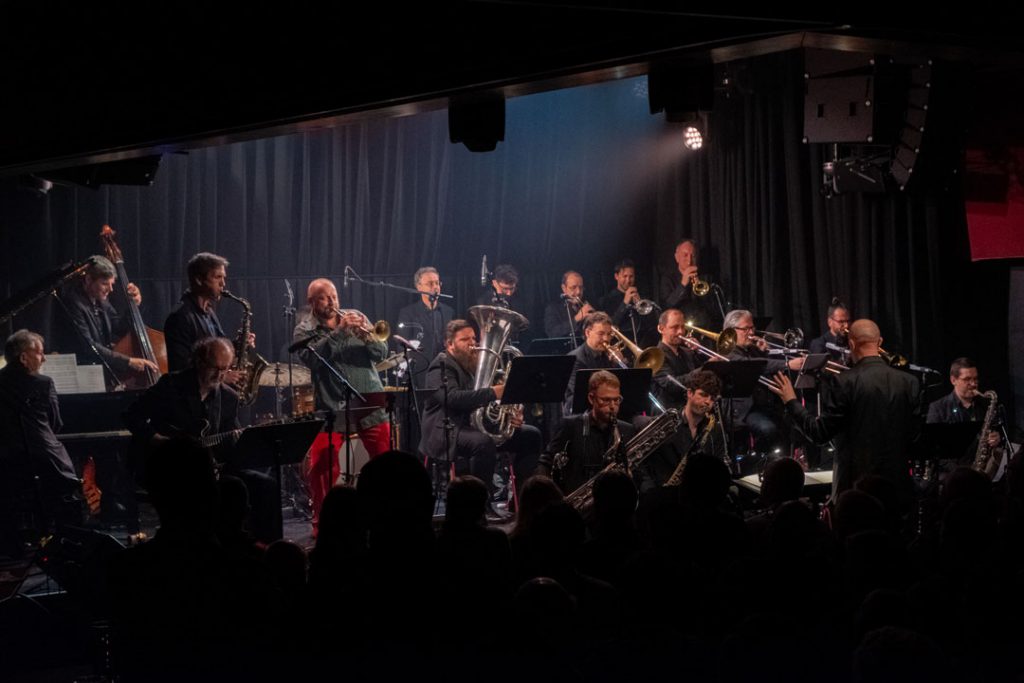
The Zurich Jazz Orchestra | Photo by Palma Fiacco
That’s how the orchestra keeps thriving. It’s not just about one person’s leadership; it’s about continuity, about standing on the shoulders of those who came before and building from there. That’s especially true for a group like the Zurich Jazz Orchestra and other bands that aren’t full-time institutions. It’s one of the secrets to their success—flexibility, evolution, and this shared sense of ownership among the musicians.
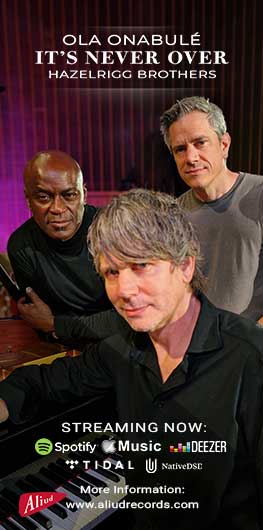
Andrew Read: Let’s move on. One artist who is probably one of my favorite male vocalists is Ola Onabule. I know you know Ola well through projects, and I believe you did a project with him in Zurich. Also, there is an upcoming album with the Latvian Radio Big Band using Ola’s Pointless album. Could you share your take on that?
Ed Partyka: Yes, I’ve worked with Ola a bunch of times now. Our first collaboration was around 2014 in Frankfurt, working with the Frankfurt Radio Big Band on some jazz standards. The guy can sing anything, and he does it incredibly well. A year later, in 2015, we actually got to work together in Copenhagen; that’s when I started arranging some of his original material for him and the Danish Radio Big Band.
Since then, we’ve been collaborating pretty regularly—usually, I’m handling the arrangements for his compositions. It’s been a really fruitful partnership. Ola’s also been a guest in Zurich and with UMO in Helsinki, and he’s done a bunch of things with the Latvian Radio Big Band over the years.
So the current project—like you said—mainly features tunes from Ola’s Pointless album, along with a couple of his older pieces, all arranged by me. It honestly took us years to find a band willing to record this project. Because, you know, these days, it’s tough to get original projects across the line, even in Europe. Ola’s music deals with some heavy, socially conscious themes—he doesn’t shy away from deep critical commentary in his lyrics.
Ola is really one of the greats—a fantastic vocalist and a strong composer, just a truly well-rounded musician. So we were looking everywhere to get this music documented. Maria reached out and connected us with the Latvian Radio Big Band. They’re a younger group than some of the longer-established bands in Europe, and they seem much more open to taking risks. So we managed to set up a recording in Riga back in January, and it went really well. I think the album’s going to be great—it should be released early next year.
Andrew Read: That’s great news, I’ll be watching out for that. Let’s move on. I want to talk about your vision when it comes to arranging. You definitely have your own voice, and people who know your work can pick your arrangements. Could you share your vision, particularly regarding thematic material and how you voice sections?
Ed Partyka: Great. My take on arranging has really been shaped by the people I admire most—Bob Brookmeyer, Bill Holman, and Jim McNeely, who in my view is one of the greatest arrangers out there. McNeely borrowed a lot from Brookmeyer, but he also soaked up a lot from Gil Evans and George Russell. Carla Bley is another major influence; she combines serious technique with a fantastic sense of humor.
Bob always had a kind of dark, sometimes even cynical approach, while McNeely carried a bit of both clarity and edge. These folks have impacted my style and the way I approach arranging and composition.
When it comes to voicing, I’ve spent endless hours studying Brookmeyer. His sound world is all over my writing—you’ll hear lots of minor ninth intervals, and like Ellington, I’m not shy about deliberately throwing in the occasional “wrong note” to achieve that pungent dissonance and harmonic tension you get from Ellington or Thad Jones. For orchestration, I gravitate to French horns and clarinets, inspired by Gil Evans and McNeely. For me, it’s all about mixing those colors.
READ MORE …
Last modified: May 5, 2026