 Written by
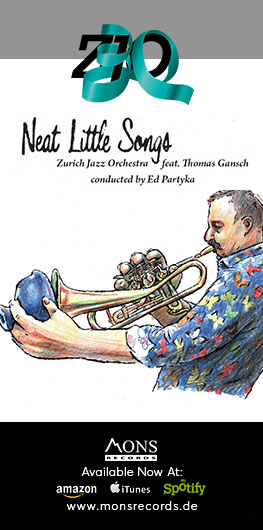
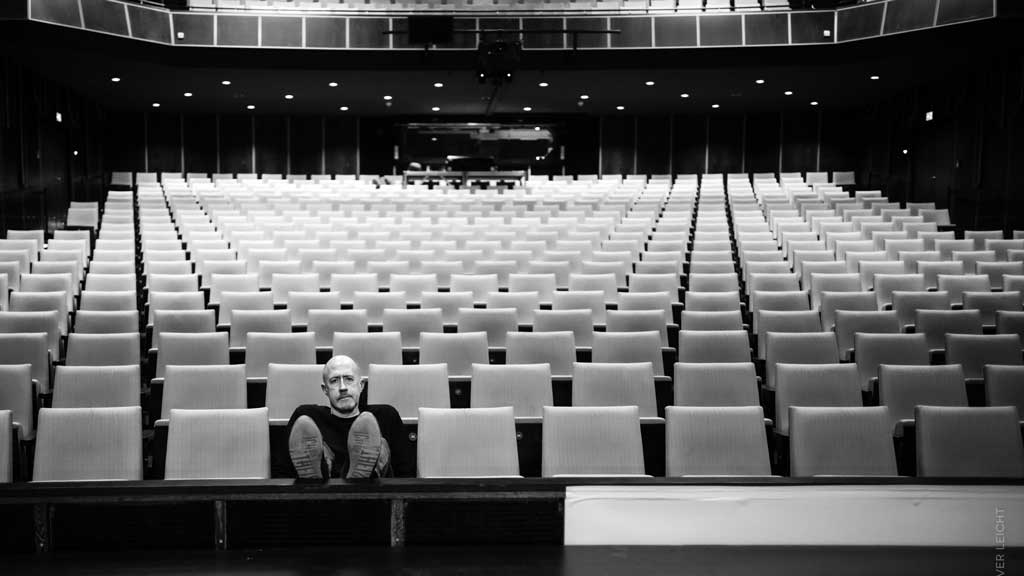
 I’ve been planning to interview Ed Partyka for some time, and the recent release from the Zurich Jazz Orchestra in May, and the release of his new album offered a timely opportunity to reach out and explore his work and views. Ed Partyka is a bass trombonist, tubist, composer, arranger, and conductor with a career spanning several decades and continents. Originally from Chicago, Illinois, Ed pursued his early musical education there before moving to Germany in 1990 to further study jazz trombone and composition.
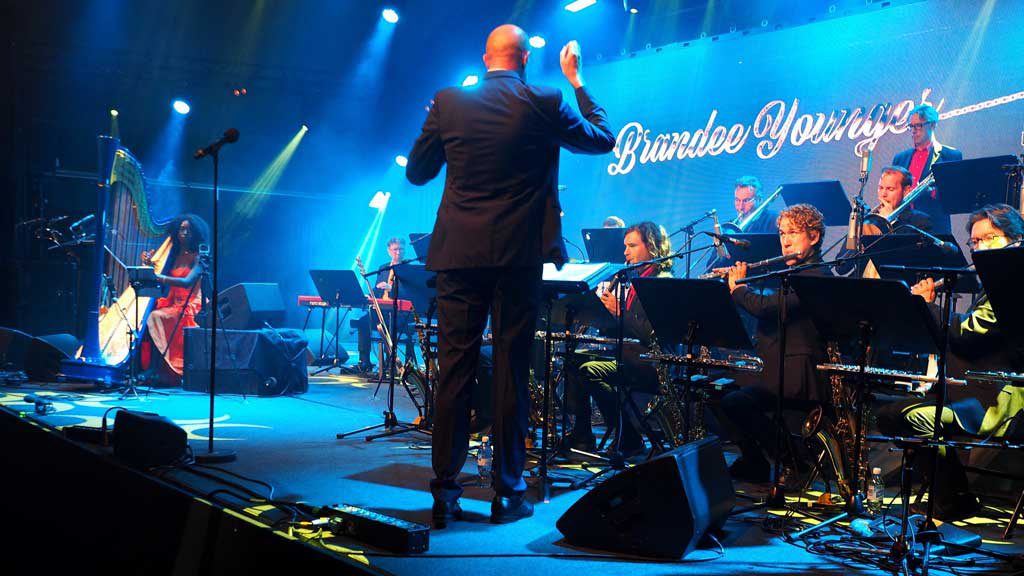
Ed Partyka has worked extensively with many European big bands, including the Bob Brookmeyer New Art Orchestra and the Vienna Art Orchestra. He currently leads the Ed Partyka Jazz Orchestra and serves as musical director of the Zurich Jazz Orchestra and was chief conductor and artistic director of Finland’s UMO Helsinki Jazz Orchestra from 2019 to 2025. In addition to performing and composing, he holds academic positions related to jazz theory and composition at music institutions in Austria and Switzerland.
His contributions as an arranger and bandleader are noted for blending tradition with contemporary jazz practices while maintaining a strong connection to jazz history. Across his career, Partyka has balanced performance, composition, conducting, and education. This interview aims to cover his artistic journey, influences, and perspectives on the evolving world of large ensemble jazz.
Andrew Read: Let’s start with some background. Can you tell me a bit about your early life in Chicago and what led you to pursue music professionally?
Ed Partyka: I was born and raised in Chicago and then moved out to the suburbs, as often happens. I was lucky enough to be in a school system with a very good music program where every student could join the wind band. Around the age of ten, I was interested in playing an instrument. I had seen other bands—wind bands and jazz bands—and I had my heart set on playing the clarinet because I thought it was a really interesting instrument.
There was an evening event for kids interested in joining the wind band, and a person from the local music store came out. He was basically a salesman but could play all the instruments. He started with the flute, then clarinet, saxophone, trumpet—maybe even French horn—and finally trombone. When he played a couple notes on the trombone, for some reason, I was really enamoured with the sound, and I thought, “Wait a minute, I’ve got to do that.” It was a win-win because my parents were concerned about the cost, and trombones were much cheaper than clarinets. That’s how it started.
From that point, I always played in different wind bands. I was very lucky to have some great teachers in grade school and high school who were enthusiastic about big band music. My very first teacher, Bill Chambers, was a trombone player and very into big bands. I started playing trombone at ten, and by twelve, I was already playing in the first school big band, which was a little rare even at that time. Since he played bass trombone, that was also when I began playing bass trombone. So already at a young age, I was exposed to big band music.
Andrew Read: Did this early exposure influence your music tastes outside school?
Ed Partyka: Absolutely. I also found some old records in my parents’ collection—Glenn Miller and others. Around eleven or twelve, I read in the local paper that the Glenn Miller Orchestra was playing at a nearby shopping mall. I bugged my parents to take me, and although my dad said, “That’s music for old people,” he took me. We sat in the very last row. The audience was mostly older people; my dad, in his thirties, was one of the youngest, and I was the only kid. I loved it. When they played “Pennsylvania 6-5000,” I knew the words and proudly yelled them, much to my father’s embarrassment as all the older audience members turned around.
That enthusiasm for big band music stayed with me. In high school, I had a great big band and band director, Bob Haddick, a professional trumpet player. We played a lot of music by Nestico, Basie, and others, so the passion continued.
By seventeen or eighteen, I was starting to have some success in music and decided to study it professionally. I thought, “What’s the worst that can happen? If it doesn’t work out, I’ll do something else.” My father was an electrical engineer and encouraged me to follow that path, but I pursued music. When I got to university, I landed at Northern Illinois University, which had an excellent big band program led by Ron Modell.
Ron was an incredible big band leader. We toured several times with guest artists like Carl Fontana, Conte Candoli, Louis Bellson, and Jiggs Wiggum. Ron was very open to letting students write music. Around 1986, a friend introduced me to Bob Brookmeyer’s album Composer and Arranger. That album was a turning point — hearing it made me want to write music like that.
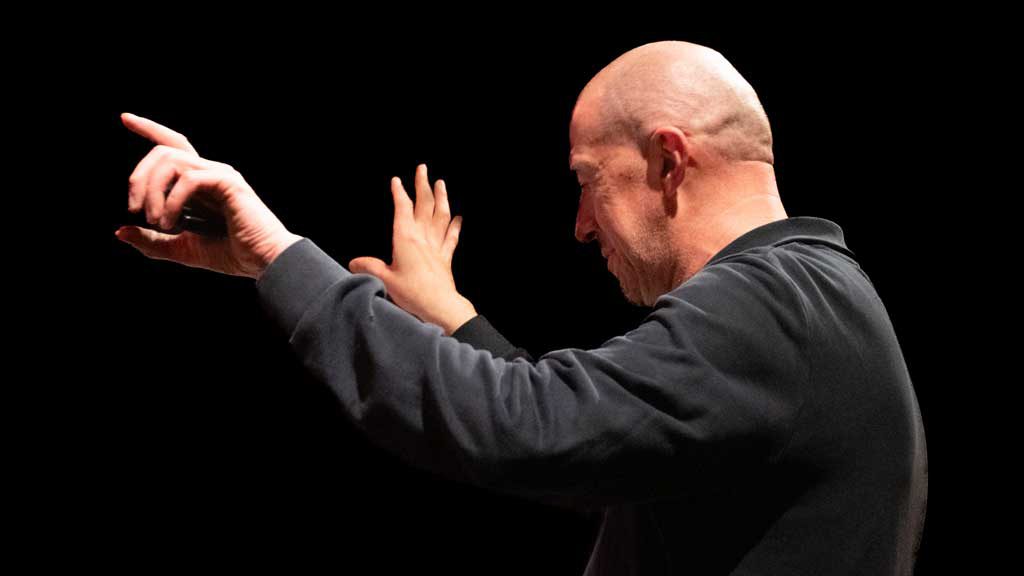
During my bachelor studies, Ron would play our compositions with the big band. If he liked them, he included them in concerts. Ron was very supportive, and I started leading a big band myself, often conducting more modern pieces inspired by Lester Bowie’s Brass Fantasy and George Gruntz’s Concert Jazz Band.
Although Ron usually led traditional big band music, he challenged me to conduct some of my modern compositions, which he allowed in rehearsals and concerts. These experiences set me up for my future. At that time, I still wanted to become a bass trombone player, but composing became a significant outlet.
Andrew Read: Did you plan to stay in Chicago after this?
Ed Partyka: Not really. Even though I was born and studied there, I wanted to move on. New York was an obvious choice because Bob Brookmeyer lived there. However, before that, I wanted to become the best bass trombone player I could be. Many of my favorite players were studio musicians in Los Angeles, so I applied for a master’s degree at Cal State Northridge.
In 1990, I spent a week in L.A. trying to find a place and meet people, but I hated it. The music business there was very commercial and focused on business as much as music, which turned me off. I returned to Chicago unsure of my next steps.
That’s when Jiggs Wiggum came into the picture. He was a guest artist at Northern Illinois University and told us about the music scene in Germany, especially the radio big bands. I got in touch with him and applied to the conservatory in Cologne where he taught. I was accepted, went to Germany for auditions, and ended up studying there.
Andrew Read: So, now you are in Germany and Bob Brookmeyer comes back into the picture. How did this come about?
Ed Partyka: Studying with Jiggs was a whole new experience—learning a new language, living on a new continent—but oddly enough, it felt comfortable. My initial plan was to stay a few years in Germany and then maybe move to New York to study with Bob Brookmeyer. But Bob was relocating to Europe, living near Rotterdam, and by 1991, he came to the conservatory in Cologne to do a workshop. I got to play in the big band and took part in his composition workshop, where I showed him some of my work.
Bob had set up the GEMA Jazz Composers Workshop in Germany, inspired by the BMI workshop in New York. I was extremely lucky to be accepted into that, and had lessons with him once a month. It felt like pure serendipity.
Andrew Read: You were also very active in Vienna at the time. Tell me about your time there.
Ed Partyka: One of my first major gigs in Europe was with the Vienna Art Orchestra. I was a member though I rarely conducted since Matthias Rüegg was both conductor and primary writer.
In 2001, Peter Polansky from the Vienna Konzerthaus commissioned me to compose a guitar concerto entitled ‘Continental Call’ for Wolfgang Muthspiel and the Concert Jazz Orchestra Vienna. This was recorded and gave my career as a composer and conductor a significant boost.
From around 2000 to 2010, I balanced playing and conducting. Some years I had more commissions and conducted more, and other years I was playing more, like during Vienna Art Orchestra tours.
READ MORE …
Last modified: May 5, 2026