 Written by
 JAZZ à SEMUR returns to the medieval town of Semur-en-Auxois from 2 to 4 July 2026 for its sixth edition — three days of jazz in one of Burgundy’s most quietly beautiful settings, with a programme that makes a strong case for the festival’s place among the more thoughtfully curated events in the French summer calendar.
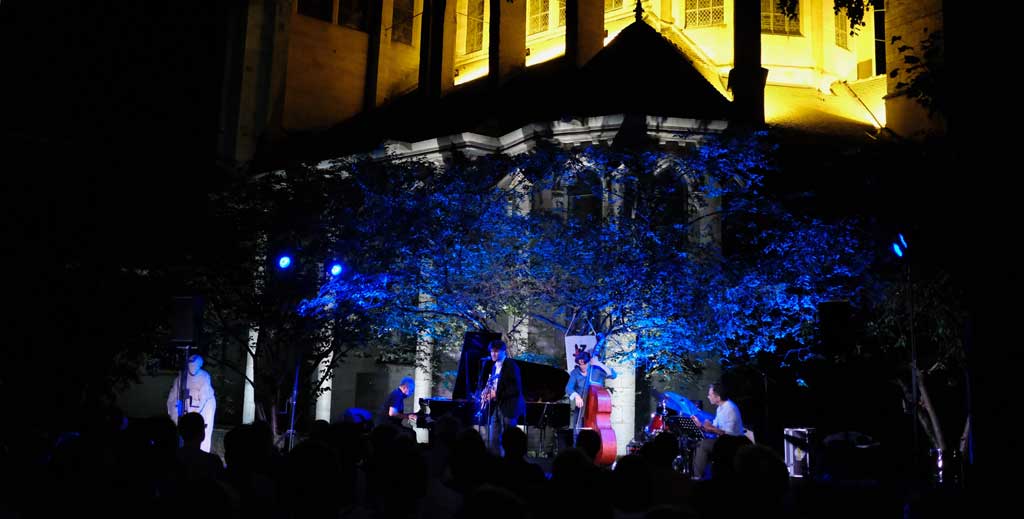
The festival is organised by the JAS association, which has shaped it since its founding in 2019 into something with a clear and distinctive identity. Part of that identity is the town itself. European jazz has long found a natural home in settings that carry some sense of place — and Semur-en-Auxois, a medieval market town in the Auxois-Morvan area of Burgundy, has that quality in abundance. The Collegiate Church of Notre-Dame, the old stone streets, the unhurried pace of a town that has not been smoothed out for tourism — all of it creates a backdrop against which live music lands differently than it does in a purpose-built festival arena. JAZZ à SEMUR understands this, and the setting is woven into the event’s identity rather than treated as mere scenery.
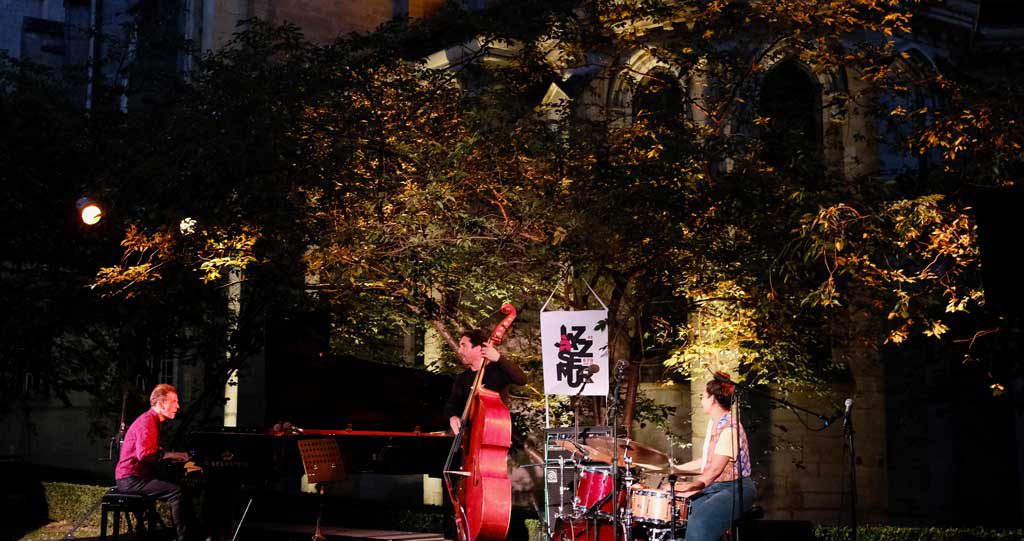
Anne Paceo Triphase 2023 | Photo Copyright Jazz à Semur
For 2026, JAZZ à SEMUR returns to the Town Hall Park as its main outdoor venue, after last year’s edition at Le Bahut, with one concert also taking place in front of the Collegiate Church. The capacity of around 400 seats is a deliberate choice rather than a practical limitation — at this scale, the distance between artist and audience that larger festival stages impose simply does not exist. The intimacy is the offer.
I had not come across JAZZ à SEMUR before meeting the organisers at the Balkan Jazz Network conference in Dijon last week, but the more they talked about the 2026 programme, the more it was clear this was something worth bringing to our readers’ attention. It is a three-day festival with a full and varied bill, and what struck me most was how much range the programme holds without losing its focus — the four acts mentioned below in particular caught my attention as highlights worth looking at more closely.
Philippe Soirat is one of the most respected figures in French jazz — a drummer whose reputation has been built across decades of work at the highest level of the music, and whose quartet brings exactly the kind of focused collective intelligence that an intimate festival setting rewards. The group’s repertoire combines original compositions with reinterpretations of masters — Wayne Shorter and Miles Davis among them — and what distinguishes the project is not the choice of material but the quality of attention the musicians bring to it. The playing is precise without being clinical, intense without being aggressive. This is a group that listens to itself, and you hear that in every exchange. For audiences who care about the conversation between musicians as much as the notes themselves, the Philippe Soirat 4tet will be one of the sets of the weekend.
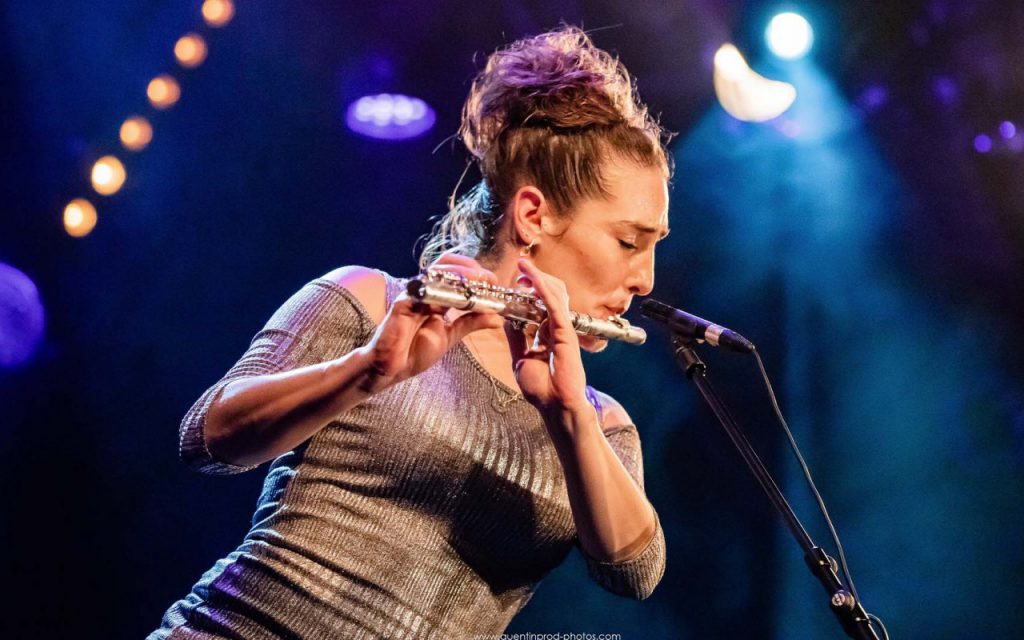
Ludivine Issambourg
Ludivine Issambourg brings a different energy and a less frequently heard voice to the programme. As a flutist working in jazz-funk, she occupies a space that is specific enough to be genuinely her own — a repertoire of original compositions and well-chosen covers, built around groove and played with an ensemble that includes rhythm section and brass. The combination of flute, brass, and a locked-in rhythm section produces a sound that is both immediately appealing and texturally rich, and Issambourg’s playing deploys a range of influences that gives the project substance beyond its considerable surface energy. There is heritage here — the lineage of jazz-funk is long and well-documented — but the sound identity she has assembled is contemporary and distinctly her own. This is the kind of act that tends to surprise audiences who come in without high expectations, and leave them as converts.
The two names likely to draw the widest international attention are Yumi Ito and Emile Londonien — and the contrast between them is as instructive as any single act on the bill.
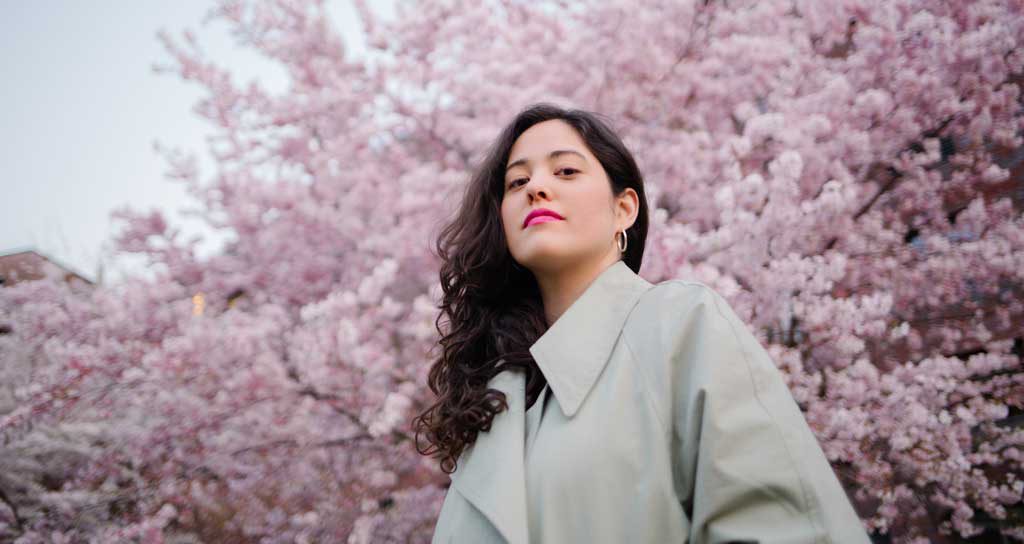
Yumi Ito
Yumi Ito is a Swiss-Japanese-Polish vocalist, pianist, composer, and songwriter based in Basel, whose 2025 solo album on enja yellowbird marked a new stage in a career that has already taken her to the Blue Note in New York, to Montreux, and to Jazzmandu. Her music moves between jazz, art-pop, and neo-classical, held together by vocal improvisation of real expressive depth. There is a quality of stillness and atmosphere in her work that feels particularly well-suited to an intimate outdoor setting — the kind of music that rewards close listening, and that an audience of 400 people in a park in Burgundy is well placed to give it.
Emile Londonien is an entirely different proposition. The Strasbourg trio — drummer Matthieu Drago, synth player Nils Boyny, and bassist Théo Tritsch — emerged from the Omezis collective and have, across their 2022 album Legacy and the 2024 follow-up Inwards, established themselves as one of the most energising acts in the new French jazz scene. Their music is built around groove: broken beat, house, jazz, funk, and R&B in a combination that is physically compelling without abandoning the improvisational core. The jazz language is still present and doing real work — it is simply arriving dressed for a different room than it might have done twenty years ago. Live, they are the kind of act that shifts the energy of an evening.

Emile Londonien
Alongside these four, the programme also features Klo&Ange, Ninanda, and Andy Emler who will perform at the Collegiate Church of Notre-Dame. for this concert Andy will play the churches Great Organ, an instrument built by Riepp in 1752, expanded by Callinet in 1833, and restored in 1992. Listed as a historic monument, it provides a remarkable setting for a programme that moves between improvisation and original composition, drawing on influences that range from Bach and Ravel to Miles Davis, Stravinsky, and Peter Gabriel. Beyond the ticketed programme, student performances from local and regional music schools are woven into the schedule throughout, a detail that signals the festival’s investment in its community.
What JAZZ à SEMUR has worked out, more quickly than most festivals manage, is that curation is not just about individual acts — it is about the relationships between them, the argument the programme makes as a whole. Soirat’s quartet speaks to the tradition with rigour and warmth. Issambourg brings groove and contemporary ensemble energy. Ito offers atmosphere, lyricism, and the expressive possibilities of the voice at its most refined. Emile Londonien arrive from the direction of the dancefloor and the studio, and make the case for jazz as a living popular music. Each is a legitimate answer to the question of what jazz is in 2026. That all four sit naturally within a single three-day festival in a 400-seat park in a medieval Burgundian town is, to my mind, what makes this event worth travelling for.
Ticket prices reflect the festival’s community-rooted character, and previous editions have included free or reduced-rate access for certain audiences. Semur-en-Auxois is reachable by road, with TGV connections at Montbard and a shuttle option available. Full programme and ticket information at jazzasemur.fr.
Last modified: May 21, 2026