 Written by
 The Nijmegen based festival “Music Meeting” has been a quietly radical fixture on the Dutch live music calendar since 1985, and this coming weekend reaches its 40th edition. From 22 to 25 May, the festival marks the occasion with a programme that is typically adventurous, internationally minded, and in a significant development for 2026, newly anchored in the heart of the city rather than its familiar park setting. Four decades in, Music Meeting shows no sign of softening its ambitions.
There are festivals that chase names, and there are festivals that chase ideas. Music Meeting has always been firmly in the second camp. I’ve been aware of the Nijmegen festival for as long as I’ve been covering the European scene, and what strikes me every time I look at its programme is how little it resembles anything else in the Netherlands. While the bigger summer festivals fill their bills with artists audiences already know, Music Meeting consistently programmes artists audiences need to know — musicians from West Africa, South Asia, Eastern Europe, and the Americas whose work rarely finds its way onto Dutch stages. That editorial courage, maintained year after year, is what has made it matter.
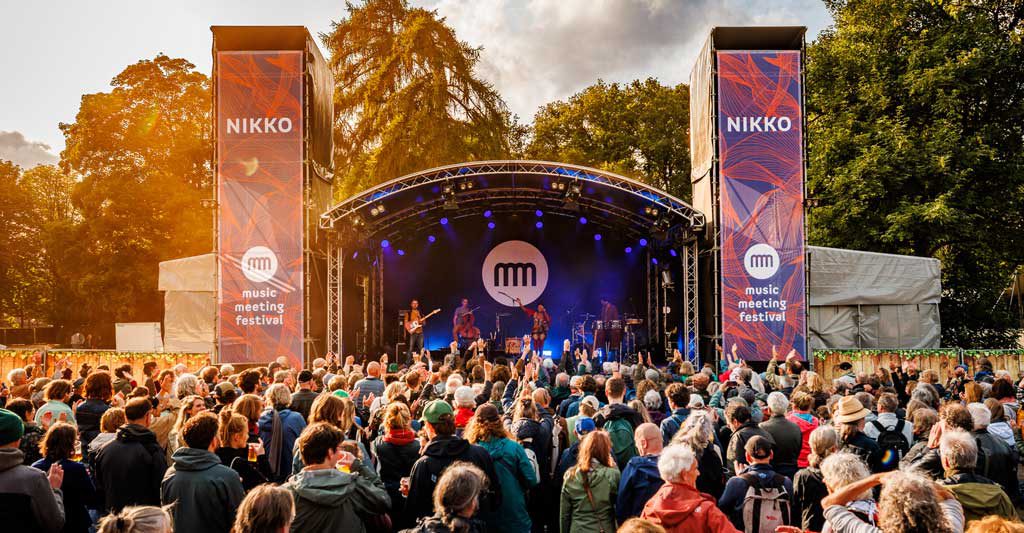
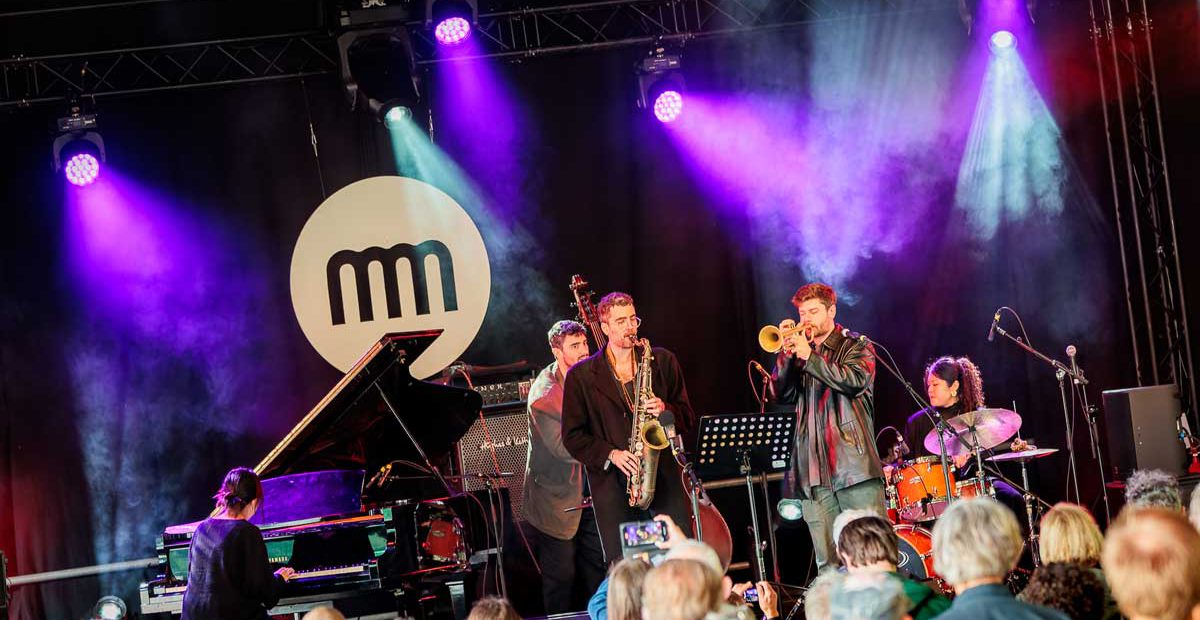
Music Meeting 2025, the last edition in Park Brakkenstein
The festival was founded in 1985 with a focus on global music, improvisation, and cross-cultural collaboration — a remit that was forward-looking then and remains entirely relevant now. Held annually over the Pentecost weekend, it has built its identity around what its organisers call “discovery”: not just presenting music, but framing it, contextualising it, and creating the conditions for genuine encounters between artists and audience. Concerts have always sat alongside workshops, conversations, and more intimate formats, making Music Meeting something closer to a cultural gathering than a standard festival. That distinction matters, and it’s one of the reasons the festival retains a loyal, genuinely engaged audience year after year.
For 2026, there is a structural shift worth noting. The festival moves away from its traditional home in Park Brakkenstein and spreads across multiple venues in Nijmegen’s city centre — Doornroosje, De Vereeniging, the Stevenskerk, and LUX among them, with a free outdoor Block Party on the Mariënburgplein. It’s a significant change of atmosphere, trading the park’s informality for the grain and character of the city’s built fabric. Whether that shift enhances or complicates the festival’s particular atmosphere remains to be seen, but the ambition behind the move is clear: to open the festival outward, to bring it into contact with the city in a more direct way.
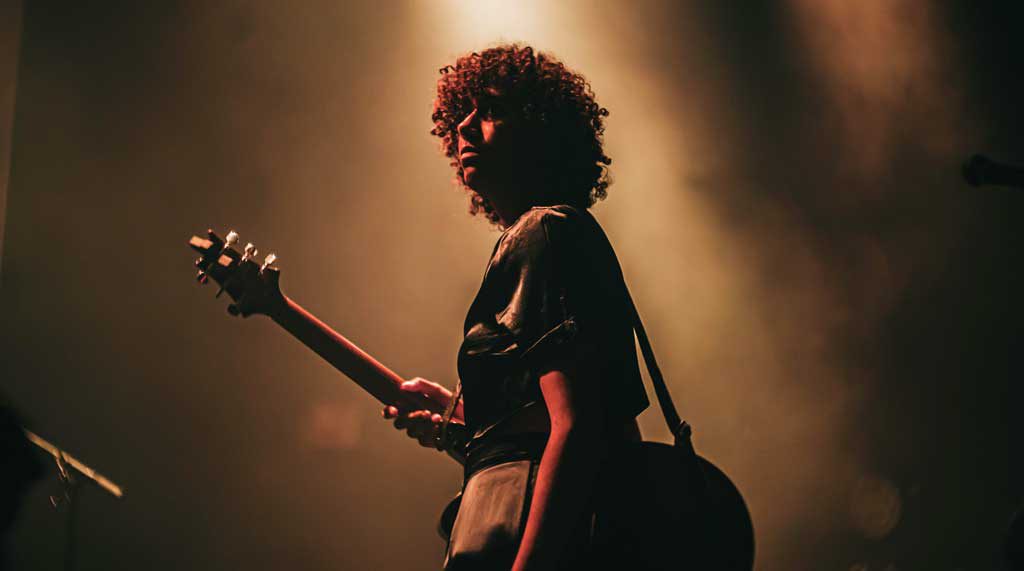
Oumy | photo by Dominic Marcus
The 40th edition also introduces something genuinely new: a film programme running across three days at LUX. This feels like a natural extension of Music Meeting’s longstanding interest in context as much as sound. The selection is characteristically wide-ranging. Big Ben Webster in Europe offers a portrait of the great tenor saxophonist’s later years on the continent — essential viewing for anyone interested in the history of jazz’s transatlantic relationship with Europe. Alongside it, Searching for the Blues explores the musical landscape of western India across a triptych format, while Elder’s Corner examines the Nigerian musicians who were pioneers of some of Africa’s most significant musical movements. The Angolan artist Isis Hembe contributes The Adventures of Angosat, an indie-musical retelling of Angola’s lost satellite, and Gnawa Music – Body and Soul takes the form of a road movie tracing the human and musical depth of the Gnawa tradition. It’s a strong selection, and one that extends the festival’s reach into hours of the day when stages are dark.
The concert programme opens on 22 May at Doornroosje with a mayoral welcome from Mayor Bruls, before the music takes over. One of the weekend’s most anticipated events is the Indian Raga Night at the Stevenskerk on 23 May, a late-running concert that takes the audience through to the early hours of 24 May. Central to that evening is Debasmita Bhattacharya, a young sarod virtuoso whose command of the Hindustani tradition is matched by a restless creative intelligence. She appears alongside Ashwani Shankar, Parvathy Baul, Jayant, Balakrishna SG & Heiko Dijker, and Ustad Shahbaz Hussain — a night of serious depth in one of Nijmegen’s finest acoustic spaces.
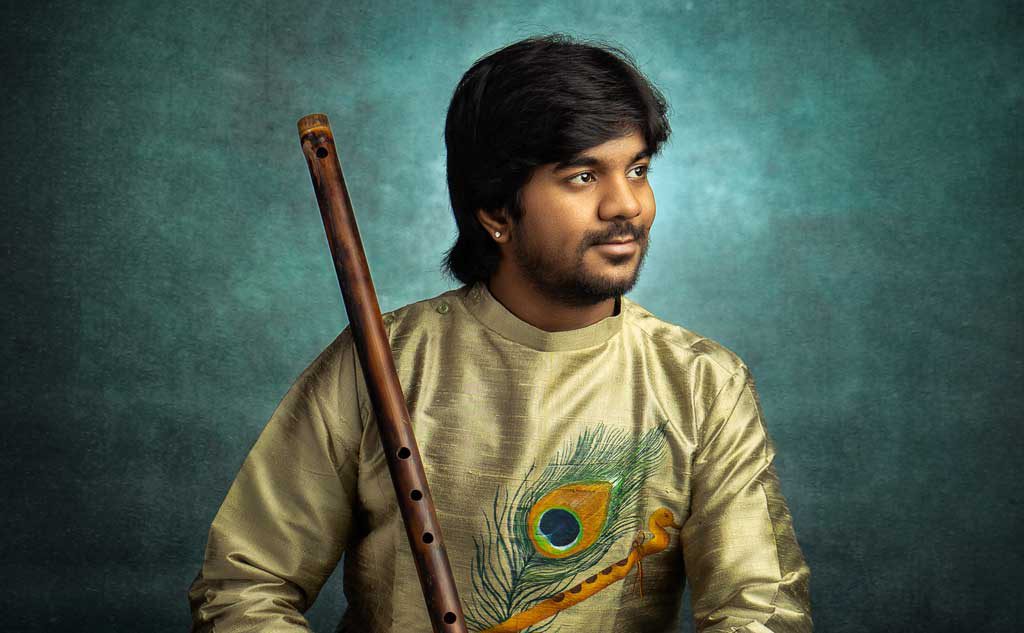
J. A. Jayant
Rhiannon Giddens appears at De Vereeniging on 24 May, an artist whose work at the intersection of American roots traditions — bluegrass, old-time, blues, and much besides — has established her as one of the most important voices in contemporary acoustic music. Her presence at Music Meeting feels entirely right; she is precisely the kind of artist the festival exists to bring to Dutch audiences.
Also on 24 May, composer and music theatre maker Saskia Venegas premieres your at LUX, a new work developed through the festival’s New Makers programme. An immersive composition for violin and electronics, it explores the ritual and healing properties of water against the backdrop of the current ecological crisis. Venegas performs the piece multiple times across the afternoon — an intimate counterpoint to the larger-scale concerts elsewhere in the programme.
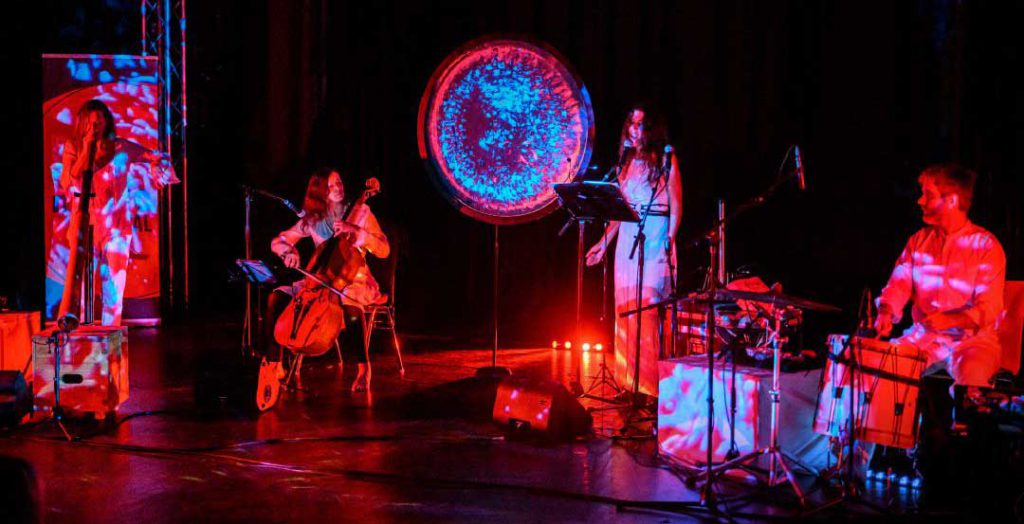
Saskia-Venegas. “Ur”
The free outdoor programme on the Mariënburgplein runs across all three days and deserves attention in its own right. Romperayo bring adventurous Colombian cumbia, Svjata Vatra offer their distinctive Ukrainian-Estonian folk rock, and the griot trio Guitari Baro from Guinea and Mali complete a frontline that spans three continents. DJ sets, dance workshops, one-on-one concerts under the INTIMATUM format, and a children’s programme under the Mini Meeting name fill the spaces between. The Block Party is free and open to all — a genuine public offer that reflects the festival’s commitment to accessibility as well as ambition.
Music Meeting also continues its collaboration with Wintertuin, the Nijmegen literature organisation, with spoken word and poetry framing a selection of festival acts across the weekend. It’s a small detail that speaks to something larger: this is a festival that thinks carefully about how music is received, not just which music is presented.
Forty years is a long time to sustain a clear editorial identity. Music Meeting has managed it by staying genuinely curious — about where music comes from, how it travels, and what happens when traditions meet in the particular conditions a festival can create. The 40th edition looks like a strong one. I’ll be watching closely.
Tickets for Music Meeting 2026 are available from musicmeeting.nl. Day tickets and multi-day passes are available from €32, with discounts for under-30s and CJP cardholders. The Block Party and Library programmes are free of charge.
Last modified: May 18, 2026