 Written by
 Pianist René Urtreger died on 16 July 2026, in Mortagne-au-Perche, at 92. Most obituaries focus on what happened on the night of 4 December 1957, in a Paris studio, where, watching Jeanne Moreau on screen, Miles Davis improvised a soundtrack. That story is true, and I will tell it again here, because it deserves telling. But if that’s the only story you know about René Urtreger, you know a snapshot, not a career. What I want to focus on here is continuity — a musician who stayed present in French jazz for seven decades and never sounded like a man visiting his own past.
I first heard Urtreger play in person in Berlin 2017, years after I’d worn out the Ascenseur pour l’échafaud soundtrack on vinyl. What struck me wasn’t nostalgia. It was how contemporary he sounded. Hi touch was lighter than on the old session, the harmonic thinking sharper if anything, and none of the museum deference some veteran players fall into when an audience arrives expecting a historic legend. He played like someone still working something out. That’s why his death feels like the end of a long sentence, not the closing of a chapter.

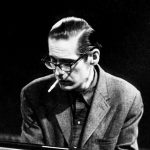
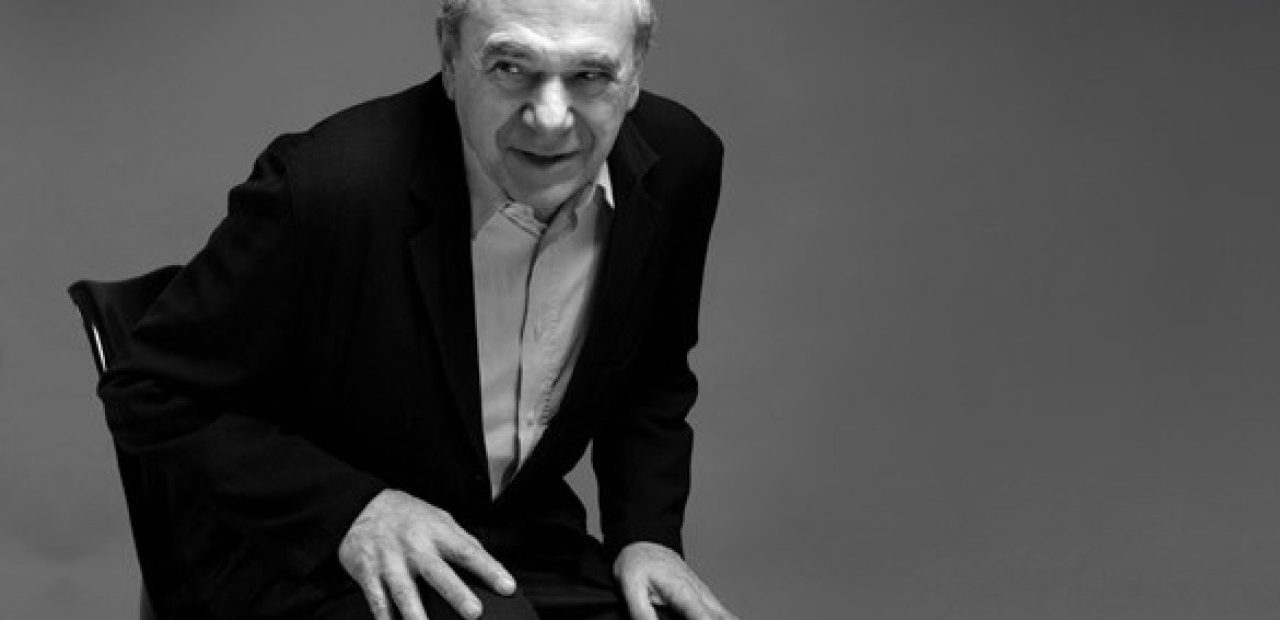
Rene Urtreger | Publicity Shot for Berlin Jazz Festival 20217
Urtreger was born in Paris in July 1934, to Polish parents. He started on piano young, with classical training before jazz entered the picture. He found Bebop as a teenager, and Bud Powell became the model he never abandoned — late in life he’d still say Powell set the standard he measured everyone else against, including some very famous names he’d shared bandstands with. He won a national piano prize in 1953, at nineteen. Within a year he was accompanying Don Byas and Buck Clayton, American expatriates who’d made Paris their second home. That was the education: not the conservatoire, but those informal classrooms, where the visiting Americans expected you to cut it or step aside.
Urtreger cut it. Kenny Clarke, Stan Getz, Zoot Sims, Bobby Jaspar, Stéphane Grappelli, Chet Baker — the list of players Urtreger worked with before he turned twenty-five reads like a roll call of who mattered in transatlantic jazz at that moment. Lester Young thought enough of him to bring him along on a European tour in 1956. A recording from Young’s final session, later released as Lester Young’s Last Message, has Urtreger at the piano — a quieter piece of jazz history than the Miles Davis story, but no less telling of where he stood in that circle.
Then came the night in December 1957 that everyone reaches for first. Davis, Barney Wilen, Pierre Michelot, Kenny Clarke and Urtreger recorded the score for Louis Malle’s Ascenseur pour l’échafaud in a single overnight session, largely improvised against the projected footage. Urtreger was twenty-three. The session is inseparable now from the idea of postwar Paris — the fog, the tension, Moreau walking and walking — and it’s tempting to treat it as the whole of his significance. It isn’t. What made that night work wasn’t an American genius parachuting into a receptive city. It was a conversation between musicians who already understood each other, and Urtreger’s part in that conversation was earned, not conferred by his proximity to a famous name.
The bridge he built ran in both directions. He absorbed what the Americans brought to Paris, and in 1960 he turned around and built something distinctly French out of it, forming the HUM trio with bassist Pierre Michelot and drummer Daniel Humair. Their debut record won the Prix Django Reinhardt and the Grand Prix du Disque. This album was notable because it proved Urtreger wasn’t just a sideman of consequence, he was also a strong band leader that could organise a group, shape a repertoire, and give the modern piano trio a French accent.
Comercial reality pulled him toward chanson and studio work through the 1960s — sessions with Claude François, Serge Gainsbourg, Sacha Distel. It’s easy to read that stretch as a detour. I don’t think it was. The same ear that voiced a Bud Powell line could voice a pop arrangement, and the discipline of studio work never blunted the jazz instinct underneath it. By 1978, with the album Récidive, he was unmistakably back. The years after brought him into rooms with Dizzy Gillespie, Lee Konitz, Barney Wilen, and eventually musicians two and three generations his junior, who encountered him not as a legend to study from a distance but as a working pianist they might actually play alongside.
That’s the continuity I keep returning to. The honours arrived properly — a Victoire du Jazz in 2000, a Victoire de la Musique for lifetime achievement in 2005, the Légion d’honneur — and in French scene they called him “le roi René” with real affection, not irony. But the honours are a record of recognition, not the thing itself. The thing itself was seventy years of one musician staying firmly in the room: bebop in his twenties, a leader in his thirties, a studio professional’s adaptability through the lean years, and a late-career presence younger players could learn from in person. Ascenseur pour l’échafaud will stay the door most people walk through to find him. Once inside, keep walking, there’s more to find than a soundtrack.
Last modified: July 22, 2026