 Written by
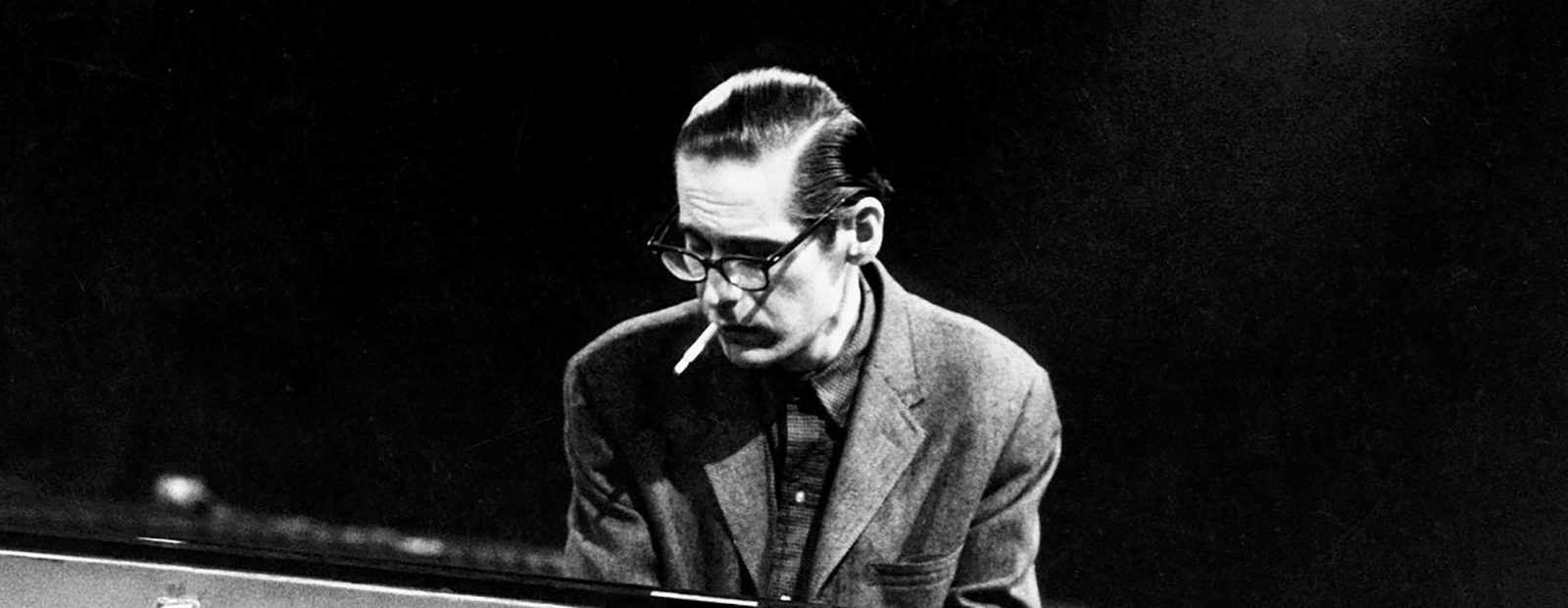
 Bill Evans changed the way jazz musicians think about harmony, and more than half a century after his death his language still sounds like it belongs to no one else. As a jazz pianist, I‘ve spent years living inside Bill Evans’ musical language — absorbing it, playing it, teaching it — but preparing a new online masterclass on his music pushed me back into it with fresh ears. Here’s some of what I found.
I’ve been down a bit of a Bill Evans rabbit hole lately, and it started, as these things often do, with a piece of footage I wasn’t expecting to find. This week I stumbled upon a rehearsal film from Copenhagen, recorded in 1966, with Eddie Gomez, Alex Riel and Monica Zetterlund. The footage is fascinating in the most unglamorous way. The piano pedal isn’t working when Evans arrives. The crew is still figuring out camera positions. Evans is talking through stage setup and visual communication within the trio, the ordinary mess of getting a television broadcast on its feet.
While that production circus orbits around the stage, Evans sits down at the piano and starts walking the Danish drummer Alex Riel through Very Early. It’s not a simple tune to hand someone cold. The form is unusual, there are several tags at the end, and the outro carries a number of rhythmic kicks that don’t necessarily land on a first reading. Evans lays out the form, then zooms in on the ending, pointing out exactly where the rhythm sits.
While the crew is still setting up, Riel and Gomez keep working through those details. Then, once they’re actually on stage to record, Evans says something that caught me completely off guard: “Don’t put yourself into any tension about any of those things — I’d rather have you miss them and be relaxed.”
That remark surprised me, because it isn’t what I expected from Bill Evans. We tend to associate him with sophistication — intricate harmony, subtle voice leading, extraordinary attention to detail. Yet in this moment, detail isn’t his priority. Relaxation is. Not because the details don’t matter; he’d just spent several minutes explaining them. But because once the music starts, the hierarchy changes. If worrying about the figures gets in the way of listening, feeling the pulse, or interacting with the band, the figures have become less important than the music itself.
The more I sit with that, the more I think it’s connected to why Evans’ music sounds the way it does. His compositions can be remarkably sophisticated underneath, but they rarely feel complicated. The listener hears a story, not a system. Maybe part of his genius wasn’t simply the complexity he created, but his ability to keep that complexity from getting in the way of the music.
That idea has been sitting with me for a particular reason. Some time ago I joined the people at PianoTech Masterclass for a podcast conversation about practicing, communication and creativity — the usual rabbit holes musicians disappear into. A few weeks later they invited me to present an online masterclass on Bill Evans, taking place on June 18th. A chance to dive back into Evans’ music and share what I found along the way wasn’t a difficult sell.
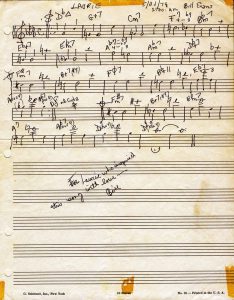 Like a lot of pianists, I assumed I knew Evans’ musical language reasonably well. I’ve been playing and listening to him for years, and had already spent time studying and recording pieces like Very Early, Waltz for Debby, Time Remembered and Turn Out the Stars all the through to his later works such as Laurie and B Minor Waltz. Then I actually started preparing for the workshop. As a first step I went back to those tunes with fresh ears, alongside some of the classical influences that shaped Evans’ world — Ravel and Debussy among them. That’s when it got interesting. These were tunes I thought I knew, tunes I’d played for years, but with a masterclass on the horizon I wanted to go past the obvious and dig further. So the question that emerged was simple: why does Bill Evans still sound different, even today?
When Evans came up in the late 1950s, jazz harmony was largely built around functional movement. Chords had jobs. Progressions were designed to move forward. Bebop thrived on momentum, direction and resolution. Evans seemed interested in something else entirely — color, atmosphere, ambiguity, the emotional weight of harmony itself. In some ways he treated harmony the way Monet treated light.
That doesn’t mean he abandoned functional harmony — far from it, there’s a lot going on under the hood. But Evans often disguises functional movement beneath floating tonal centers, rich inner-voice movement, unexpected melodic choices and a remarkable sense of form. A melody note can stay exactly the same while its meaning changes completely. A simple harmonic idea can generate an astonishing range of color. Two chords can become an entire universe.
The more I studied his music, the more I realized his genius wasn’t only harmonic sophistication. It was his ability to balance familiarity and surprise, clarity and complexity, structure and freedom. The listener always knows where they are, even as the harmonic landscape keeps shifting underneath them. To me, that’s the musical DNA of Bill Evans, and maybe that’s why his music still sounds so fresh — not because the harmony is complicated, but because he never lets you hear the complication. You hear the story, the color, the atmosphere. The rest stays hidden in plain sight.

Over the coming weeks I’ll be sharing more discoveries from this process, including specific examples from B Minor Waltz, Very Early and Peace Piece. One of Evans’ favorite devices was creating stability in one layer while everything else shifted underneath — inner voice leading, anchor tones, formal extension, harmonic reinterpretation, to use the jargon. In plainer language: the melody stays put, the scenery changes. Same note, different meaning.
Curious to explore the rabbit hole further? On June 18th I’ll be sharing some of these ideas, and a few more harmonic mysteries, during The Musical DNA of Bill Evans for PianoTech Masterclass. You’re welcome to register and join.
More Information and Booking for the Masterclass:

Last modified: June 18, 2026