 Written by
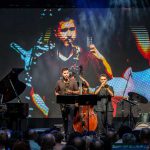
 “Apparently, I have a very expensive new shirt that keeps developing new patterns,” laughed drummer Emil Brandqvist, referring to the unique conditions at this year’s JazzBaltica festival, where temperatures hovered around 40 degrees Celsius. In the end, everyone—musicians and audience alike—looked as though their clothes were covered in ever-expanding Rorschach patterns. Fans and water bottles were essential accessories. Record-breaking heat and record-breaking attendance—with over 21,000 visitors—delighted the exhausted yet happy artistic director, Nils Landgren.
There are many different ways to report on a festival. A chronological list is invariably the most boring. Ranking performances by quality is difficult, and sorting them by the number of musicians on stage isn’t always helpful, either. However, the 2026 edition did feature a high concentration of big bands; the youth contingent included the Ostsee Gymnasium ensemble and the state youth jazz orchestras of both Schleswig-Holstein and Hamburg. Saxophonist Ben Prechtl—this year’s recipient of the IB.SH Jazz Award—had played in both of the latter ensembles.
He received his award at the festival opening in the presence of Federal President of Germany Frank-Walter Steinmeier, a devoted jazz fan who was visiting the JazzBaltica festival. The high-ranking political guest—accompanied by his wife, Elke Büdenbender, and State Premier of Schleswig-Holstein Daniel Günther—enjoyed the trio led by Swedish drummer Emil Brandqvist, who captivated the audience with compositions influenced by delicate Swedish folk music and a keen sense of dynamics and tone colors. In contrast, the second concert in the same set fell far short of that standard. The performance by singer Michael Mayo with the Norrbotten Big Band lacked impact; the arrangements were strangely indistinct, and the singer could just as well have been performing with a quartet.
Perhaps the impression was colored by the contrast with the Danish Radio Big Band, which the previous evening had backed Brazilian legend Ivan Lins and the New York Voices—though “backed” is hardly the right word. At 81, Ivan Lins remains agile and sprightly; vocally, however, it took a few of his monumental compositions for his fragile voice to find its footing. The band—featuring masterful arrangements by conductor Ralf Schmid, who has a brilliant knack for tone colors (when else do you hear alto and bass flutes or alto horns in a big band?)—was the true star of the evening.
The NDR Bigband has been a fixture of the festival since its inception over 30 years ago, and this marked their second visit with new leader Nikki Iles. Their current program was titled “The Shadow of a Dream”; particularly striking was Iles’s composition “Dark Underbelly,” in which her anger was triggered not by Brexit, but by Trump’s re-election. At the other, gentler end of the spectrum was her “Loveletter to Vienna”—dedicated to a quiet spot she found outside a church—a piece that saw the big band incorporating tubular bells into their instrumentation.
Bobby Sparks II sought to turn up the heat even further during the Friday evening concert—an event no longer billed merely as a “Dance Night.” The band took the stage with a funky, groovy vibe; Keith Anderson on saxophone, in particular, made a powerful impact alongside keyboardist Sparks. While the concert began invitingly—reminiscent of an exhilarating gospel service—it gradually morphed into something akin to an exorcism as the volume levels soared. Yet, the groove and intricate retro-keyboard sounds could not quite mask the fact that the tracks occasionally lacked melody and proper resolutions.
Mindfulness and political themes cropped up unexpectedly throughout the diverse festival program. Alma Naidu captivated the audience with her plea not to view women as possessions; the band’s backing vocals on her more pop-oriented tracks were breathtakingly beautiful. Drummer Carsten Lindholm spoke about his gratitude journal and, together with his trio—featuring Eva Kruse (bass) and Stefan Aeby (piano)—played through a century of Danish jazz history, though the focus remained largely on the last twenty years.
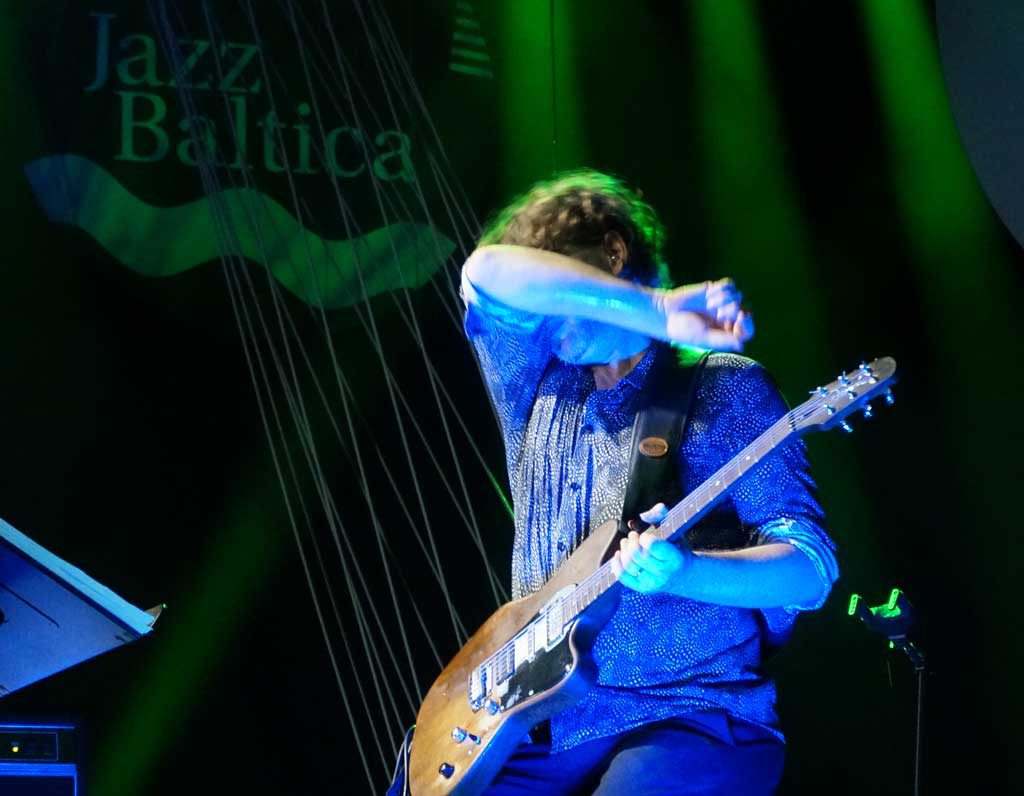
The project Delay Lake presented a new program titled “Lost Places.” Guitarist Kalle Kalima, alongside fellow guitarist Keisuke Matsuno, ignited a veritable fireworks display of sounds and rhythms; unfortunately, the lyrics—which would likely have made the somewhat austere compositions more accessible—remained difficult to understand and were too subdued in the vocal mix (Mirna Bogdanovic).
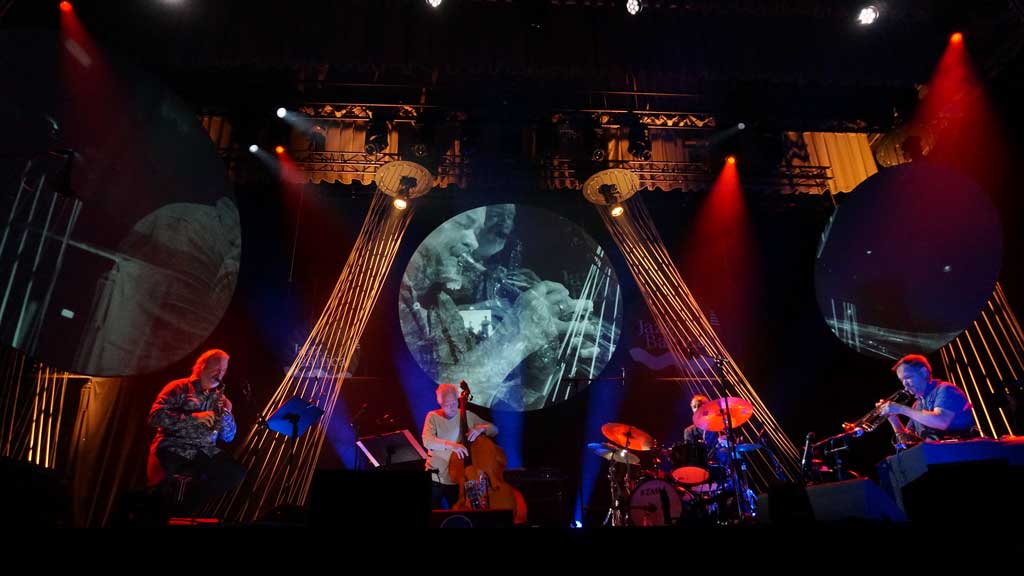
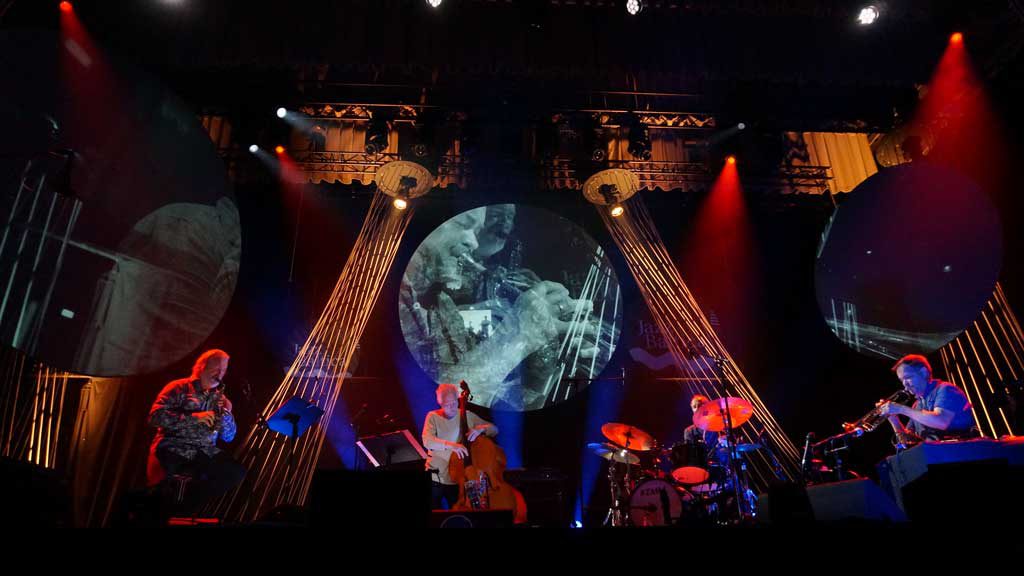
The Norwegian-Finnish-Swedish quartet Arcanum also took a political stance. Their composition “Elegy”—an incredibly moving, melancholic and beautiful piece dedicated to all children in Gaza or Ukraine forced to live with war—left a lasting impression. For me, Arve Henriksen (trumpet and effects), Trygve Seim (saxophones), Anders Jormin (bass), and Markku Ounaskari (drums) were among the festival’s absolute highlights; both their music and their stage presence epitomize what jazz—as a living musical form—should be about: a form of musical communication on stage where motivic ideas are picked up and threads of dynamics are woven together, all shared with the audience. A truly magical moment. Joo Kraus, Omar Sosa, and Diego Piñera didn’t quite win me over with their “Vibe Factor,” though the very late hour—leaving my ears less than receptive—might have played a part in that.
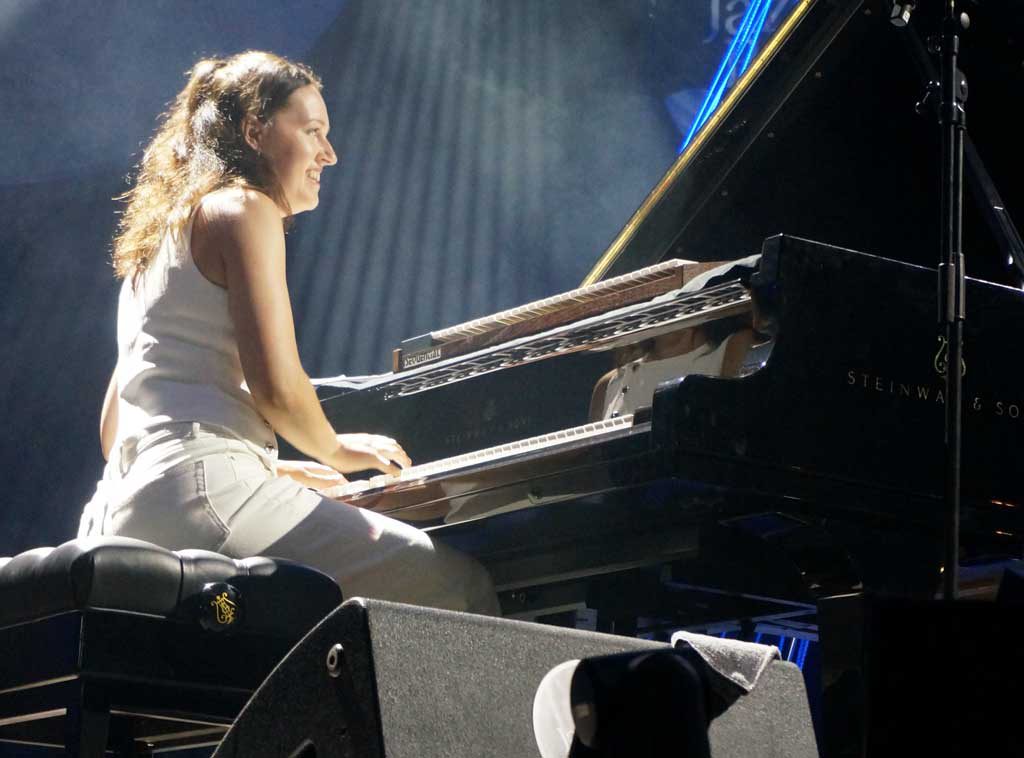
Pianist David Helbock and bassist/cellist Julia Hofer presented their new album, while drummer Peter Gall and his quintet rocked out to new compositions from his release *Love Avatar*. Estonian pianist Britta Virves, now based in Stockholm, was upgraded to the main stage after having previously performed in the festival’s hotel jazz club in an earlier year. Her compositions dedicated to family members—especially the piece for her mother, Lilly—were enchanting.
South African pianist Nduduzo Makhathini is currently making headlines in all jazz media. Even during the soundcheck, it was clear that everyone is equally important to this musician, whether fellow musicians or technicians. His first question was directed to the piano tuner: “Is she OK?” he wanted to know. The instrument was indeed OK and was grateful to the musician for the respect and care. The trio, with Dalisu Ndlazi on bass and Lukmil Perez on drums, blended African lyrics, healing messages, Cape Jazz vibes, and a touching tribute to the late Abdullah Ibrahim. The audience gratefully accepted the invitation to provide the backing vocals for his melodies.
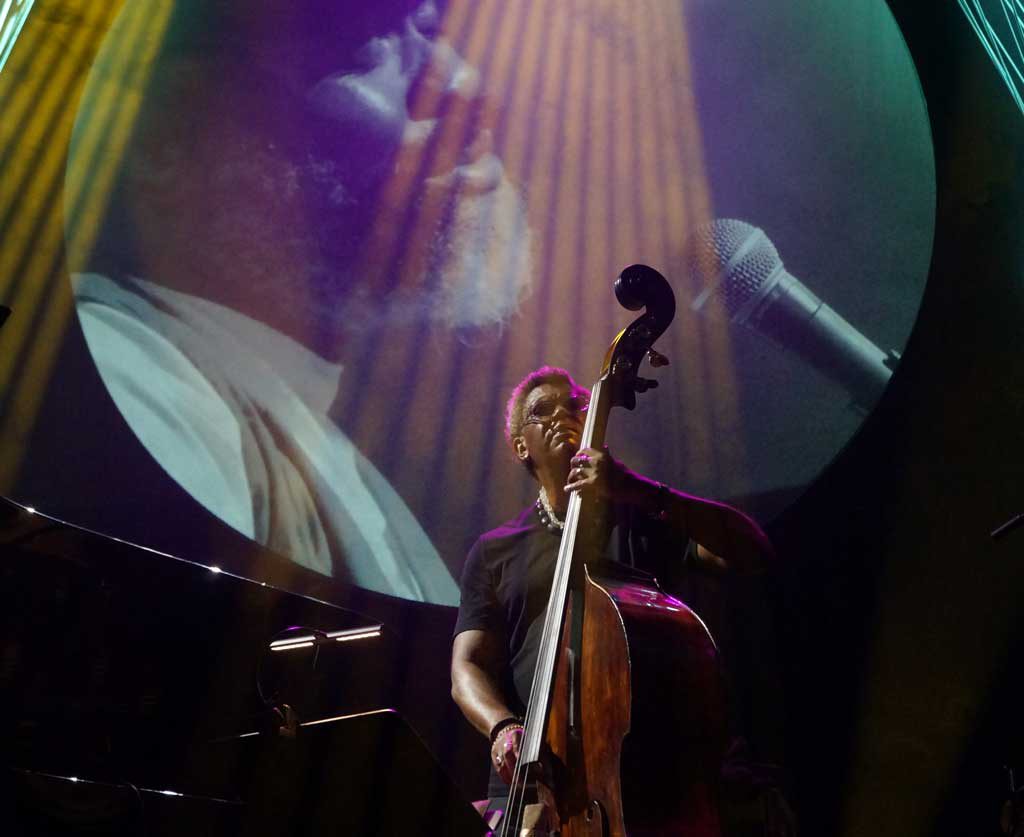
The youngest audience members weren’t left out either; as always, there was a children’s program—this time dedicated to *Emil of Lönneberga* (known in German as *Michel aus Lönneberga*). Actor Gustav Peter Wöhler recounted Emil’s mischievous pranks at the Katthult farm in Lönneberga to the children. Nils Landgren gathered three trombonists (Lisa Stick, Izumi Ster, Annette Saxe) and drummer Eva Klesse around him to perform arrangements of bassist and fellow musician to Swedish jazz legend Jan Johansson, Georg Riedel’s film scores and his own compositions.
The “Red Trombone” remained active right through the festival’s finale. However, the name “4 Wheel Drive”—with Nils Landgren at the wheel—was somewhat misleading in 2026, despite the lineup featuring Landgren, Wollny, Danielsson, and Haffner on stage. Because Magnus Lindgren and his Bielefeld brass ensemble, along with Ida Sand (who had stepped in for the double-booked China Moses), took center stage, Lars Danielsson and Wolfgang Haffner were relegated to the back seat. In a true four-wheel-drive system, engine power is distributed to all four wheels; here, however, the rear-wheel drive didn’t quite have equal standing.
The Joe Sample program served as the perfect closing concert to create a party atmosphere—even if the band missed an obvious pun (to circle back to the subject of that expensive shirt with the ever-changing patterns). With outdoor temperatures nearing 40 degrees Celsius, Joe Sample’s smash hit “Streetlife” really ought to have been renamed “Heat Life”:
“Heat life – But you better not get old“
„Heat life – Or you’re gonna feel the cold”
Last modified: July 21, 2026