
 Written by
 Vinyl Corner has always been about the records — the reissues, the rediscoveries, the pressing quality debates that keep our inbox busy. But readers keep asking the same question in different words: what should I actually play these records on? So this time we’re turning the column toward the deck itself, with three turntables landing across late 2025 and early 2026 that between them cover almost the entire budget-to-mid-price spectrum. It’s the first in what I hope becomes a regular strand for Vinyl Corner, and I’ve picked three machines that make an honest case study: the Sharp RP-TT100, the Technics SL-40CBT, and the Audio-Technica AT-LP7X.
I’ve spent the better part of four decades around turntables, from the SL-1200s that lived in every European club booth I ever worked near, to the belt-drive purist decks that certain mastering engineers I know still swear by. What strikes me about this particular trio is how clearly each one declares its intentions. None of them is trying to be all things to all listeners, and that, frankly, is refreshing in a market that often blurs those lines to chase every buyer at once.
Sharp RP-TT100 — the on-ramp
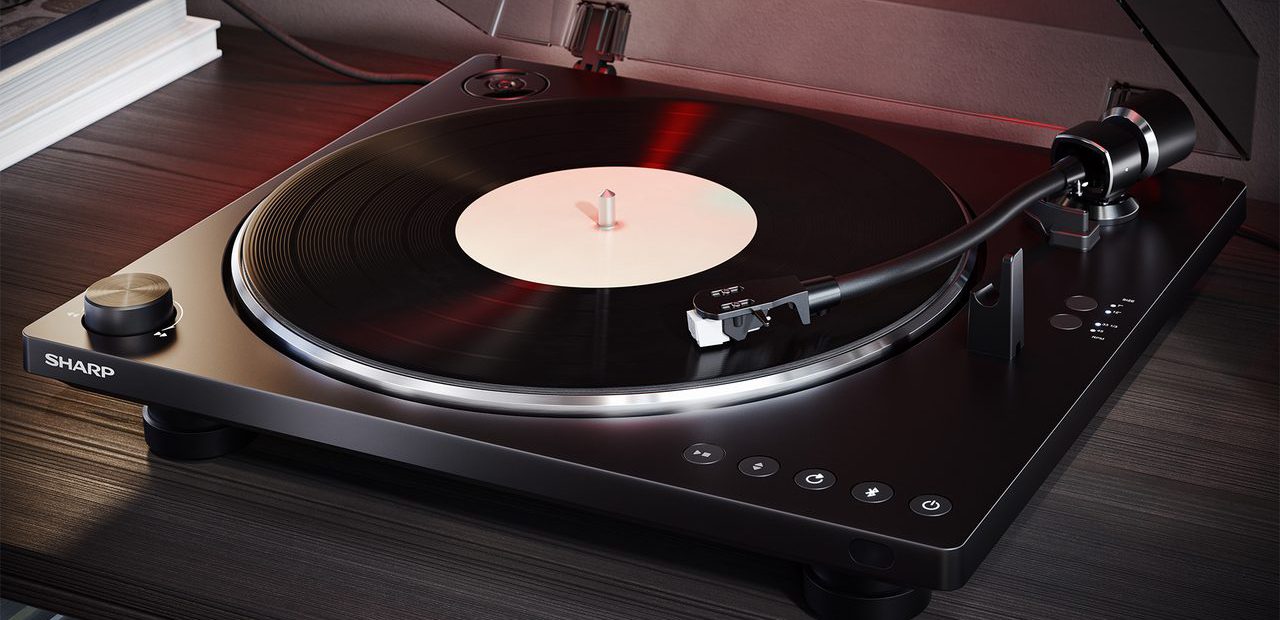
Sharp’s return to turntables after a long absence is not a subtle one. The RP-TT100 is fully automatic, Bluetooth-equipped, and priced to sit at the very entrance of the hobby — around €199. One-touch start and stop, remote control, USB-C output for digitising records, and a factory-fitted Audio-Technica AT-3600L cartridge that has quietly served as the industry’s go-to entry-level cart for years. None of this is designed to impress an audiophile, and it isn’t meant to. It’s designed to get a record onto a soundbar or a pair of Bluetooth speakers with zero friction.\
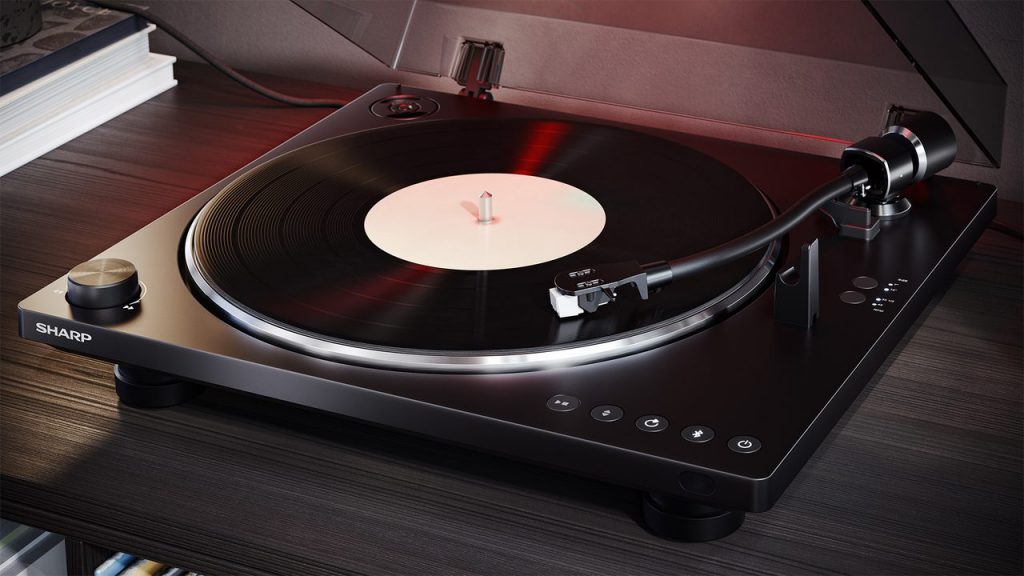
For our purposes, the interesting question isn’t whether the RP-TT100 is a serious hi-fi component — it plainly is not trying to be — but whether it’s a credible way for a new, often younger listener to first encounter jazz on vinyl. I’d argue it is. The forgiving AT-3600L tracks well enough that a well-mastered reissue of, say, a Blue Note session still communicates its dynamic range and rhythm section interplay convincingly over Bluetooth, even if the last word in tonal balance is left on the table. Sharp has clearly thought about where the real upgrade path lies for this buyer, and it isn’t the deck itself — it’s the speakers downstream of it.
Who is this for? First-time buyers, casual listeners with a soundbar or powered speakers already in the room, and anyone who wants vinyl in their life without building a system around it. Budget-conscious, convenience-first, and honestly a fair way in.
Technics SL-40CBT — heritage, reworked for the living room
Technics occupies a different register entirely, and the SL-40CBT — unveiled at IFA Berlin last year — is a deliberate attempt to bring the brand’s direct-drive credentials to buyers who have no interest in a DJ-style deck. The coreless direct-drive motor is descended from the same lineage that made the SL-1200 a fixture in booths across the continent, engineered here to minimise cogging and hold speed with the kind of stability that matters on sustained piano chords or a long cymbal decay. The S-shaped tonearm and detachable headshell nod to classic Technics geometry rather than reinventing it.
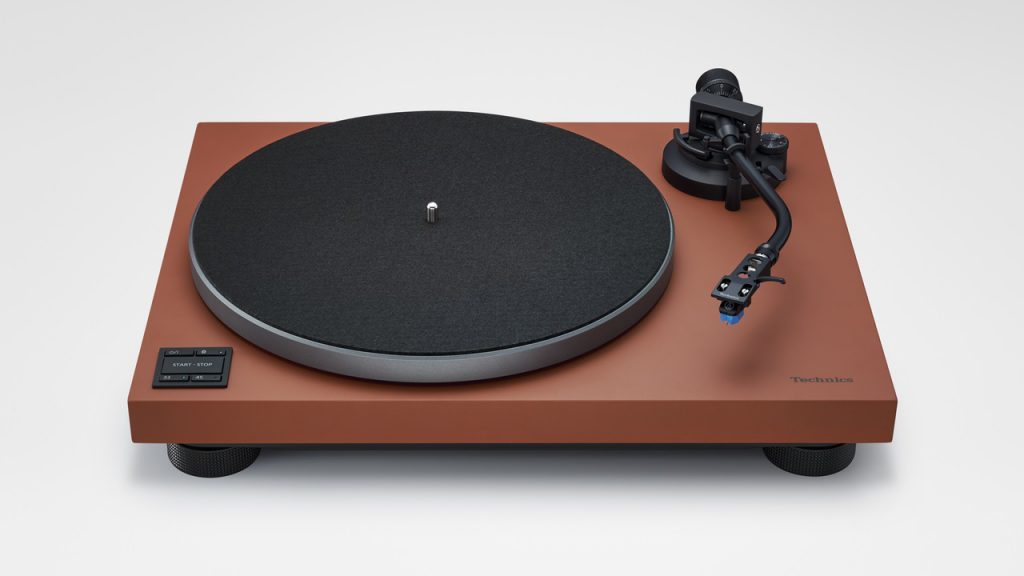
The Technics SL-40CBT in Terracotta
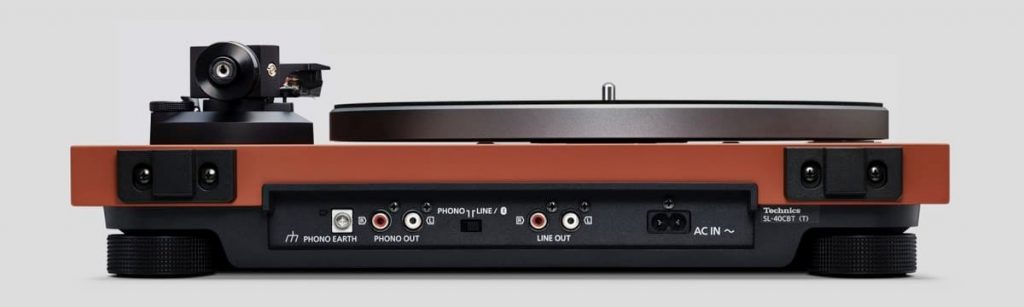
What makes the SL-40CBT a genuinely different proposition from the Sharp is the built-in MM phono stage combined with Bluetooth output, which effectively makes it a one-box hub — plug it into a passive amp via the phono stage, or send it wirelessly to a pair of active speakers, and either way you’re hearing a motor and tonearm combination with a real pedigree behind it. At somewhere around €800, it sits well above entry level, and the compact chassis and colourway choices (terracotta, light grey, charcoal) are clearly aimed at buyers who want the deck to look at home in a living room rather than a rack. The trade-off worth discussing honestly is whether the Bluetooth convenience undersells what the motor and arm are actually capable of once you run it through a proper phono input into a decent amplifier — my instinct, and something I’d like to test properly on a future visit to Vinyl Corner, is that it does.
Who is this for? Listeners who want genuine Technics engineering without the DJ associations, who are building — or already have — a living-room system, and who value design as much as spec sheet.
Audio-Technica AT-LP7X — the purist’s step up
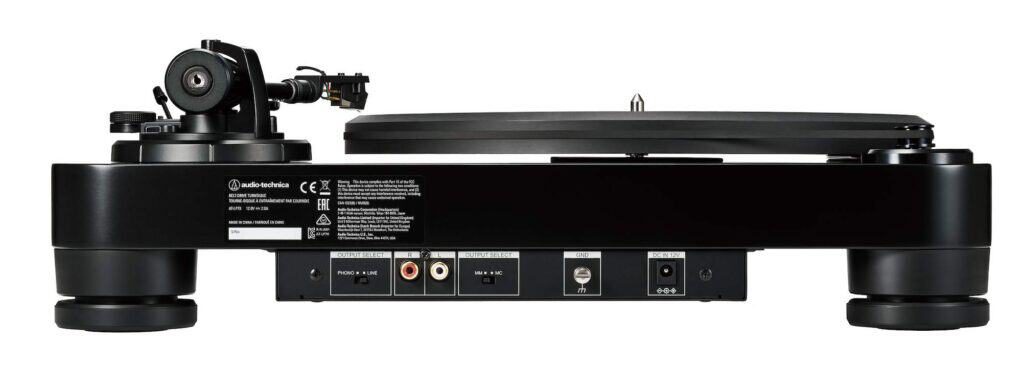
Of the three, the AT-LP7X is the one built for readers who already think of themselves as vinyl collectors rather than vinyl listeners. Announced at CES this January, it’s a fully manual belt-drive deck with a 40mm MDF plinth and a 20mm acrylic platter, both there to add mass and damp resonance rather than to look impressive on a spec sheet. The J-shaped tonearm uses dual-axis gimbal suspension with precision bearings, and — critically for anyone thinking long-term — offers adjustable VTA, anti-skate, and support for additional counterweights. It ships with a AT-VM95E moving-magnet cartridge on an AT-LT10 headshell, a cartridge with a well-established upgrade path through the rest of the VM95 range.
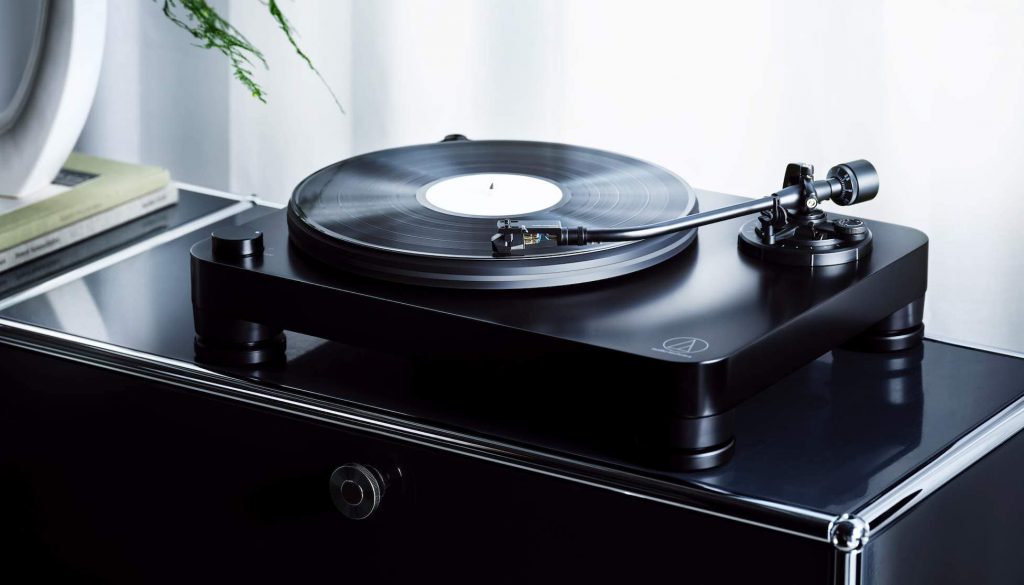
The Audio-Technica AT-LP7X
There’s no Bluetooth here, and no automation — you cue the record yourself, lift the arm yourself, and that’s precisely the point. This is a deck built to reward attention rather than remove the need for it. At around €799, it sits close to the Technics on price but occupies almost the opposite philosophical position: no wireless convenience, no lifestyle styling, just a heavier, quieter platform built to be upgraded piece by piece as a collector’s ambitions grow. For readers with a genuine hi-fi chain and an ear for tracking accuracy, channel separation, and noise floor on acoustic jazz recordings, this is the deck in the group that will keep giving back as the rest of the system improves.
Who is this for? Committed collectors ready to move past their first or second turntable, readers who want a platform they can grow into rather than replace, and anyone for whom the ritual of manual operation is part of the appeal rather than an inconvenience.
The bigger picture
Lined up together, these three decks read almost like a deliberate ladder. The Sharp trades every ounce of tweakability for convenience and a €199 price tag. The Technics splits the difference — real direct-drive engineering wrapped in a Bluetooth-equipped, living-room-friendly shell for around €800. The AT-LP7X asks you to give up automation and wireless streaming entirely in exchange for a manual belt-drive platform built for cartridge upgrades and long-term system building, at a broadly similar €799.
None of them is the wrong choice — they’re simply aimed at different points in a listener’s relationship with the format. What I’d like to do next in this column is get all three on the same turntable mat, so to speak, and actually run a side-by-side listening session on some of my original pressings — piano trios, a big band or two, something with real dynamic range to expose the differences in tracking and tonal balance. If any of our readers have strong views on which deck they’d like to see put through its paces first, I’m listening.
Last modified: July 20, 2026