 Written by
 Nine cities, nine collaborators, one trumpet threading through all of it — Nils Petter Molvær’s “Be Quiet” is less a conventional album than a travelogue in sound, and it arrives at a point in his career where every new release seems to be quietly restating the terms of his language rather than searching for a new one. Scheduled for release on Edition Records on 10 July 2026, it is a record I’ve spent a good deal of time with over the past week, and one that rewards patience and behaviour its title seems to be asking for.
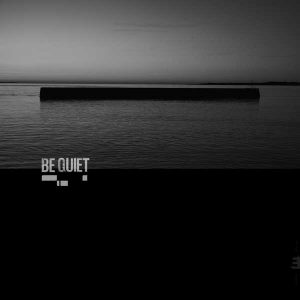 I’ve followed Molvær’s work since the “Khmer” days, and there is a particular pleasure in hearing an artist this far into a career still choosing to complicate his own formula rather than repeat it. “Be Quiet” is built from nine duo encounters, each recorded in the home city of the guest musician rather than in Molvær’s own studio — Chang Jing in Bangkok, Martux_m in Rome, Miki Yui in Düsseldorf, John Paul Jones in London’s Finsbury Park, Marilyn Mazur in Copenhagen, Imogen Heap in London’s Hackney, Soheil Shayesteh in Amsterdam, Alva Noto in Berlin, Anja Lechner in Munich. Molvær travelled to each of them, worked in close proximity to their equipment and their instincts, and let the resulting music take its shape from that encounter rather than from a score written in advance. It’s a simple conceit, but a disciplined one, and it gives the record a coherence that a more scattershot set of guest pairings often lacks.
The album carries a dedication in memory of Marilyn Mazur, who died before its release, and that fact sits over the Copenhagen track in particular with a weight the music doesn’t need to underline — it does so anyway, and rightly.
What struck me most on repeated listens is how little this record behaves like a set of songs. There’s no obvious verse-chorus logic anywhere on it, no moment that reaches for a hook. It behaves instead like sound design — which, given how closely the project is tied to Per Maning’s accompanying documentary film, makes complete sense. I’d go so far as to say “Be Quiet” is best understood as a soundtrack that happens to exist without its picture yet fully attached, and listeners expecting nine self-contained jazz performances may need to recalibrate before the record opens up for them. Once you stop listening for tracks and start listening for atmospheres, it becomes considerably easier to love.

Molvær’s trumpet is the constant. Whatever language each guest brings — John Paul Jones’s piano, Imogen Heap’s voice and electronics, Chang Jing’s guzheng, Soheil Shayesteh’s kamancheh — it’s his tone, breathy, processed, often barely there, that holds the record’s centre. This is the same hushed, electronically shadowed trumpet sound that’s followed him since the Jon Hassell– and electric Miles Davis–indebted textures of “Khmer,” and it remains as recognisable here as a signature can be without ever repeating itself literally. The production, credited to Jan Bang on the mix and Helge Sten (Deathprod) on mastering, is genuinely first-rate — spacious, detailed, unhurried, exactly the kind of sonic care this material needs to avoid collapsing into mush.
 Picking favourites across nine pieces built on such different logics feels almost against the spirit of the record, but three tracks pulled me back more than the rest. “London–Finsbury Park,” the duo with John Paul Jones, is the one where the piano actually seems to lead Molvær rather than simply colouring around him — there’s a genuine conversation happening, and it’s the most harmonically grounded moment on the album. “Rome,” with Martux_m’s electronics and synthesizers, is where the record leans hardest into pure texture, and it’s also where the soundtrack quality I mentioned earlier is most explicit — close your eyes and you can practically see the film that isn’t in front of you. And “London–Hackney” with Imogen Heap does something none of the other tracks attempt: her voice, treated and layered, becomes another horn in the arrangement rather than a vocal in any conventional sense, and the interplay between that processed voice and Molvær’s trumpet is genuinely absorbing. None of this is to undersell the rest of the record — Anja Lechner’s cello on the closing “München,” Alva Noto’s austere electronics on “Berlin–orbit 4,” Marilyn Mazur’s percussion on “Copenhagen” — it’s a consistently strong set from top to bottom, and there isn’t a weak pairing anywhere on it.
Placed against Molvær’s recent catalogue, “Be Quiet” reads as the third piece of a loose triptych he’s built for Edition Records. “Khmer Live in Bergen” revisited the beat-driven electric energy of the original 1997 ECM record in a concert setting, and the “Charlotte” soundtrack channelled his cinematic instincts into a continuous, single-narrative score. “Be Quiet” takes that same trumpet-and-electronics vocabulary and scatters it across nine intimate, small-scale encounters instead, and of the three it’s the one that feels most like a portrait of Molvær as a collaborator rather than an auteur — less about imposing a vision, more about seeing what his sound becomes when it’s placed in someone else’s hands for forty minutes at a time.
The documentary strand, directed by Per Maning, is worth flagging for anyone reviewing or programming this record, because it isn’t a promotional afterthought — it’s presented by the label as integral to the project, following Molvær into each city and each session and capturing the relationships as much as the recording process itself. Material from the film has already been previewed at Kongsberg Jazz Festival under the working title “Sound of Air,” paired with a live performance built from “Be Quiet” material. Anyone programming Molvær for a festival slot this year would do well to ask whether that film material is available to accompany the set — it changes the experience considerably.
Three decades on from “Khmer,” Molvær doesn’t need this record to prove anything and it doesn’t try to. What “Be Quiet” delivers instead is a mature, generous piece of work. It’s not background listening, although many will see it as such, This is a highly complex set that fully deserves the attention its title asks for.
Track Listing:
Bangkok | 2. Rome | 3. Düsseldorf | 4. London?Finsbury Park | 5. Copenhagen | 6. London?Hackney | 7. Amsterdam | 8. Berlin?orbit 4 | 9. München
Personnel:
Nils Petter Molvær, trumpet, electronics | Chang Jing, guzheng | Martux_m, electronics | Miki Yui, electronics | John Paul Jones, piano | Marilyn Mazur, percussion | Imogen Heap, voice, electronics | Soheil Shayesteh, kamancheh | Alva Noto (Carsten Nicolai), electronics | Anja Lechner, cello
Release Date: 10 July 2026
Format: CD | 2xLP Vinyl | Hi?Res / Digital Streaming & Download
Label: Edition Records

New Release Spotify Playlist
The Jazz In Europe New Release playlist features tracks from the new releases reviewed on Jazz In Europe. Updated weekly, it is the best place to discover music selected by our editors — not algorithms. Follow the playlist to keep up with the kind of records we believe deserve attention and to stay ahead of the curve.
The best way to keep up to date with all the latest releases is to follow the playlist on Spotify.
Just click the button below.

Last modified: July 19, 2026