 Written by
 The music industry – and in particular the jazz industry – is in constant change and evolution, and this has been clear for some time now. In this era of AI and algorithms, the general concern of music lovers (and beyond) is about the authenticity and the honesty of what seem to be more and more merely products of a market, that have to fit a certain strategies, in a certain amount of time. Quickly, rapidly, heartlessly. And the attention falls progressively on details that are further and further from the music itself: the hottest collaborations, the brands, the hooks, the number of streams. All details that often distract the listeners and drag them away from those special minutiae: a moving melody, the story behind a composition, the relationship behind a partnership, the hearts that beat behind a production. All the human features that make music not just a product but an act of artistic creation.
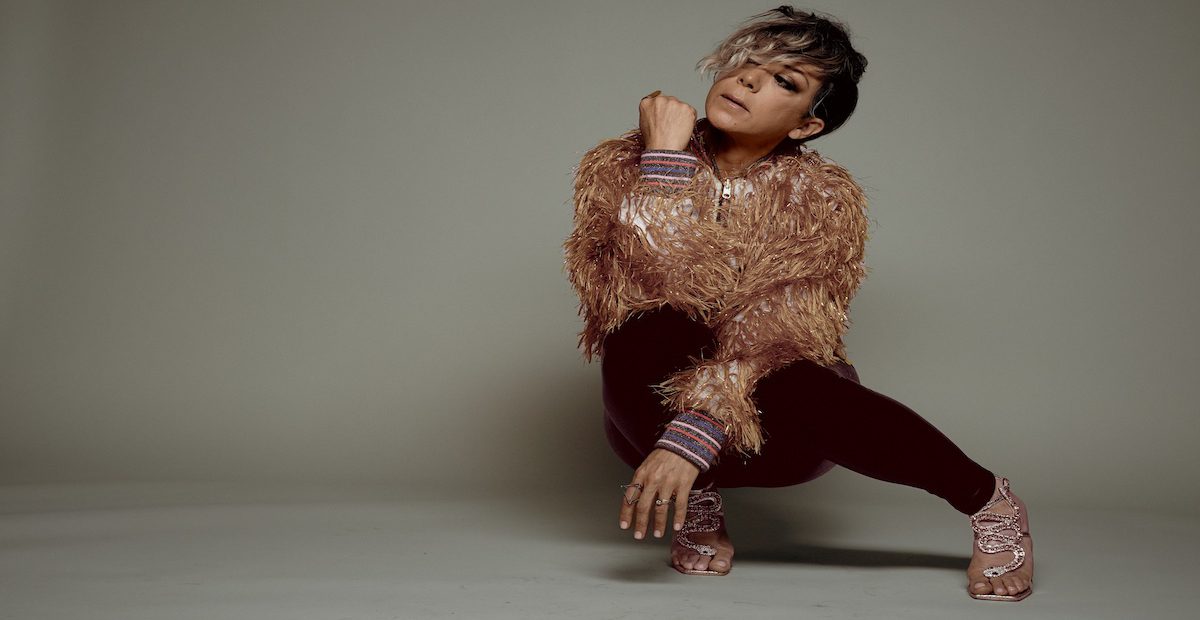
This might sound dark to write – and for you to read – but my bleak preamble has a silver lining for you: for those who still want to cry and laugh over a composition, have goosebumps and feel the shivers down their spines listening to music, there’s hope. From an artist that in her twenty-year career has preserved, with each of her works, her authenticity and honesty, comes a new release that does just that. The artist in question is Gretchen Parlato and her new album, The Wise Ones, will be out in September. And it’s going to be a real musical breath of fresh air.
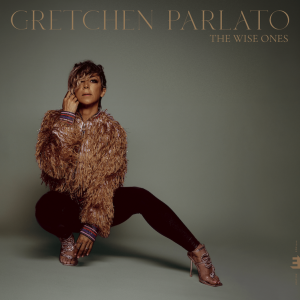 With a singular voice and a magnificent, distinctive rhythmic vocal approach, Parlato has redefined the direction of vocal jazz – and beyond – since the beginning of her career, with works that have become landmarks of contemporary jazz (and, in particular, turning points for singers) embracing and encompassing a multitude of genres.
Her music is – and has always been – honest, real and transparent. As are the relationships that bind her to her many collaborators – from the long term one with Lionel Loueke to the more recent with Alan Hampton, co-producer of her new release. And I think this is the magic that happens in The Wise Ones. The album is a perfect celebration of all Parlato’s artistic strengths: a dream team (featuring Robert Glasper, Gerald Clayton, Mark Guiliana, as well as vocalists Becca Stevens and Moonchild’s Amber Navran, Meshell Ndegeocello and Josh Mease), united to celebrate what is mean to be her statement about time, evolution and transformation but also gratitude and appreciation for everything that comes with existence itself.
In the The Wise Ones there are all the musical influences and melting pot of sounds that have differentiated Parlato’s music from everyone else’s, merged together – with a new awareness – in compositions destined to be remembered. But it’s even more than this: you can hear the hearts, the closeness and the harmony between the musicians that have beautifully entangled their minds and souls to create something that goes beyond the numbers and the algorithms. And it feels good.
GSLS: Your new album The Wise Ones reflects both continuity and change and is the perfect statement of your evolution from the distinctive roots of your early works (“In a Dream” released in 2009 and “The Lost and Found”, out in 2011) to more daring and intrepid music. Can you tell us how you have evolved and how that has shaped your artistic ideas over the last 20 years?
GP: I can’t believe it’s been 20 years! I feel like the first thought, to me, is that the evolution of the art and the music has just gone in alignment with my evolution as a person, in life, so I think the key for me was always not trying too hard to create something or find some statement. It was more that inner realisation of just writing music about who I am, what’s happening in life, my experience and something very honest and very personal and just having the art reflect who I am in life.
When you mention these past albums, it’s like a portrait of a certain time in my life and things that were happening. So, with The Wise Ones it’s the same thing now – I’m a different person than who I was back then so the art will reflect that. And what’s interesting is when I listen back, even though the art reflects a specific time, the songs hopefully to me are universal, where I can sing them from this perspective where I am now, written decades ago and have a new version, a new definition of it, a new realisation within the piece; so that’s cool. I think that’s cool for art to sit that way, where everyone can have their own experience with every time they hear it.
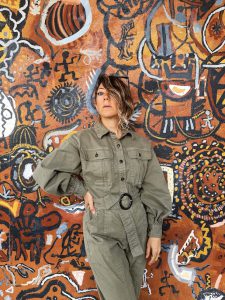
Photo by Lauren Desberg
GSLS: So, when you sing songs that you composed in the past, do you sing them like “Gretchen now”, do you still recall those roots or it’s more a mix of feelings, from both the past and the present?
GP: I think it’s a little bit of a mix, but it’s ultimately me singing as who I am now. I think the goal would be for me to try to take that song that I wrote, acknowledge who I was then, realise who I am now and sing it from this place. A perfect example is a song I wrote called “Better than”. I still sing that in sets – I just sang it a week ago with Taylor Eigsti in Tokyo and I went through this process in my head: hearing it and feeling it in the moment and thinking that I remember who I was when I wrote the song and what I was thinking about when I wrote it. And now I’m singing it the same lyric, but I’m seeing it from the other side. Without realising when I wrote it, the first part of this song is about “there’s nothing better than this person”, and maybe someday there will be something better. And now I’m at this “something better than” part, thinking back when I wasn’t sure if there was anything better than what I had and now I’m on the other side. To me, the ultimate reward as an artist is that you can create and have things evolve with you universally, without having to really change the song. It’s just changing the perspective of who you are when you sing it. It’s still like it’s documented as who you are then – which is very charming but you can still sing it later, like when Joni Mitchell sings “Both Sides now”: each one has this amazing, special, unique quality to it and one’s not better than the other; it’s just like “Wow! That’s her then, this is her now and I love them both, for these different reasons.”
GSLS: In the title-track “The Wise Ones” you start singing: “Someday this will be long ago”. You said that this phrase opens your heart, filling you with gratitude and anchoring you in the present. What are the achievements that you’re most grateful for and how have they made you into the artist that you are today?
GP: When someone asks about achievements, you think there’s something like an award, a great gig or something, which is part of an answer. You know, I could be grateful for the actual achievements of being the first singer in the Thelonious Monk Institute, winning the competition or singing at the Hollywood Bowl on the same night as Billie Eilish, something like this. But also, achievements to me could be becoming a mother, creating a family, marrying someone I adore and having this unit, being grateful that, in this moment, everyone in the family is happy, healthy and connected. So being grateful for the people in my life and what I’ve helped create and cultivate. Also an achievement is, as an artist, just being able to continue to create music that’s honest to me and that means something to people. There was a time some years ago where I didn’t know what my next project was gonna be. You know, you have a lull in your creative process so the achievement could just be to create an album and a repertoire. I went from being totally unsure what I wanted to do next to having a new album and being happy with it, so those are some some thoughts I have on achievements.
Thinking about this question in connection with the “The Wise Ones” lyric – “Someday this will be long ago” – I think the whole point is to acknowledge these wins in life, these achievements, these good feelings and know that they are these stepping stone moments that you’ll look back on someday and see the path that you’ve taken: it will be these marking points and that everything is in the moment, is fleeting, it will soon become just a memory but it will have a significance.
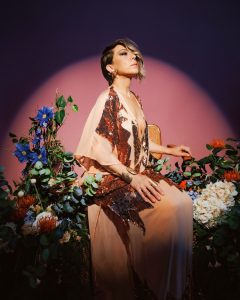
Photo by Lauren Desberg
GSLS: You’ve said that you have always been patient with your creativity, “allowing the wave to come in due time”. Talking about the making of this new release, “The Wise Ones” is co-produced by Alan Hampton and features many innovative musicians who helped bring your vision for the album to life, including Robert Glasper, Becca Stevens and Amber Navran as well as Gerald Clayton, Mark Guiliana, and Josh Mease. In general, we’ve seen many amazing collaborations in your work – such as your long-term partnership with Lionel Loueke. Can you talk us through the process of collaborating and following the same (…or different) creative waves with other people?
GP: When you name the names, I’ve been very lucky to have these collaborators and friendships and part of the answer starts with having a personal relationship with somebody that is genuine, that is a musical one, that’s just connecting as friends and people and you realise you have a like mindedness of how you approach music and care about music and interact. You can play with people where it’s great music but it might not always be this buzzing spark. So the people you listed on this project are people who I love musically and just love as people to hang out with and be with anyway. I think the approach is the same to just know that there’s a really strong connection, something unique for both people to be open to. You wanna be very open with your ideas and what you offer and then also open to know that there could be shifting and movement and different opinions about what’s the best thing for the music. I think the similarity with all those people is that they care so much about the music but there no one’s holding on too tightly where they don’t let other people in, so we have to really a really nice flow: sometimes there are great ideas but if two people are really stuck in their ways and don’t completely agree, it doesn’t flow. I think no matter who it is in all those people listed, it’s the same kind of openness and it’s also just trusting the other person and trusting that everyone’s on the same page and that everyone’s capable of making this elevated experience.
GSLS: The first single that was released was “Capricorn”, a composition by Alan Hampton with lyrics co-written by saxophonist Matt Parker. This is also the tune that opens the album, setting the mood for a resurging atmosphere. Can you tell us more about the tune and how it came to life?
GP: I love this song so much! I wanted Alan to be a part of this project, to be on the album as a musician and also as co-producer as well and this was one of the first songs he brought to me and that he wrote for me for this album. So he wrote the music and the melodies, the harmony, the structure of the song, which is just brilliant to me. Our mutual friend, Matt Parker, helped with the lyrics. To me, I heard it and harmonically and musically, I thought this should be the opening track. It was just very clear. It had this immediate pull. I told him that day hearing that it feels like a Stevie Wonder song, like a new classic. And that just shows the the brilliance and the genius of Alan and that’s really so much of what I wanted for this project too: for people to hear how brilliant he is. He has everything to do with the flow of this album and literally the bass – the bottom end of keeping this together. He’s so talented with his songwriting and with his singing and we have such a great connection that I knew that he needed a shine and a spotlight. It’s great because he’s also a part of every every tour and every show because maybe, someday, he’ll be busy and I can’t have him but I need Alan to execute this music live, it’s gotta be him so we were able to do that and share the music together too.
GSLS: You’ve always been a bold musician, continuously exploring your vocal language and fearlessly navigating through genres – from jazz to R&B, soul, pop and African and Brazilian music – creating a very distinctive and unique sound. In a music scene that often feels the need to label artists (and in particular female singers) and wants to confine them to one specific genre, what advice would you give to the new generation of young artists that can’t fit just one box?
GP: I think just I’d say “join the club”! I just turned 50 of some months ago and my friends who are 50, they’re like: “come on in, the water’s fine!” I think it’s that similar mentality though: I’m not the only one as someone who came up wanting to incorporate and loving all kinds of music. When I came up and I asked myself “what’s my first album gonna be? What’s the statement? What’s the sound they have?”, it wasn’t just one style. And even in jazz…I guess I’m considered a jazz singer but I still have yet to do a standards album in swing feel – which I can, I would like to and it will be great when that happens – but, to me, it was more about a genuine statement and just gathering repertoire that is meaningful music, no matter what the style. What unites it is just our approach, the sound of the musicians and our take on it.
There’s so many other people that have done that before me and alongside me and continue so the advice for people doing it now is to like just follow your heart and your own instinct, but also see the path ahead of you of people that have done it and come and join us, there’s room for everyone: for something to be very traditional in a certain genre of music and I think there’s room for some bending and some shape shifting. Maybe the theme of our interview today is to be honest and genuine and I think, from that place, the motives behind it are not anything else but just making great art and connecting with people. You just do what what feels right and just be honest with who you are and what the context of the music is. The pure jazz genre is something to be appreciated and acknowledged in history, its context and its relevance so you can’t be a jazz musician and not study jazz, you can’t just kind of fall into that by ear. There’s a lot to to know and to be a part of but, once you do that, I think it’s ok to explore and be different. So that would go with any genre. Whatever you’re incorporating, just know the context and the history and the relevance of that music and then create the art that feels right to you.
GSLS: You’ll be performing in London on July the 11th, at Ronnie Scott’s Jazz Club. What should the audience expect from this performance?
GP: That’s our first show of our tour so the first thing to expect is that we will be so excited, so thrilled and always remember that is the first time that we are performing the music from the new album. I always love that and I always like to share that when it happens: there’s something really special about the first time that the music is played. It’s Alan Hampton who will be there playing bass, guitar and singing; Jacob Man who’ll be playing piano and keyboards – he’s just masterful! Mark Guiliana will be on drums so the band is incredible. We will be just really buzzed and excited: we love London, we love Ronnie’s and it’s an exciting place to start a tour so you will expect us to feel thrilled and excited and eager to share the music and, hopefully, the room is just filled with people that to want to hear it too.
Gretchen Parlato is playing at Ronnie Scott’s Jazz Club on 11th July 2026.
Tickets available here: https://www.ronniescotts.co.uk/find-a-show/gretchen-parlato
Last modified: July 7, 2026