 Written by
 Let’s deal with the obvious question first. At around €6,500, the Nu-Vista Vinyl S is not a phono stage most readers of this column will buy on a whim, and Musical Fidelity knows it. This is a reference-grade box aimed squarely at listeners who already have a system worth feeding it into. But having spent time with what it’s actually doing under the hood, I can say plainly: if your budget stretches this far, it’s a genuine contender, and one I’d recommend without much hesitation.
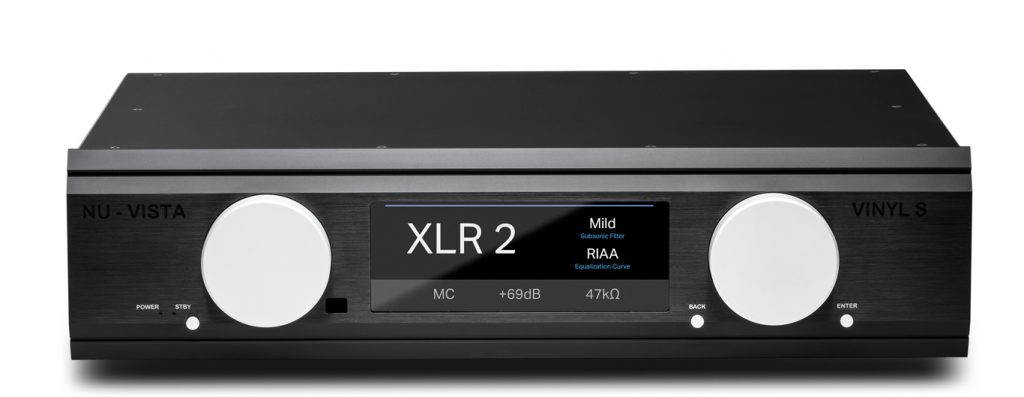
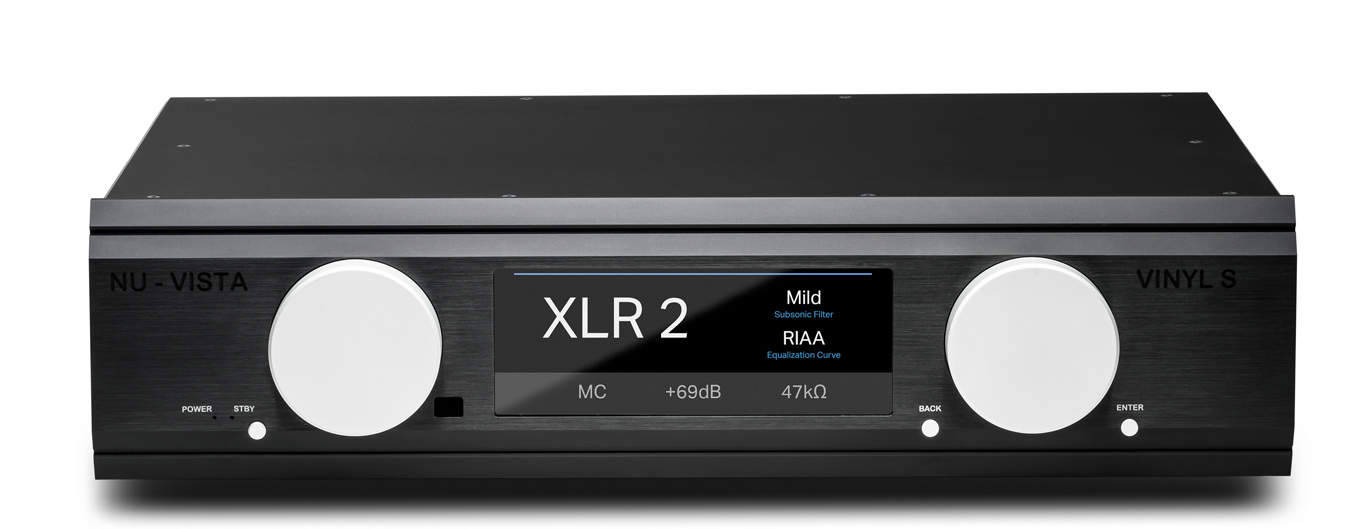
The Vinyl S is the more compact sibling of Musical Fidelity’s larger Nu-Vista Vinyl 2, trickled down into a chassis around 45 percent smaller but built on the same fully balanced, fully discrete Class A architecture. At its heart are eight 7586 nuvistor tubes running as a balanced buffer stage — the same “house sound” the larger Nu-Vista components are known for, housed here in a milled aluminium enclosure that doubles as a Faraday cage against interference. It’s a serious piece of engineering dressed in a slimmer box, not a scaled-back one.
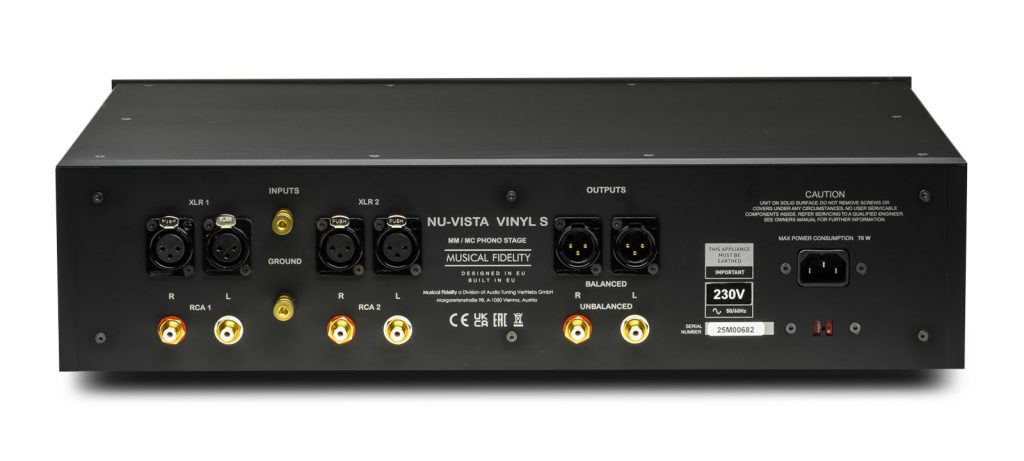
What struck me most on the spec sheet, and later in listening, is how far Musical Fidelity has pushed flexibility without compromising the noise floor. Four inputs — two balanced XLR, two unbalanced RCA — can each be independently configured for MM or MC operation, with settings stored per input. For anyone running more than one tonearm, which is not unusual among the collectors this column speaks to, that means a mono cartridge for older jazz pressings and a modern MC for contemporary ones can live on the same unit without re-dialling anything each time you switch. Gain runs from 40 dB up to a generous 69 dB on the balanced output, comfortably covering everything from a high-output moving magnet to the quietest moving coil.
The detail that will interest serious jazz collectors specifically is the EQ selection. Alongside standard RIAA, the Vinyl S offers DECCA and COLUMBIA curves from the front panel — a genuinely useful feature for anyone working through original European or American pressings from the fifties and sixties, where the correct historic curve rather than a forced RIAA compromise makes a real difference to midrange presence and top-end energy. It’s the kind of feature that separates equipment built by people who actually collect records from equipment built purely to a spec sheet.
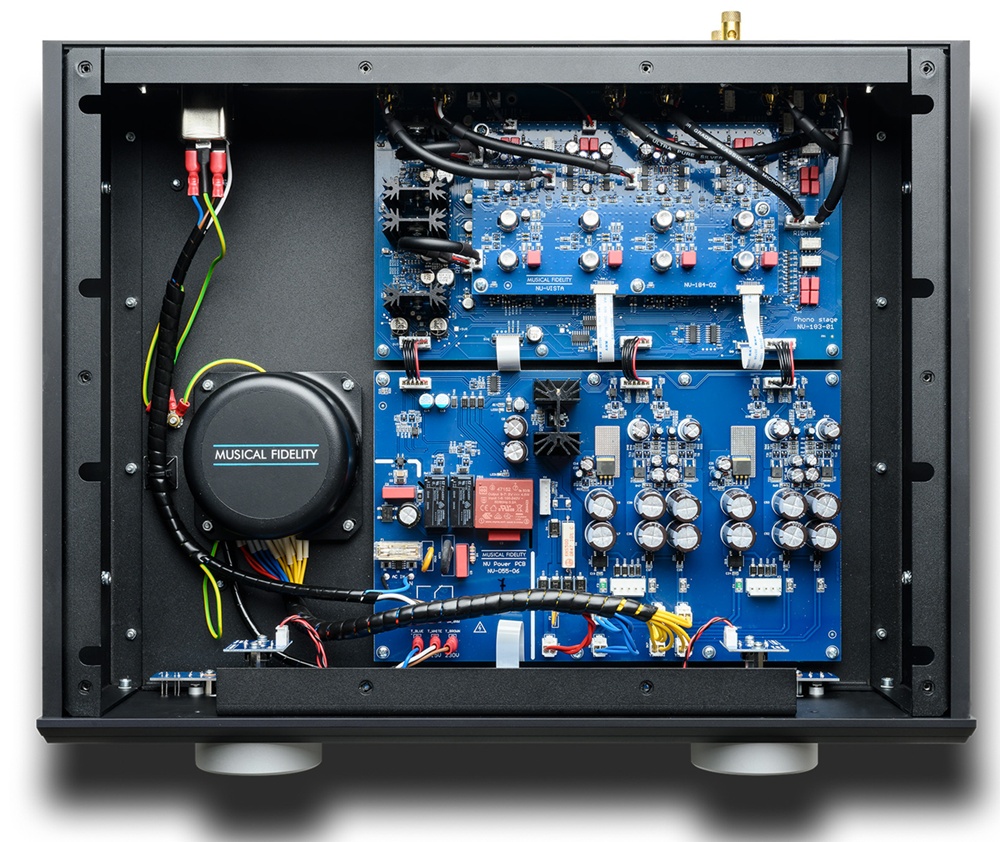
Sonically, the nuvistor buffer delivers exactly what that lineage promises: warmth and dimensionality without the softened top end that cheaper tube-flavoured stages sometimes trade in. On a well-recorded piano trio, the tonal balance leans rich rather than clinical, but the measured signal-to-noise figures — north of 101 dB on MM, above 82 dB on MC — are backed up in practice by genuinely black backgrounds between notes. Cymbal decay and ride bell definition come through with a touch of softening that I found more pleasurable than diminishing, bass carries real weight and articulation, and brass on horn-led sessions takes on a warmth that flatters without blurring detail. Distortion measures below 0.005 percent at 1kHz, and with an overload margin around 32 dB, there’s essentially no cartridge on the market that will trouble it.
None of this comes cheap, and none of it will matter if the rest of your chain isn’t already resolving enough to show it off. This is not a phono stage for a system still finding its feet, and I wouldn’t recommend it to anyone who hasn’t already sorted their turntable, arm, cartridge, amplification and speakers to a standard where a component like this can actually earn its keep. But for the collector with multiple arms, a shelf of older pressings crying out for proper EQ treatment, and a system ready to reveal what a nuvistor buffer stage can do — this is not for everyone, but if the budget stretches, it comes highly recommended.
Last modified: July 29, 2026