 Written by
 “Where are you going? Where exactly are those islands again? Is there really a festival there that also features jazz?” Those were the questions I was asked before my trip to the Faroe Islands. The Sheep Islands, as the name translates, lie far out in the North Atlantic, between Denmark, the Shetland Islands and Iceland. The 18 islands look adventurous, like huge boulders thrown into the sea as an experiment to see what wind, weather and tides would do to them.
Normally, people visit the islands for their breathtaking landscape: rocks, lots of water and fifty shades of green, from discreet pale green to vivid, almost poisonous green, attract lovers of landscape in functional outdoor clothing and hiking boots.
The islands are famous for their steep cliffs, waterfalls and seabirds such as puffins. The sheep on the islands greatly outnumber the 55,000 inhabitants. They can be found everywhere, including on the roads, and have to be urged rather firmly to make way.
The islands are less often visited for culture. Yet the Nordic House in the capital, Tórshavn, has a concert hall for philharmonic concerts, while the Finsen Aula has a hall with a fine grand piano. Blábar in the city centre hosts singer-songwriters and jazz sessions, while the OY Brewery is more suited to rock-oriented programming.
As small as this autonomous island group belonging to the Danish Crown may seem, its musical diversity is considerable. The summer music festival Summartónar offers an impression of this diversity and sets no musical boundaries. Here, jazz stands alongside rock, pop, singer-songwriters and contemporary classical music on equal terms. This unusual and interesting concept was launched in 1984 by the Association of Faroese Composers.
Summartónar brings music to the people. Over a period of four months, local musicians and international guests travel across the islands, turning churches, museums and cultural centres, including those in remote villages, into concert stages. Well over 100 concerts take place at 33 venues. Summartónar offers its own particular way of discovering the islands’ living environment through culture.
The Swedish bassist Anders Jormin, for example, is a regular visitor:
“This is my sixteenth time here. I first played with Kristian in 1979, when I was still a student. Kristian should receive a gold medal for everything he has set in motion musically in the Faroe Islands. And the concerts we were able to give in the sea cave with John Tchicai, for example! It was an adventure getting ourselves set up there and bringing the instruments and the recording equipment to the site. But they were very special concerts.”
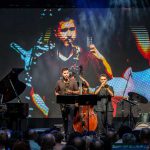
In mid-August, the bassist appeared with pianist Kristian Blak at the Nordic House, playing interpretations of compositions about monsters and legendary figures. Born in 1947, Blak is a pianist, composer, artistic director of the Summartónar Festival, and much more besides.
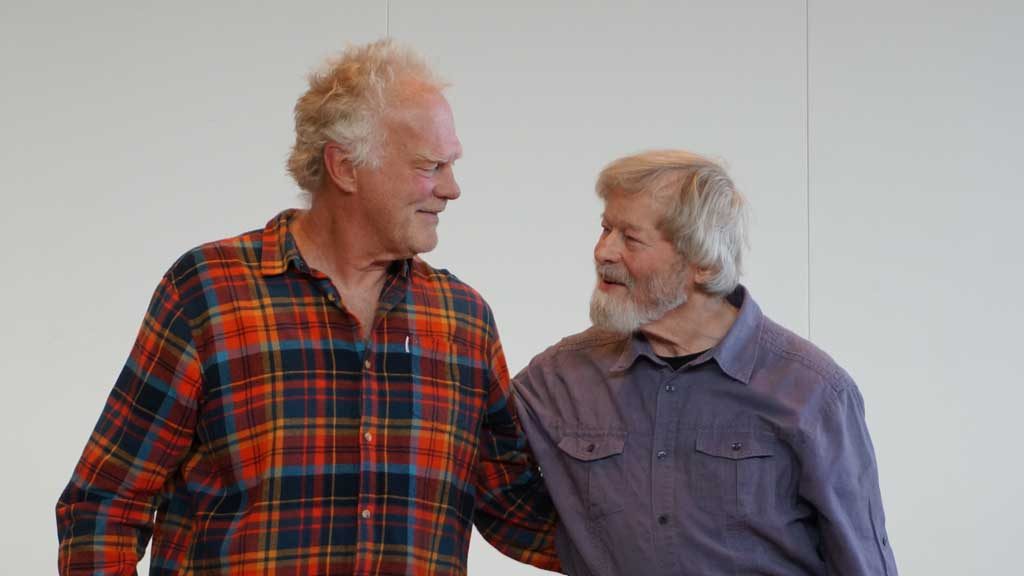
Anders Jormin and Kristian Blak
At evenings of Faroese food—roast lamb with potatoes and parsnips—he and his ensemble introduce audiences to traditional music. It is a musical tradition that for centuries was performed only by a lead singer and a chorus joining in on the refrains. Long forms with more than 250 verses are not unusual. The traditional chain dance is well suited to maintaining rhythm and tempo, and is danced by people of all ages.
The instrumental versions, with piano, flute, fiddle and guitar or mandolin, showed the similarities between the traditional music of the Faroe Islands and that of the Shetland Islands. Fiddle player Barry Nisbet was able to bring out these connections. This traditional evening took place on Eysturoy, in the north-east of the archipelago. In the small village of Gjógv, only 12 people live there—apart from the summer months, when tourists stay at the guesthouse—but there are many more puffins, nesting in the rocks.
The journey from the capital, Tórshavn, takes an hour and offers spectacular new views at every bend and hairpin turn. Added in 2020 was the world’s only and unique roundabout 72 metres below sea level. Lit like a jellyfish and decorated with silhouettes of the chain dance, designed by the artist Tróndur Patursson, the tunnel connects the islands of Streymoy and Eysturoy.
The Nordic House, where Kristian Blak and bassist Anders Jormin played their communicative duo concert, was equally inspiring. During the interactive free passages and the tight, daring unison passages, one could let one’s thoughts wander through the various stories of monsters, or simply enjoy the view over Tórshavn and the harbour through the large windows.
The wind quintet Carion brought contemporary classical music to the islands. Local musicians and visiting guests, such as this Danish-Latvian ensemble, travel across the islands and give several concerts in order to make culture accessible beyond the capital and to make their engagements more sustainable.
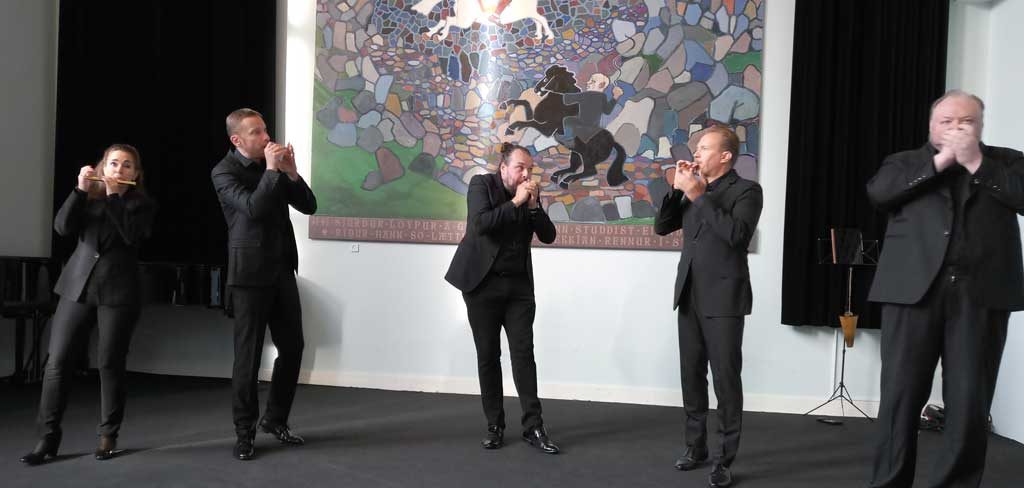
Carion Woodwind Quintet
One of the conditions attached to an engagement is that music by Faroese composers must also be performed. Carion chose a work by Eli Tausen á Lava, a composer born in 1997. Mystery of the Cathedrals was composed in 2026. The opening of the concert was particularly impressive: using only the mouthpieces of their instruments, the five musicians began Stephen Montague’s Thule Ultima and streamed onto the stage from all corners of the hall. The piece sounded like a beautiful concert of birdsong.
For me, the highlight of the concert was horn player David M.A.P. Palmquist’s arrangement of the Danish folk song Drømte mig en Drøm i Nat.
The young soprano Hanne Marit Mordal Iversen performed the second part of the concert, with works by Maurice Ravel and Ragnar Söderlind. One of the poems set to music bore the memorable title Hjorvum angar rúmdin av?—“What does outer space smell like?”
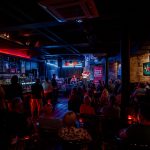
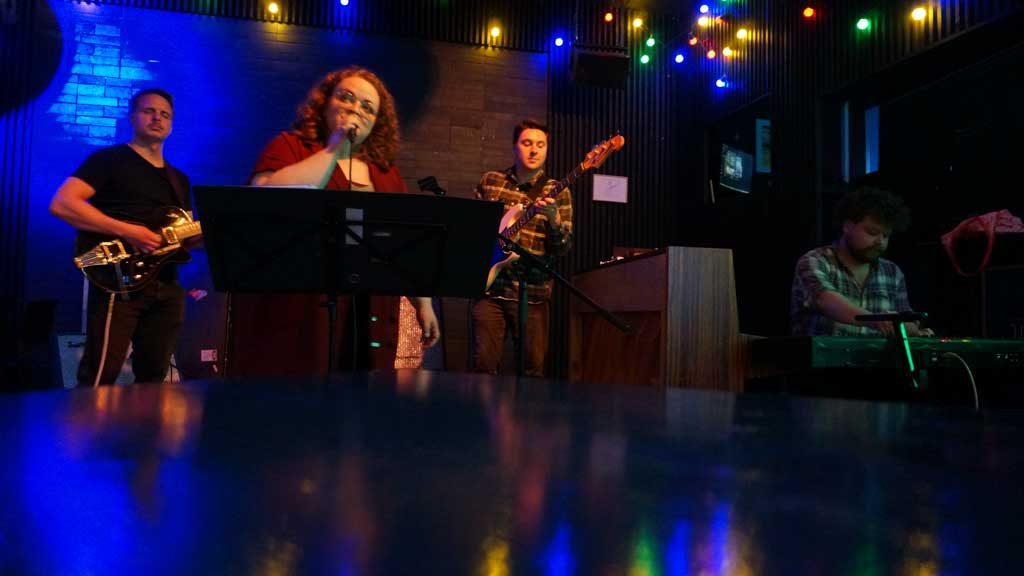
Blábar in central Tórshavn is the place for singer-songwriter concerts and jam sessions. The singer Sissal presented her new programme with an interesting line-up of guitar, bass and keyboards. Hopefully, a successor to her 2018 album A Lonely Chair With a View will be recorded soon. A sparse arrangement of the hit “Bang Bang (My Baby Shot Me Down)” as an encore was impressive.
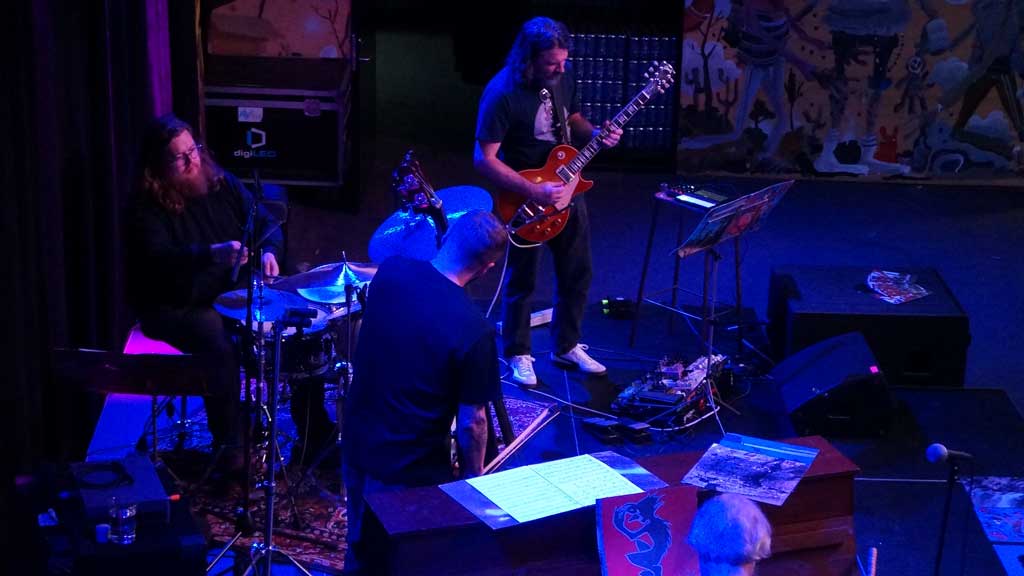
The closing concert of my trip, which was very important to me, was given by Yggdrasil. Kristian Blak’s jazz-rock band, active since the 1980s, has released suites and interesting live recordings on various albums. Particularly spectacular are the recordings from Klæmintsgjógv, the world’s largest sea cave, which enriches the recordings with the sound of the sea and twelve seconds of reverberation.
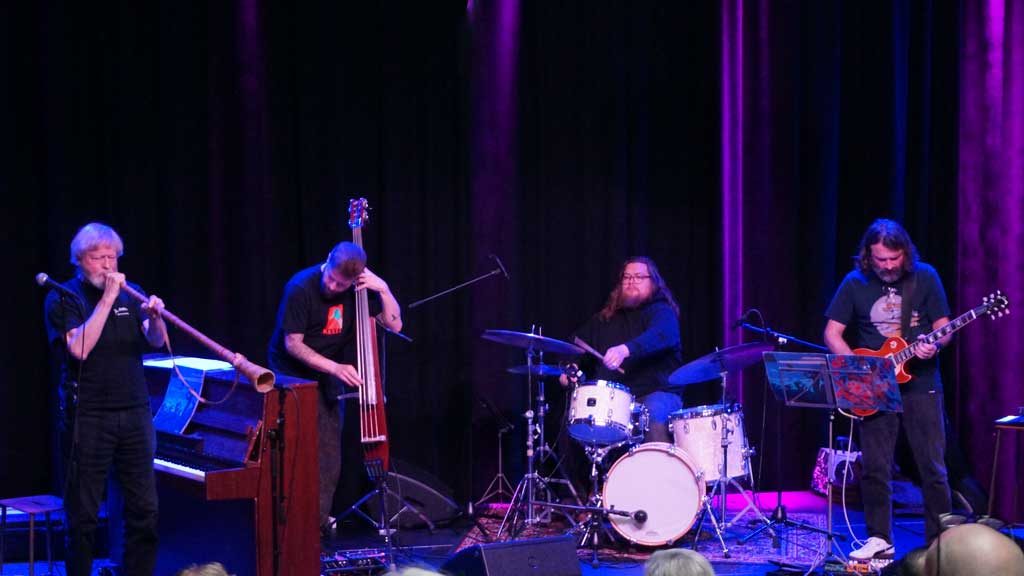
The 2026 concert took place at the OY Brewery, where burgers and good music can be enjoyed alongside the fermentation tanks. Yggdrasil gave the rockiest concert of my stay, with Kristian Blak’s son Mikael, who had just returned from a tour with the singer Eivør, probably the Faroe Islands’ best-known artist, on guitar and drums. In this line-up, Kristian Blak was able to give his mystical suite about monsters a very different dynamic.
The mixture of landscape, water, silence and—after this hot summer, not to be overlooked—temperatures that very rarely rise above 15 degrees, together with music that I would probably not otherwise have discovered for myself, made the five days in the Faroe Islands an experience.
Alongside the interesting concerts and the long conversations with Kristian Blak about traditional Faroese music and the current situation of jazz and contemporary music, I enjoyed a Faroese evening of traditional food—dried fish, roast lamb and potatoes—and traditional music on mandolin, piano, recorder and fiddle, and danced the typical chain dance. On the way to Gjógv, with its 12 inhabitants, I watched puffins and admired the uniquely illuminated Eysturoy roundabout, the Jellyfish Roundabout, beneath the sea.
I also visited the old episcopal seat of Kirkjubøur and Lake Sørvágsvatn on Vágar, which appears to hover above the ocean before pouring into the sea over a 30-metre-high waterfall. Nearby is the 142-metre-high Slave Cliff, Trælanípa, from which, it is said, slaves judged unfit for work were thrown during the Viking Age.
Túsund takk, vit síggjast næstu ferð
A thousand thanks, see you next time.
To spend five days in the Faroe Islands, enjoying the music and food, feeling the wind and admiring the landscape, before leaving in mid-August together with the puffins—me travelling home, the charming birds continuing north towards the Arctic Ocean, where they spend the winter—was a pleasure.
A very special thank you to Kristian Blak for the invitation and his inexhaustible wealth of information, and to Visit Faroe Islands for their support.
Last modified: August 31, 2026