 Written by
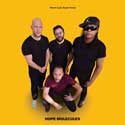
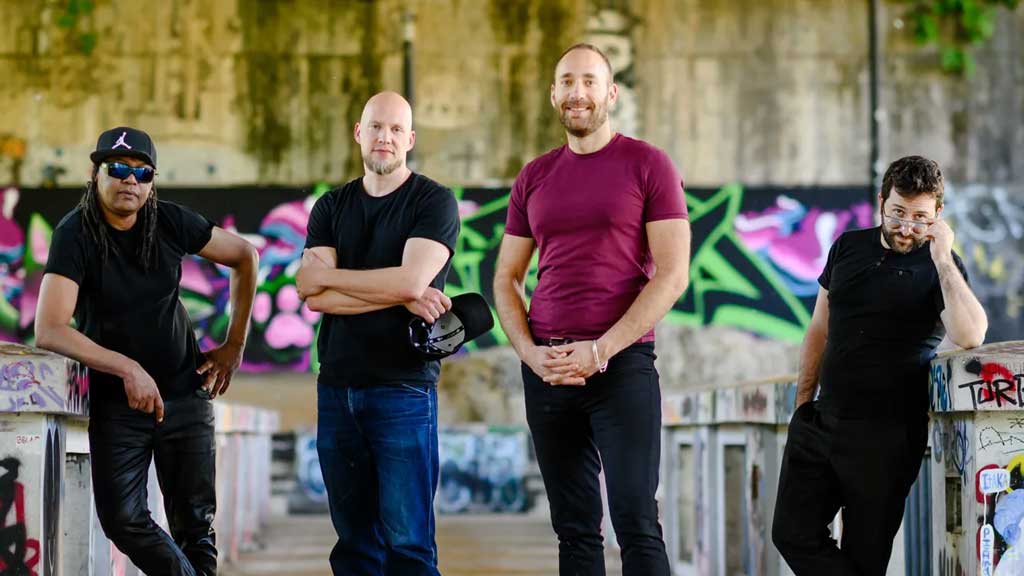
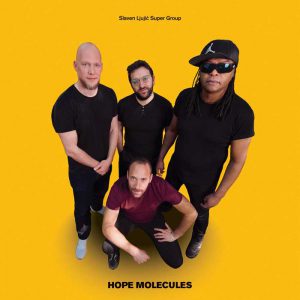
 Montenegrin drummer Slaven Ljujic announces himself as a bandleader of real substance with this high-energy fusion debut. Recorded in a single April session at DomArt Studio in Podgorica, Hope Molecules brings together four players from across Europe — tenor saxophonist Ben Kraef, electric pianist Laurent Coulondre, bassist Linley Marthe, and Ljujic himself on drums — and captures them playing with a freedom and intensity that most studio albums never get near.
 I’ll be upfront: all four of these musicians were new to me before this record landed on my desk, and I went in with no particular expectations. What came back at me from the first track was a jolt of pure, unapologetic fusion energy that had me reaching for the volume knob — in the right direction.
The album opens with a brief drum-led Intro that sets the tone perfectly — Ljujic alone, establishing from the first bars that this is a drummer’s record — before the band enters on 7am, which immediately signals what kind of ride you’re in for. It has a distinctly 1980s fusion flavour, and I mean that as a compliment. The melody has that sleek, purposeful quality you associate with the best of that era, and the rhythm section — Marthe and Ljujic — are absolutely cooking underneath it. Linley Marthe, of course, is best known for his long tenure with Joe Zawinul, and that experience is audible: his bass playing here is not merely supportive but a compositional voice in its own right.
Midnight at the Oasis — the David Nichtern song first recorded by Maria Muldaur back in 1973 — gets a samba-inflected reading that works well enough, though for me it’s the one moment on the album where the creativity becomes a little too pedestrian for my taste. That’s a minor caveat on an otherwise relentless record.
TTS opens with Ljujic front and centre. The rhythmic complexity here is demanding, more than enough to keep even an attentive listener on their toes. What really elevates the track, though, are the solos: Kraef delivers an impressive saxophone statement, but it’s Coulondre’s keyboard solo that follows which really catches fire — intense, searching, and executed with a conviction that leaves a mark. Circles provides the album’s most atmospheric moment — opening with sax and Rhodes, it moves into darker, more textural territory, with Coulondre’s sound design lending it an ethereal quality that makes for a welcome change of pace.
Double Trouble follows and is, for my money, the album’s single finest track. It’s a powerhouse funk workout — locked groove, inspired playing, every musician contributing at the top of their game. It’s the kind of track that reminds you why this music, at its best, is so viscerally satisfying. Then comes Visnja’s Bop, high-octane, up-tempo swing with a neo-Coltrane edge — Kraef’s tenor is in full flight, and Coulondre’s piano playing matches him blow for blow. Back to back, these two tracks represent the emotional peak of the record.
Nu Ti Africa is equally strong. The opening percussion feel — bass and drums playing percussively together — is immediately arresting, and when Coulondre’s keyboards enter, there’s something in the way the melody sits over the groove that genuinely reminded me of Weather Report at their most inventive. The keyboard work here is some of the finest on the record. Then comes Padrino Mado, a fascinatingly open track that refuses to show its hand early — Kraef’s saxophone improvisation wanders beautifully over the keys and rhythm in a way that feels genuinely exploratory rather than meandering.
The album closes with Outro, which begins with a bass introduction before the band enters in full, building through one long, deliberate crescendo into an up-tempo finale with a keyboard solo from Coulondre that sends the whole thing off with a flourish. It’s a great way to end what is, I have to say, a genuinely great album.
A word on the sound: the mix by Jovan Djordjevic & Marko Maksimovic at FunkyForrest Studio is upfront and muscular, which suits the music perfectly. This is not an album that wants to sit back and breathe — it wants to be in your face, and the production delivers that without tipping into harshness.
Slaven Ljujic has spent years moving between Montenegro, Boston, Paris, and Berlin, absorbing influences and building relationships across the international jazz scene. Hope Molecules is the payoff: a debut that wears the jazz-fusion tradition of the late 1970s and 80s with confidence, while every composition carries its own distinct voice. Nothing here is smooth, nothing is safe, and nothing is borrowed without being transformed. Highly recommended.
Track Listing:
1. Intro | 2. 7 AM | 3. Midnight At The Oasis | 4. TTS | 5. Circles | 6. Double Trouble | 7. Visnja’s Bop | 8. Nu Ti Africa | 9. Padrino Mado | 10. Outro
Line-Up:
Ben Kraef — Tenor Saxophone | Laurent Coulondre — Electric Piano & Synthesizer | Linley Marthe — Electric Bass | Slaven Ljujic — Drums
Release date: April 24, 2026
Format: CD | Streaming
Label: DomArt Records

New Release Spotify Playlist
The Jazz In Europe New Release playlist features tracks from the new releases featured on Jazz In Europe. Updated weekly, this playlist is the perfect place to discover new music from the leading jazz musicians currently on the scene. We hope you enjoy this selection.
The best way to keep up to date with all the latest releases is to follow the playlist on Spotify.
Just click the button below.

Last modified: June 1, 2026