 Written by
 I’ve been collecting jazz vinyl for the better part of three decades, and I’ve started noticing something among the people I buy and trade with: fewer of us are chasing another pressing this month, and more of us are staring at our turntables wondering if it’s finally time to upgrade. That’s what pulled me back to Pierre Wittig at HiFi-ZEILE.
Regular readers may remember Wittig from our 2024 profile — the technician who set up shop in the Worpswede artists’ colony near Bremen and has spent more than four decades restoring vintage amplifiers and turntables while curating new high-end equipment alongside them. I went back to him this year with a simple question: is it my imagination, or are more collectors putting real money into their playback chains again? His answer was unambiguous. He’s seeing longtime collectors — people who already own the records, sometimes thousands of them — coming in specifically to upgrade rigs they’ve been living with for years, not to buy their first turntable.

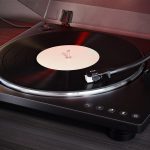
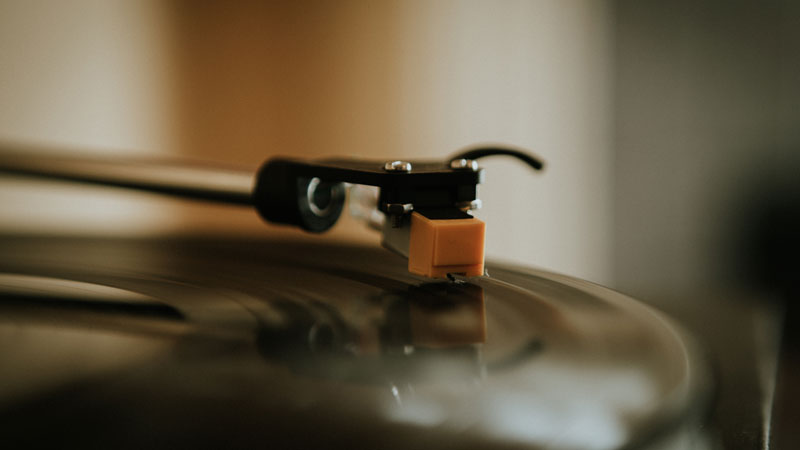
What’s notable is where that money is going. On the front end, that’s meant new turntables and cartridges rather than restored originals — and it’s not because modern engineering has overtaken the vintage decks Wittig has spent his career restoring. A well-sorted Technics or Thorens from the seventies can still hold its own against almost anything being built today. The problem is finding one. Motors drift out of speed after forty years, bearings wear, and the cartridges those tonearms were designed around have often been discontinued outright, turning what should be a straightforward purchase into a restoration project. A new turntable comes without that uncertainty — consistent tolerances, a cartridge you can still order in five years, a warranty if something fails.
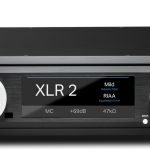
Further down the signal chain, the pull runs the other way, toward vintage amplifier and pre-amp stages — and vintage isn’t the cheap option here either. Collector demand has pushed prices for desirable amplifiers from the seventies and eighties well past what they cost even a few years ago, with sought-after models now trading for close to what a new equivalent costs with a warranty attached. What collectors are actually paying for is a specific kind of distortion. Tube and transformer-coupled amplifiers, driven hard, generate mostly even-order harmonics — the second and fourth overtones the ear hears as full and rounded rather than harsh. Solid-state circuits, and the digital conversion stages that came after them, tend toward odd-order harmonics and a far lower noise floor overall, which measures as cleaner but often sounds more clinical. The engineers building those vintage amplifiers were chasing accuracy every bit as hard as anyone designing a DAC today. They just couldn’t engineer the distortion out the way modern circuits can — and the distortion they couldn’t eliminate is the part a lot of ears still prefer.
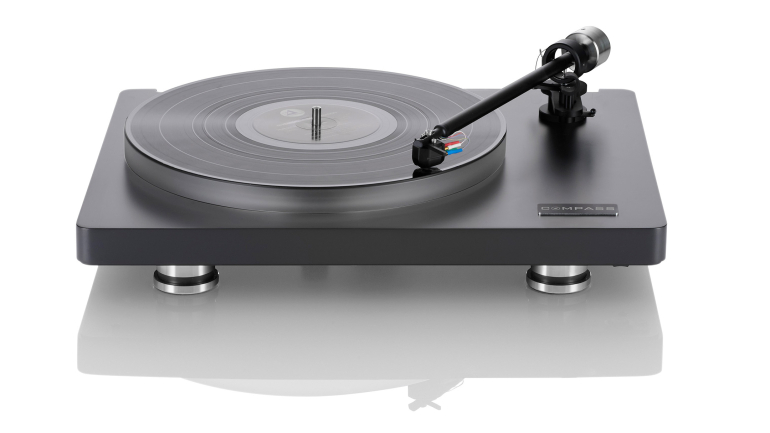
You can see the market answering the front-end half of that equation. Rega’s Planar 3 RS Edition takes the brand’s long-running workhorse and gives it in the kind of up-market finish and detailing usually seen on limited runs. This is a turntable built for someone who already knows exactly what a Planar 3 sounds like and wants the refined version. Vertere’s DG-X goes further, a modular design that lets a collector build up the system piece by piece rather than replace the whole thing at once. And Clearaudio’s Compass is maybe the most telling of the three: a deliberately accessible entry point from a brand that usually operates well into five-figure territory. A company like that builds a cheap turntable for one reason — to give the collector who’s been putting off the upgrade a low enough door to finally walk through.
That’s the part of this I recognise from my own circle. The collectors I know have been doing this for decades; picking up a record because the artwork suits a shelf isn’t really part of it. What’s changed is a growing willingness to finally spend on the equipment that’s been underserving those collections all along. I’ve had more conversations this year about cartridge alignment and phono stage upgrades than I can remember having in the previous five.
Wittig is careful to say he can’t break his customer base down by genre — a hi-fi workshop doesn’t ask what’s on the platter when someone brings in an amplifier for restoration. But jazz listeners have always struck me as a natural fit for this particular upgrade instinct. This is music built on dynamics and space and the specific timbre of a cymbal or a bowed bass, and a system that’s been good enough for background listening stops being good enough once you start listening for real. Collectors who’ve spent years tracking down the right pressing eventually want a rig that can actually reveal what they paid for.
Wittig’s workshop is booked out further than it used to be, mostly with longtime owners finally replacing parts they installed themselves a decade or two ago — people who never really left vinyl, just neglected the equipment while they kept buying the records.
Last modified: September 1, 2026