 Written by
 Talking about women in the music industry, a dear friend of mine recently shared with me the concept of having to see a woman in action with certain instruments – usually “socially assigned” to men – to acknowledge and believe that, for example, female trombone players exist. My friend had a good point and I have to admit that I’ve never thought about it: we’ve become so used to the idea that the prototype of a woman in jazz is a singer that seeing a woman playing drums, percussion, trombone, guitar and more, still surprises a lot of people out there. It really seems that we’re more and more in need to witness empowered women that, with their actions and creations, remind us that this is not only a man’s world.
Claire Cope by Blackman Images
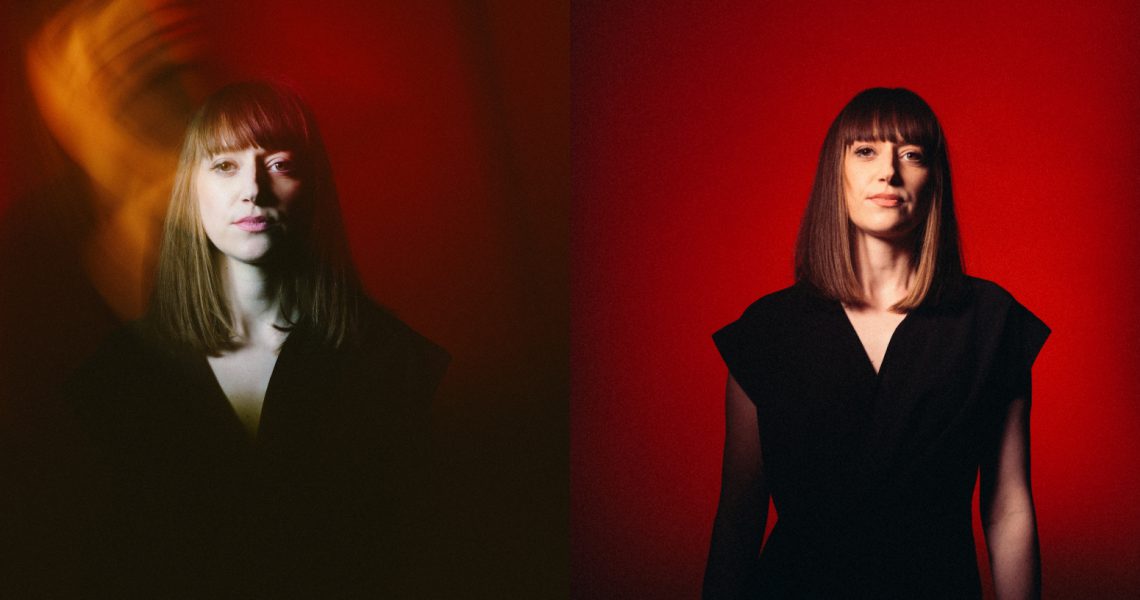
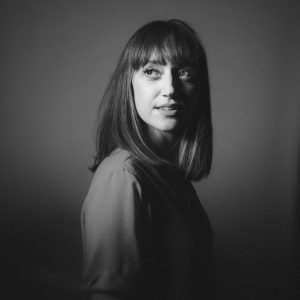
For some, it’s still difficult to name female musicians and, as a matter of fact, for some roles there are not enough names around. For instance, what concerns jazz composers, is we mainly think about Maria Schneider and Carla Bley…but are there other female composers? The answer is yes, of course, and I’m going to give you another one to follow closely. Jazztrail has forecasted her as “a promising future (…) as a composer” and her work will definitely make you believe that female jazz composers are a “real thing”. Her name is Claire Cope: she is the bandleader of contemporary large ensemble “Ensemble C”, with which she’s due to release a stunning second album. With her music – “imaginative, uplifting, thoughtful and reflective”, to quote the words of award- winning saxophonist and composer Andy Scott – Cope explores a wide range of genres, navigating through contemporary classical, jazz and improvised music.
Cope studied piano performance at the Royal Northern College of Music in Manchester with SallyAnn Macleod (where she won the John Ireland Prize and the Principal’s Prize for Improvisation) and also holds both an FRSM in piano performance with distinction and an MA in musicology with distinction from The Open University. As a pianist, she collaborates with a diverse range of musicians and has performed in Andy Scott’s Mancunity band at the Manchester Jazz Festival and performed on the debut solo album by Jemma Freese of British alt-rock band Maximo Park. In 2022 she was honoured with the Marvin Hamlisch International Music Award for Jazz Composition and premiered a new work commissioned by the groundbreaking Apollo Saxophone Quartet at the International Anthony Burgess Foundation in Manchester.
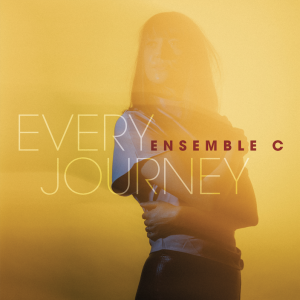
In 2020, Cope released her debut album Small World with Ensemble C, a septet that includes Cope herself on piano and synthesiser and some of the most renowned UK jazz musicians such as Brigitte Beraha on vocals, Jack Davies on trumpet, Jon Ormston on drums, Tom Varrall on guitar, Ed Babar on electric bass and double bass and Rob Cope on tenor saxophone. After 5 years from her debut and following up both becoming a mother and developing a more defined self-awareness as a composer and a precise musical vision, Cope is ready with a new album. “Every Journey” which will be released on the 7th of March 2025 and it’s no coincidence that the album will be out a day before International Women’s Day. Cope was indeed inspired to write her new music based upon stories of brave and fearless women. She cites explorer and author Jacki Hill-Murphy as a major inspiration and is influenced by both Maria Schneider’s compositions and the sound of the early Pat Metheny Group.
To open up to new sound possibilities but also as a proof of a creative expansion, Ensemble C widens into an 11-piece group, that now features guitarist Ant Law, trumpeter Mike Soper (on flugelhorn), saxophonist Matt Carmichael, trombonist Anoushka Nanguy, trumpeter Freddie Gavita, percussionist Jack McCarthy, bassist Gavin Barras alongside again with Brigitte Beraha, Rob Cope and Jon Ormston: a true dream team with which to venture out into an unexplored world of adventuresses, explorers and fearless heroins…through Cope’s sonic lenses.
GSLS: “Every Journey” is steeped in stories about empowered women, intertwining tales from writer Jacki Hill-Murphy with the soundscapes of Maria Schneider. Could you tell us the story of how you put together these inspirations and what is the ultimate message – if there is one – that you want to share with the album?
CC: I had a big vision for this album when I first started imagining how it could take form, all the way back in 2020. Whilst the first musical seeds were planted back then, I was discovering more about the incredible stories and journeys of forgotten female adventurers. I am a big fan of the adventure world, as someone who loves travelling and hiking especially. When I discovered Jacki Hill-Murphy’s work, I was so inspired by, not only the explorer’s themselves and their incredible bravery, but also Jacki and her passion and commitment in retracing their journeys. I started to think that there could be a musical narrative that could form the basis of an album, becoming about taking that first step on a journey towards something, and how that is always the biggest challenge. That resonated so much with me personally, and my journey as a musician, as I am sure it would for many.
 GSLS: Can you tell us more about Ensemble C? How was it born in the first place and how did it evolve from the septet in “Small World” to the 11-piece group of “Every Journey”?
CC: The release of the first Ensemble C album in 2020 was a very important step forwards for me personally as a musician. I had wanted to write an album like this for many, many years but I struggled to find the confidence to take the first step. Finally getting together with those 6 incredible musicians was an amazing moment, and the music felt like a really honest creation of what I had been wanting to make for so long. After that, I knew I wanted to explore a bigger soundworld, and push myself as a composer in learning how to write and arrange for a much larger ensemble. I also knew that the musical ideas that were swimming around in my head required a more powerful source. That year became a real turning point for me personally, in really uncovering my true identify as a composer. Writing for a full scale big band did not feel like the right step then, so I was really interested in the idea of creating something that sits in between small ensemble and big band. With 11 musicians, you can create big textures, but there is still space for more intricate and intimate moments, with maximum communication between the musicians.
GSLS: Is there a track on this album that is particularly dear to you? Does this track also reflect your favourite story of all the ones told on the record? If not, which is the story that you treasure the most?
CC: There are so many moments on this album that I will treasure forever, because of what these incredible musicians made of them! ‘Isabel’ was one of the first tunes I wrote for this album, and I remember getting severe writer’s block with that for a very long time! I distinctly remember listening again and again to Pat Metheny records and really trying to identify how he constructs his melodies, and then I felt like I knew what to do. I think a lot about that process now when I get stuck on something! In terms of stories, that one, about Isabela Godin and her journey down the Amazon, so dramatic and unbelievable, is also one that I thought about again and again. But there are so many other special places too that I am so grateful for – Brigitte’s incredibly beautiful lyrics on ‘The Birch and The Larch’ which so poetically tell that story, for instance.
GSLS: You describe “Every Journey” as being about “courage, overcoming anxiety and finding inner peace” and – particularly for you – “feeling comfortable in (your) choices as a musician and deciding to identify as a composer”. What was the key turning point in your life that helped you feel at ease with your choices and artistic identity? What advice would you give to someone who is struggling to take the steps forward towards what they really want to do and/or be?
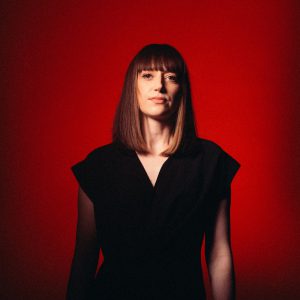
Claire Cope by Blackman Images
CC: It was around the time of releasing my first album with Ensemble C, and as I turned 30, that I realised that it is the process of writing new music that I love so much, and I suddenly realised that I didn’t need to limit myself. Having trained as a classical pianist, contemporary music in other genres or styles is also very important to me. Though jazz will always be the wonderful way in which I started composing, I enjoy so much trying to write music for a very diverse and eclectic range of musicians and ensembles. I will always be so grateful to my brilliant friend and incredible composer and musician Andy Scott, who gave me one of my first writing opportunities for The Apollo Sax Quartet. And this urge to learn all I can about composing has led me to want to finally study it more formally, and so I took another big step forwards this academic year in returning to study composition at the Royal Northern College of Music with Gary Carpenter and Emily Howard. As a 35 year old student Mum, it is hugely challenging, but I am learning so much, and am so grateful for this time to more seriously dedicate to my work and personal development.
I would say that sometimes it is focusing too much on the end goal, or what you want to achieve that can feel so overwhelming, as it might be something big that feels unobtainable. I think it is really important to break it down into smaller chunks, and to think about the practical steps you can take to achieving each of those smaller goals. Each step on that path will get you to where you want to be. Also, seek out the people who can help you and ask for help. And think about how every single person who has gotten to certain place in their journey started somewhere.
GSLS: In the interval between your albums, you became a mother. How did this impact your life as a composer and as a musician? What’s the greatest lesson that you’ve learnt from your child?
CC: Becoming a Mum had a really extraordinary affect on my life as a musician and composer. A lot of music came out of me after that first year of getting used to everything, and I found writing music, for me, to be a very healing and cathartic process. But having my daughter also inspired me to be a better role model for her. To be more proactive and not waste time, because suddenly you think about time in a different way – it isn’t all yours anymore. My biggest hope is that she grows up knowing she can achieve anything, and that she has the confidence to try things and believe in herself. So I am trying to let that be a lesson for myself as well!
Sometimes it feels like being two different people at once, and it can be extremely challenging, especially when trying to be creative in short bursts (anyone who composes knows how frustrating it is when you are deep in the flow with something and you are forced to stop!) But I have therefore gotten much better at using my time in the most efficient way, and enjoying those moments that I get to myself. As she grows up, seeing her enjoyment and experience of music develop is so incredible!
GSLS: Talking again about empowered women, who is your biggest female role model and why?
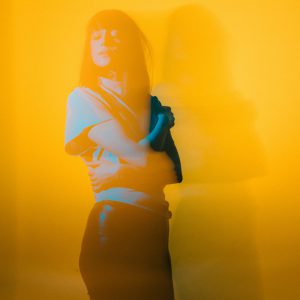
Claire Cope by Blackman Images
CC: I really don’t know where to begin! Of course my Mum and sister. Musicians such as Joanna McGregor, Zoe Rahman and Nikki Iles were huge role models to me when I was growing up and wanting to be a pianist (and of course still are). A friend at school brought Zoe’s Melting Pot album for me when I was about 16, and discovering that music, and discovering women in the contemporary jazz world, was really life changing! Of course, Maria Schneider, and the sheer power of her voice and how she leads and has crafted her sound over so many years, will forever inspire me. To have the confidence and commitment to realising such huge visions is so inspiring to me. And Anna Clyne, as a composer in the more contemporary classical world is hugely influential. There are also so many women not in the musical world who I would say are role models, however, lots of women in the adventure world such as Anna McNuff who has ran and cycled all over the world. And also the incredible Rosie Swale Pope, 74 years young, who is running solo from the UK to Kathmandu, a journey of over 6000 miles. Age is but a number!
GSLS: We hear a lot about artists struggling to keep up with a music industry that is increasingly demanding. Is there a specific issue that you think we should talk more about? What would you suggest to improve the situation?
CC: I think ageism is a big problem in the music industry. Music is such a lifelong commitment and learning process – it is continuous development and discovery until you die, I believe, whenever that may be. So the media pushing and pushing a certain image of having everything figured out at a very young age puts a lot of pressure on young people. You need time to experiment and try things out, and really learn about yourself and the music you want to make. I think we need to be celebrating musicians of all ages and who are at different stages in their journey. We can’t all go on the same path, and I believe we can all learn from each other.
GSLS: What are the next steps in your journey and what are you really looking forward to after the release of the album?
CC: This year, as I am back studying at the RNCM, I am composing the most I have ever composed. I am looking forward to my first orchestral workshop experience, as well as premieres of some new music. I am also excited to be writing some pieces for some really wonderful musicians, both here and in the US. Because of all this, I haven’t had much space left to think about where Ensemble C might be in the future, so I am really looking forward to starting to think about new music for this band, and how I might develop it.
Discover more about Claire Cope’s work at the following link: https://clairecopemusic.com
You can pre-save “Every Journey” here
This interview was first published in the December 2024 Women in Jazz Media magazine
Last modified: January 21, 2025