
 Written by
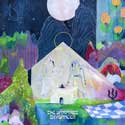
 Karel Eriksson has spent the better part of a decade building Sound Pollution Eclectic into one of Vienna’s more stylistically restless bands. With The Path North, released on Mons Records, the trombonist and composer moves the project into heavier, more electrified territory while anchoring the record in a story of displacement and migration.
Eriksson came to Austria to study at the Jazz Institute of the Graz University of Music, drawn specifically by the presence of trombonist Ed Neumeister on the faculty. After finishing his studies he settled in Vienna, where he now works as a freelance trombonist, composer, and arranger. Sound Pollution Eclectic, usually abbreviated S.P.E., grew out of those Graz years. The band formed in 2017 when its members met at the KUG Jazz Institute, and it will mark its tenth anniversary in 2027.
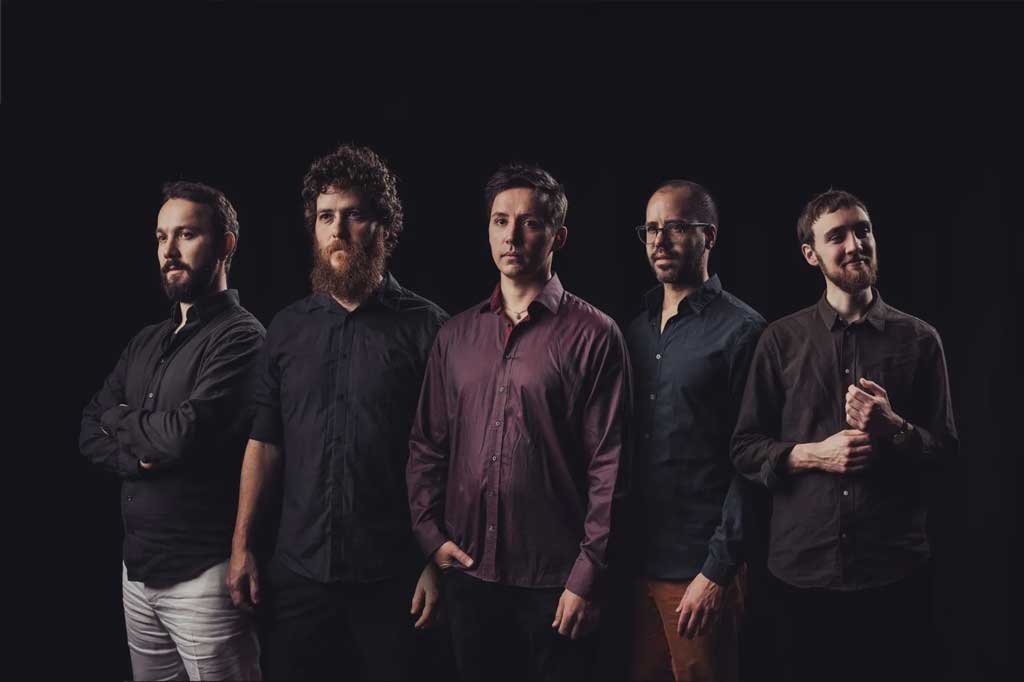
The group’s roots extend well beyond Austria. The group supports an international lineup with backgrounds in Brazil, Germany, Austria, and Sweden/Estonia, and the band has performed at festivals and clubs across Austria, Sweden, Germany, and the Czech Republic. Eriksson points to that range of backgrounds as central to how the band sounds. “The fact that we all have such different musical backgrounds is a big advantage in a band like SPE,” he says. “We grew up listening to everything from rock, classical music, and metal to funk, Brazilian music, jazz, and much more. This helps us explore different grooves, harmonies, and sounds without feeling restricted to a particular style.”
The band’s origins trace back to Eriksson’s own listening. “After reading Miles Davis’s autobiography and listening to albums like Bitches Brew and On the Corner, I wanted to start a jam-based band of my own,” he says. The earliest incarnation of S.P.E. leaned on improvisation around riffs and rhythmic fragments, a starting point audible on the group’s 2018 debut, Free To Choose. Composition has taken on a larger role since then. “In the early years, everyone brought in songs and ideas, and we developed them together,” Eriksson says. “Nowadays, I usually bring in the material, and we work together to adapt and arrange it for the band.”
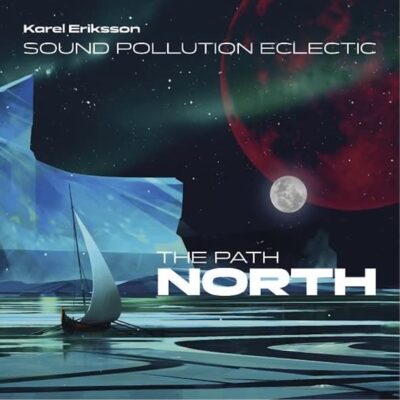 The Path North extends that shift. Where earlier S.P.E. material drew on studio improvisation, the new album is entirely through-composed. “The Path North has a heavier, more electrified sound than our previous albums,” Eriksson says. “The music is entirely through-composed, rather than built through studio improvisation, giving the album a more focused, cohesive, and compact overall shape.” Part of that shift involves a sound Eriksson had wanted to explore for some time. “Exploring electronic effects on wind instruments is something I had wanted to pursue for a long time,” he says. “With this album, it finally felt like the music called for that sound. The biggest challenge was finding the right balance between acoustic and electronic elements without making the album feel too erratic.”
Underneath the musical shift sits an emotional one. The Path North was shaped by Khaled Hosseini’s short story Sea Prayer, written about the fate of Alan Kurdi and the wider experience of people forced into dangerous journeys by war and conflict. “This album reflects on the many people who have been forced to leave their homes because of war and conflict,” Eriksson says. “Many have travelled north in search of peace and a better future. Khaled Hosseini’s Sea Prayer was a major inspiration for the album, and after reading it, I knew there had to be a musical portrait of that story on the record.”
That inspiration surfaces directly in the album’s two largest pieces, “Warlords & Thieves” and “Sea Prayer,” which Eriksson describes as the record’s central pillars. “‘Warlords & Thieves’ creates a world shaped by war and displacement,” he says. “‘Nordic Light’ represents the hopes and dreams of those seeking a better life, while ‘Sea Prayer’ portrays the long and difficult journey towards safety.” The closing track, “Pilangó,” takes its title from the Hungarian word for butterfly. “The final piece symbolizes hope and the belief that, in the end, things can and will become better,” Eriksson says.
Not every piece on the record traces back to the same source. “A Gift” grew out of improvisations on the trombone, while “December Child,” dedicated to Eriksson’s wife, began as a melody that came to him during walks in the woods of Serbia. Despite the different origins of individual tracks, Eriksson describes the album as built for coherence rather than contrast. “The compositions are designed to complement one another throughout the album,” he says. “One piece focuses on harmony, another on groove, another on atmosphere, and together they create a coherent musical journey.”
The Path North is out now on Mons Records and available on major streaming platforms. You can hear “A Gift” featured on our New Jazz Releases spotify playlist.

New Release Spotify Playlist
The Jazz In Europe New Release playlist features tracks from the new releases reviewed on Jazz In Europe. Updated weekly, it is the best place to discover music selected by our editors — not algorithms. Follow the playlist to keep up with the kind of records we believe deserve attention and to stay ahead of the curve.
The best way to keep up to date with all the latest releases is to follow the playlist on Spotify.
Just click the button below.

“`
Last modified: July 31, 2026