 Written by
 One of the best phrases that I’ve came across is “when we overthink things, is where we start derailing” and it’s an extract from a short YouTube video of American singer Veronica Swift. Thanks to a powerful and direct voice, a dazzling improvising technique and an outstanding musicality, from a very young age Swift has affirmed herself as one of the most notable jazz singers of our time, winning second place in the Thelonious Monk Institute of Jazz International Vocals Competition in 2015 and releasing her acclaimed debut album “Confessions” with Mack Avenue Records four years later, followed by “This Bitter Earth” in 2021.

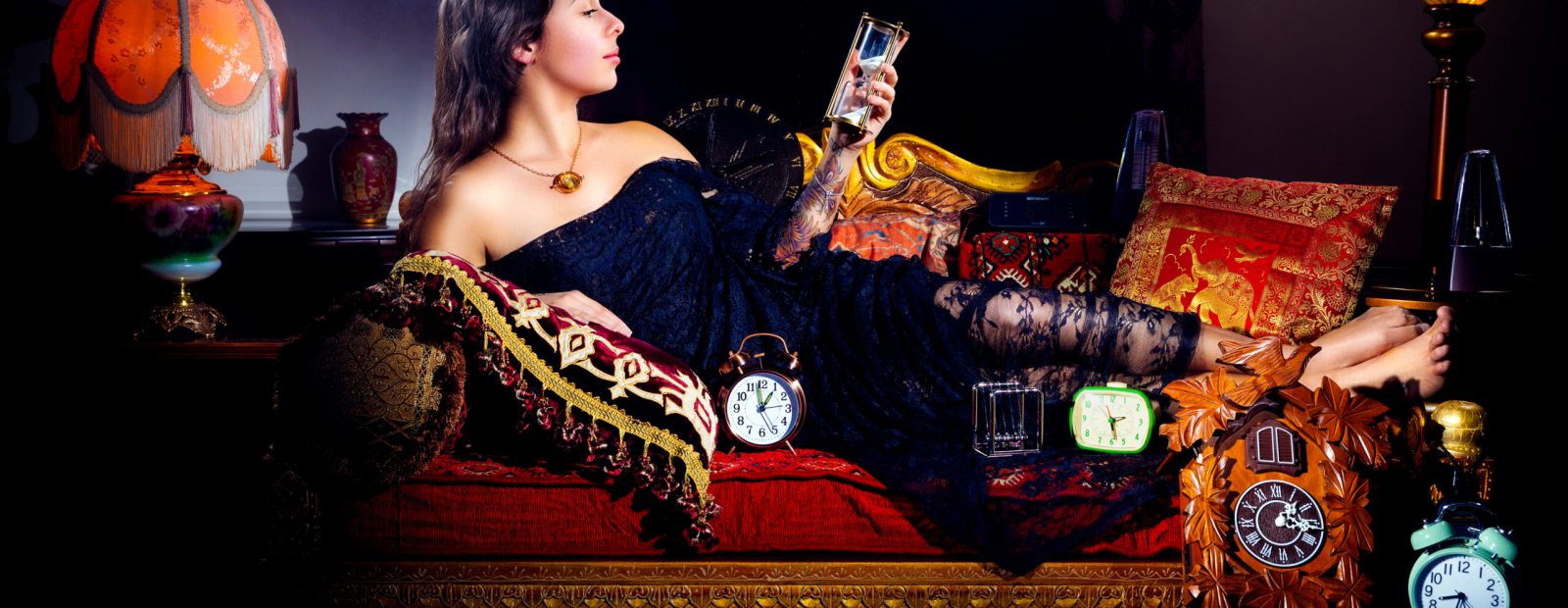
Photo by Matt Baker
But her recognition, didn’t stop her from colouring outside the lines of the somewhat restrictive – and very often overly intense – world of jazz vocals and jazz in general, to start a true revolution, without overthinking too much but with a specific strategy and plan. Her principle is simple: life is just too short not to do what we love or to restrain our self-expression and I couldn’t agree more with this. The singer affirms her artistic freedom firstly talking about the concept of ‘transgenre’, to loosen herself from the familial duty to uphold the jazz roots and revealing in time what really has fuelled her creativity: rock and soul music, among many others things.
With her third album, “Veronica Swift” released in 2023, she unravels her polyhedral-self, in an honest and intelligent testament to her versatility and bravery that includes, besides jazz, a multitude of genres and references from musical theatre, rock and opera. Even her change of look is the bold and audacious expression of a woman that allows herself to be unapologetically creative, have fun and, on top of everything, – in a world that wants even more to confine female artists (and especially singers) in boxes of gowns and specific aesthetic standards – simply be who she is.
Swift will showcased her “transgenre” approach over summer in France, with a stop at Ronnie Scott’s in London, bringing her exploration of French and Italian opera, European classical music, bossa nova, blues, rock, funk, and vaudeville. But ‘transgenre” was just the first step in Swift’s plan: with the brilliant cover of Queen’s 1973 anthem “Keep Yourself Alive” and references to “The Show Must Go On”, the singer anticipated her next move: the introduction of DAME, her first rock band. With this new project, she is starting a series of live performances in the US at the end of September and, as the big fan that I am, having followed her moves closely, I just can’t wait to see what Swift has in store next.
“Where jazz meets rock….where Ella Fitzgerald meets Freddie Mercury…Veronica Swift is the bridge”…and the question is one and only one: why not?
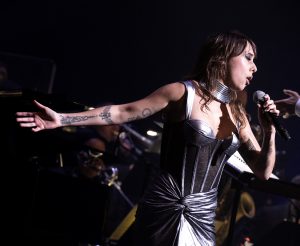
Photo by Tatiana Gorilovsky
Your evolution – from your first album to your new project. How would describe this journey? What have you learnt along the way?
VS: Every time you make a record it feels like the first time because what you’re doing is capturing a moment in time in your life as an artist, as a person. When I was 9, that wasn’t like I was getting ready to make my first record and it was not a serious career move. I started singing with my parents – who, for those who don’t know, are both world renowned, famous jazz musicians – so I grew up in the business. A lot of people get into jazz through their families or through school.
I grew up on the road and jazz clubs, kind of like Liza and Judy – that’s like me and mum, you know. But that was just something my mom wanted to capture…this young, emerging talent and artist at the beginning of their career, the beginning of their life and I wasn’t trying to impress the world. There’s something pure about that… and then there was the first record with Mack Avenue, which is “Confessions” and, even though there was another one as an adult, this was the first in my career with the “eyes are on me” kind of thing so there was a pressure that I had… a sort of ‘Alright, I have this moment to tell my story and so many songs”.
When you’re a kid, you’re not thinking about career trajectory and the choices you make and how they can affect your future. As a creative, it’s so important we are in that space of just being in the moment, that spontaneous moment that’s captured. It’s always important to be strategic, of course, but to put on those different hats at different times. What I wasn’t doing was tending to the garden that was my creativity, which was rock’n’roll, punk, soul music… like P funk, the theatre, Broadway, the opera. All this huge plethora of other kinds of music and colours into my palette that when they started to weave their way into my jazz repertoire – especially in the last four years – it was a good way to test… So there was a strategic way that I wanted to test the audience because now I’m actually being my authentic full self to my fans and promoters and presenters. And then I came out with the latest record, the self-titled, which was that broad genre album.
Advertisement
Now, that was an intentional choice to have it kind of be a million things, which for some people can be jarring…it can be like “what is this? I don’t know what to make of this”, but you have to see the live show for it to make sense. Otherwise you can just listen to the record… like there’s baroque funk jazz… it’s just a whole melting pot….think of jambalaya or gumbo: it’s just a million tastes all at once. I could have done the 180 degree flip where it’s like “and now I’m going to rock” but to me what felt more genuine was to introduce it – also because it was a strategic choice – but because I I wanted to use when I call the “transgenre show”. This is my tipping my hat off to also the LGBTQ world that I am a part of, but really it’s like the wide spectrum of musical styles and where you fit on that changes from day-to-day and your mood.
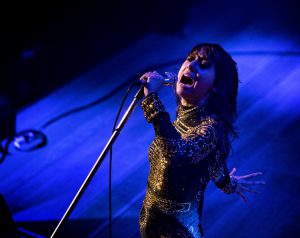
Photo by Tatiana Gorilovsky
And is it why you decided to have two different Instagram profiles – one with Dame and one as Veronica Swift Jazz?
VS: Yeah, that’s where I was getting to… the ‘transgenre’ project was always a vehicle. Think about a ferry: there’s one port, which is jazz and then there’s the other port, which is rock and original. The way I write original music is very theatre driven, rock, opera driven. So how do I get from here to there? There needs to be a ferry that takes you… it doesn’t ever stop, but the ferry is constantly taking you from dock to dock. So, once I identified as – actually after I got knighted in France in 2023 – where I came up with the Dame concept, you know, I think Joan of Arc, female Knights, the French Revolution, the American Revolution and revolution in general….and then Cabaret and Weimar Cabaret..I want to do that with my original project and it’s going to be called Dame. We’ve been building towards, basically, this week, which is the 2 separate profiles of Veronica Swift – which a lot of presenters and promoters will be very happy to know – will be really firmly planted in jazz roots and then Dame will be the rock project, so it’s clearly branded.
Tell me about your new project ‘Dame’ and ‘Transgenre’ can you tell me about what the word means to you and what you hope it means to an audience?
VS: Dame is what I wanted to start, with ‘transgenre’, to show people. In a way, like when you want to get people into deep jazz: you don’t just start with Coltrane and all the crazy modal stuff. You play some Ella Fitzgerald, Frank Sinatra, Louis Armstrong and test their taste. So that was what I was doing with the ‘transgenre’. I saw so many people in my audience just love the Queen stuff, they wanted more theatrical, strong female front-women singers. That’s what is really authentic to me so I said like “let’s get to the point, let’s put out the Dame stuff”. And the Dame stuff is just that: if anybody knows me as a person, doing jazz or doing Dame, it’s the same thing essentially. But the Dame stuff is very much like Queen, Led Zeppelin, Aerosmith, Beatles with the mix of musical theatre…so it’s basically Jesus Christ Superstar, Les Mis and Cabaret put together. It’s definitely not a band that can play in theatre performing arts centre that has a reverberant hall because it would be too loud and theatrical. But, in the jazz projects with the Veronica Swift ‘s record coming out down the road we’ll have a lot more of the trio setting, so best of both worlds.
You were mentioning Queen as well. I know that you got into their music at the age of thirteen/fourteen, watching Freddie Mercury’s videos and getting inspired by him but you actually said that, compositionally, you feel closer to Brian May. What is your relationship with this band?
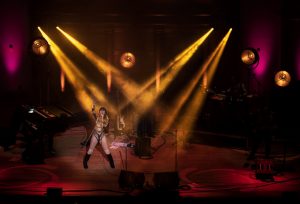
Photo by Tatiana Gorilovsky
VS: When I was younger – like eleven/ twelve – I started to get really heavily into classical music. I mean, I was around the jazz world but jazz was never a genre that I felt I needed to dive into and I didn’t have that call… I grew up around it: it was just there. But the classical music, then opera and Romantic and Baroque music, this was the music where I first felt kind of like filling my veins with. And then I would rent out scores from the music libraries and really get into score study so I had a firm, kind of sophisticated understanding of classical music and orchestration. Then I started getting my mum to show me the rock music that was around when she was younger and, of course, when I found Queen it blew my mind: it’s classical music with rock, all my favourite things in one place.
So I started to find that all my favourite songs by Queen were all Brian May songs. Freddie’s too – they both come from a lot of love for classical music – but I could see a lot of similarities between the way Brian writes and the harmonic structure in the scores that I was studying. When I saw a man two generations above me with a band that was like thirty-forty years ago, coming from the same frame of reference I was, I felt like a kindred spirit with that and it was really cool.
Which ones are your favourite Brian May songs?
VS: I have to separate songs and pieces with Queen ’cause there’s more orchestral pieces and then there’s songs. So for songs, I recorded “The show must go on” and “Keep yourself alive”, so definitely these but I also do love their kind of fantasy rock stuff like “White Queen”, the stuff on the “Queen I ” and “Queen II ” albums, even like the orchestral procession to the intro of the Queen II album. Just these are the kind of songs that tickle me in that way.
Artists continually – or should – grow and evolve but throughout history, jazz artists have come under fire/faced criticism from ‘the jazz police’ when they move into other genres or introduce non jazz influences into their work. Have you reached a stage in your career when this doesn’t bother you?
VS: It was definitely a shock when I had assumed that my audience would have got me, to a certain extent. I will say that this percentage of people who were maybe not so into it was a very small percentage and what we gained versus what we’ve lost was just this huge disparity. The numbers of what we gained, no matter of doors that were opened versus closed, it was just more and there were more the positive reactions from having done this. It’s interesting that there’s the people that you would expect to stick by you and be supportive that actually are not and then there’s people that you wouldn’t expect who would be on board and supportive that would be.
This new project came out of the COVID years and a lot of audience members and people – and particularly bookers, promoters, presenters – during COVID, it’s almost as if their world just paused in terms of what the artist is doing and that’s not how it works. People live and grow, especially when the world literally shuts down and it shakes everyone into their core…of course it’s going to change you and the way it changed me was: life is too short to not sing all the music I want to sing, so I’m going to develop this project that’s going to do this at X, Y & Z, and if people get it, great, if they don’t, whatever. And a lot of the people that I expected to be on board with that weren’t and the people that I didn’t expect were. So, you know, it was a bit of a shock, but in a good way.
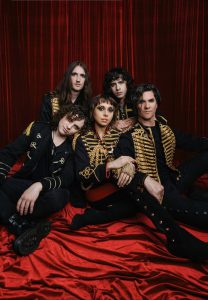
Courtesy of Veronica Swift
Look at how we handle social media: you could have hundred people telling you how amazing and important you are to them but the one person that says “I don’t like this” is the one that gets to you. That, of course, will bother me but then I have to change my perspective on this because if I let them get to me, I won’t be able to create and to write, and that’s what I’m designed to do. So what I do is switch the perspective and say: this person just liked what I was doing before, I should take that as a compliment and I answer and said “Thank you, I’m so glad you like the stuff that happened before. There will be more of that down the road, so if you don’t like what I’m doing now, no worries. You have 20 years of a career to enjoy. That’s all.
For the full interview, please visit the July 2025 Women in Jazz Media magazine.
Last modified: September 30, 2025