 Written by
 This coming October, the Iconic Amsterdam venue, the Bimhuis will celebrate it’s 50th aniversary. To celebrate this milestone in the venues history October will feature a number of special events and concerts. While the full program has not yet been announced, the first round of names have been published and include a series of three concerts by Brad Mehldau Trio Featuring Jorge Rossy & Clemens Van Der Feen, Chief Adjuah [The artist formerly known as Christian Scott, A trip through the years curated by Oscar Jan Hoogland and the premiere of the 5th Bimhuis composition commision that was awarded to Tijn Wybenga who will perform with his Brainteaser Orchestra. Watch this space in the coming months for more details as they are announced.
Leading up the October celebrations we thought it appropriate to outline the history of the venue. The original Bimhuis was hidden away on a quiet street in the heart of Amsterdam’s red light district and was a beloved gathering spot for both jazz fans and musicians since first opening back in 1974. This intimate venue has hosted its fair share of legends over the decades while also giving the stage to up-and-coming talents trying to make their mark. With its storied history and deep devotion to the art form, the Bimhuis has cemented itself as a cornerstone of the Netherlands’ jazz culture and an institution known around the world.
The Bimhuis story begins in the early 1970’s when Hans Dulfer, trumpeter Willem Breuker and pianist Misha Mengelberg were searching for a place to give Dutch jazz its own stage. Sure, the city’s jazz scene was thriving at the time, but it had no permanent home base to nurture and celebrate its artists. They found an old furniture store on the Oudeschans, stripped the walls down to bare concrete, cobbled together a makeshift stage, and opened the first BIMHUIS in October 1974. The early days were characterized by enthusiastic, progressive initiatives in jazz. Entirely fitting with the spirit of the times, there was a concerted push against the traditional approach. It was a place for and by musicians, where you could hear the newest sounds, and as a musician you would also be paid fairly.
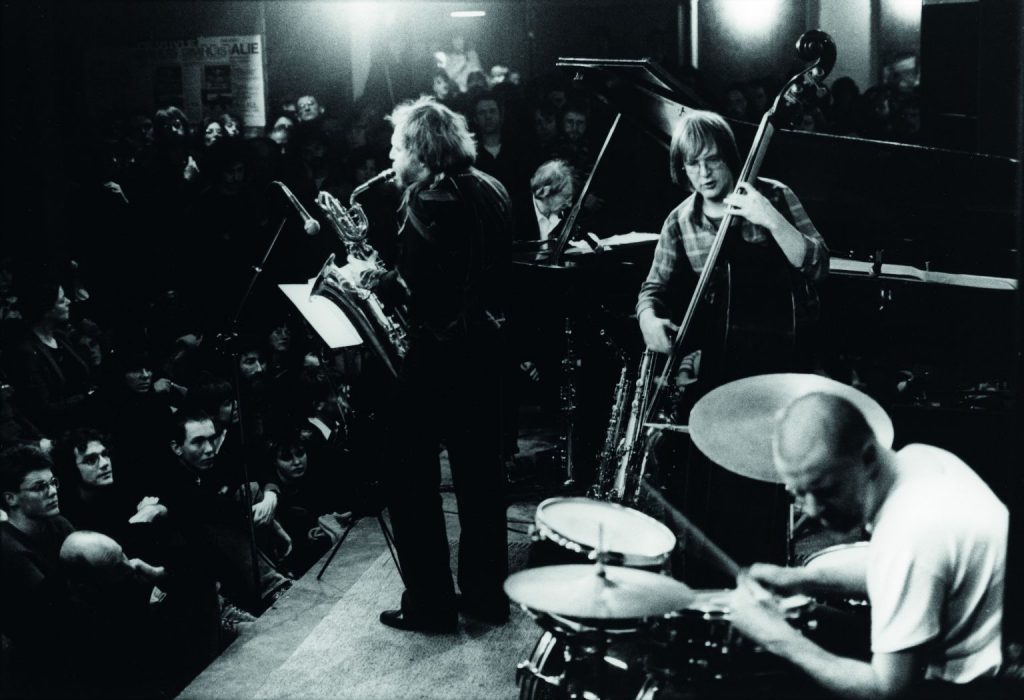
Heavy Days with Willem Breuker & Leo Cuypers 1980 | Photo © Pieter Boersma
But the Bimhuis was more than just another music venue from the very start. It was envisioned as a true sanctuary where musicians could freely explore their craft, push boundaries, and express themselves without constraint. The founders wanted to create an uninhibited space to foster creativity, experimentation and artistic expression in its purest form.
In 1984, a major renovation took place and the auditorium was redesigned as an amphitheater. This meant you could practically sit on the stage with the band of the evening, while also being able to easily get a beer at the bar. Even in the current BIMHUIS, this hasn’t changed. A professional recording system was installed, and many performances were released on vinyl and CD or broadcast on the radio. The trailblazers from the early years grew in the 1980s and 1990s into internationally respected bandleaders.
Over the years, the Bimhuis stage has played host to a true who’s who of jazz royalty from all eras and styles. From bebop pioneers like Dizzy Gillespie and Charlie Parker to avant-garde visionaries like Ornette Coleman and Cecil Taylor, the biggest names have all graced this hallowed stage.
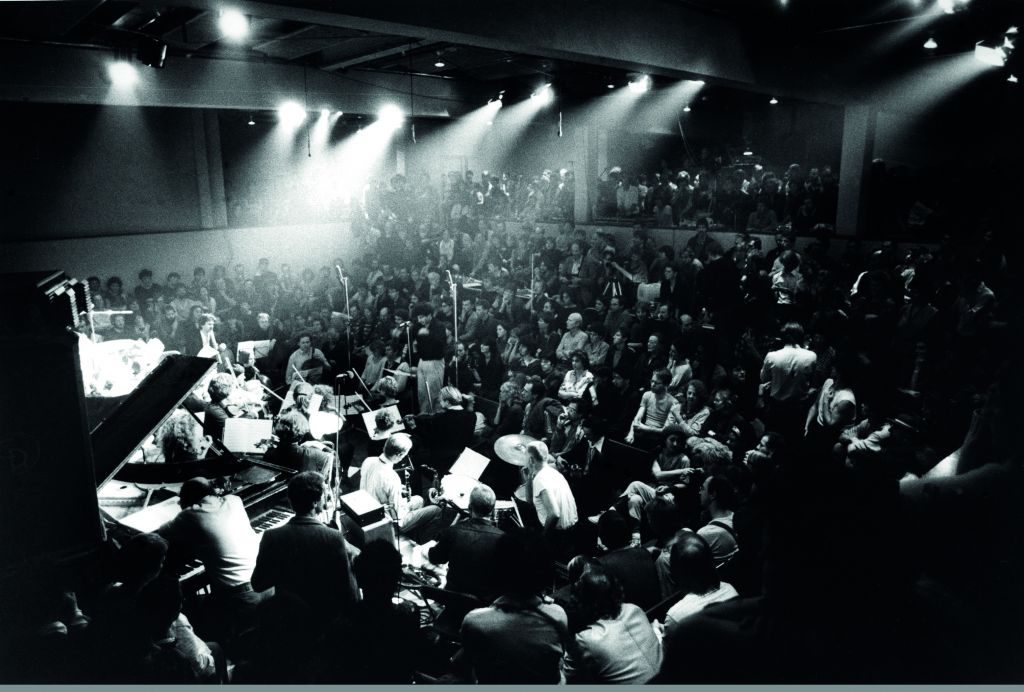
Misha Mengelberg ‘Tropic of Saddled zeekip’ on the occasion of the reopening of the Bimhuis after the renovation in 1984 | Photo © Michiel Wijnbergh
In the 70s and 80s, it became a hub for the groundbreaking European free jazz movement, welcoming iconoclasts like Peter Brötzmann, Evan Parker, and Han Bennink who pushed improvisation into uncharted territory through their sheer musical fearlessness. And the legends kept coming – Miles Davis, Wynton Marsalis, and countless other giants all left an indelible mark on this intimate space.
While celebrating the jazz giants, the Bimhuis has remained dedicated to fostering future generations through educational programs, workshops and mentorship initiatives. This has given young, aspiring musicians a vital platform to hone their skills and develop their unique creative voices.
One standout effort is the Bimhuis Composers Workshop, founded in 1988, which has nurtured countless up-and-coming composers by giving them the chance to work alongside renowned mentors and hear their works performed by world-class ensembles. It’s been an invaluable experience for many. But the Bimhuis’s impact extends far beyond just being a venue. It has played a vital role in preserving jazz’s rich heritage through its vast archives of recordings, photos, memorabilia and more that vividly document the genre’s evolution over decades. Countless iconic performances have been meticulously captured for posterity, ensuring those magic moments live on forever.
The Bimhuis has also become a hub for cross-cultural exchange, hosting international festivals, residencies and more that have brought together diverse artists from around the globe. This cross-pollination has fostered a deeper understanding and appreciation for jazz’s global reach.
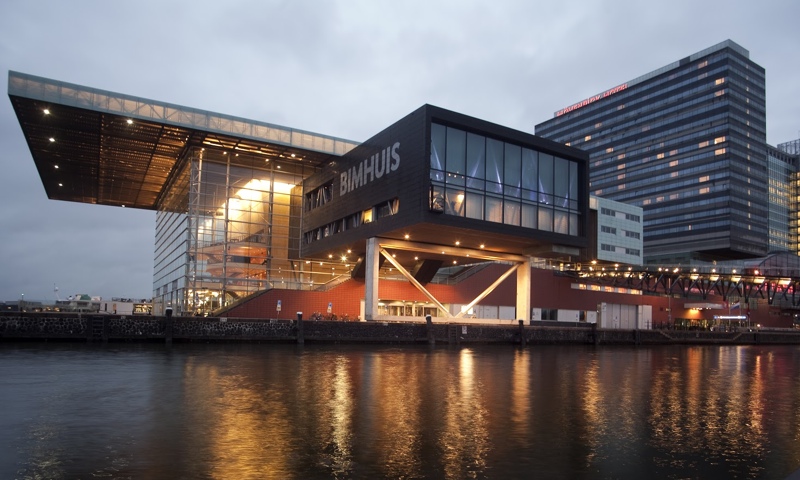
After nearly four decades in its original home, the Bimhuis relocated in 2005 to a new, state-of-the-art facility designed to provide the best possible experience for artists and audiences alike. While leaving the beloved original venue was bittersweet, the new Bimhuis has proven to be an architectural marvel optimized for superb acoustics and sightlines.
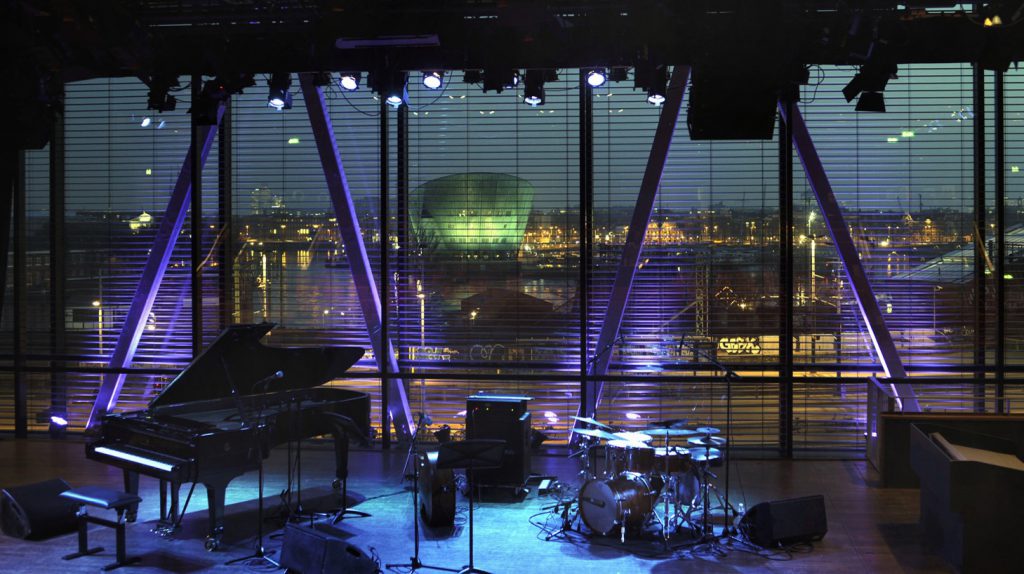
The New Bimhuis on the Piet Heinkade
But despite the new digs, the venue has remained true to its roots. The programming continues to celebrate the full spectrum of jazz’s evolution, from traditional to avant-garde. The Bimhuis’s enduring spirit and legacy as a sanctuary for creative expression lives on.
As it marks its 50th anniversary, the Bimhuis remains as vital as ever – inspiring musicians, captivating audiences, and ensuring jazz’s future burns bright. Its story is one of resilience, artistic passion, and the transformative power of music to unite people across borders. One thing’s for sure – this legendary club’s best chapters are still yet to come.

Editors Note:
Reaching the 50-year milestone is an extraordinary achievement for any jazz club. In a genre that has seen musical tastes, economic conditions, and cultural landscapes ebb and flow over the decades, maintaining not just a presence but a thriving institution dedicated to jazz for half a century is an incredible feat. Only a handful of venues around the world can lay claim to such longevity. It requires an unwavering commitment to the art form, keen business acumen to adapt with the times, and the ability to constantly reinvent and reinvigorate while staying true to the club’s core identity. Those jazz clubs that do make it to the 50-year mark have cemented their status as bastions of the music and living monuments to jazz’s rich legacy. Below are a few examples of other legendary jazz clubs around the world that have been at the forefront of presenting and preserving jazz music for over half a century. – Andrew Read
1. Village Vanguard (New York City, USA) – Opened in 1935, this legendary Greenwich Village club has hosted countless jazz greats over the decades.
2. Ronnie Scott’s Jazz Club (London, UK) – Founded in 1959, Ronnie Scott’s is one of the oldest and most renowned jazz clubs in the world.
3. Blue Note (New York City, USA) – The iconic Blue Note club in Greenwich Village has been a jazz institution since 1981, though the club’s history dates back to the 1950s.
4. Birdland (New York City, USA) – First opened in 1949, the current Birdland club has been operating since 1986 and continues the legacy of the original venue.
5. Jazz Showcase (Chicago, USA) – Opened in 1947, this Chicago club is one of the oldest continuously operating jazz clubs in the country.
6. Jamboree (Barcelona, Spain) – Founded in 1960, Jamboree is one of the oldest and most respected jazz clubs in Spain.
7. Jazzhaus (Freiburg, Germany) – Established in 1966, Jazzhaus is one of the longest-running jazz clubs in Germany.
8. Jazz Kissa (Tokyo, Japan) – Some of Tokyo’s jazz cafes or “jazz kissas” have been operating since the 1930s and 1940s, preserving Japan’s unique jazz culture.
9. Jazz Café Montparnasse (Paris, France) – This Parisian jazz club has been hosting live performances since 1968.
10. Jazz Alley (Seattle, USA) – Founded in 1979, Jazz Alley is one of the longest-running jazz clubs on the West Coast of the United States.
Last modified: October 11, 2025