 Written by
 Łukasz Droździel left Poland as a teenager and spent the next thirty-five years building a life elsewhere: high school, university and graduate school in the United States, then London, where he has lived ever since. He isn’t a musician, and until a few years ago he wasn’t especially plugged into the Polish jazz scene either. These days he’s one of its most visible champions of the genre in the UK. This September, the Polish Jazz Festival that he founded returns to London for a second, expanded edition: three venues, seventeen days, and a lineup that runs from a 1970s cult classic to a project that strips the piano out of Chopin.
I had the pleasure to sit down with Łukasz earlier this summer, ahead of the festival’s second edition. Łukasz is highly passionate about this project. He naturally talks at quite a pace and is disarmingly honest about how the whole project started: with luck, not planning.
When I asked him, “Why a Polish Jazz Festival in London?” he gave two reasons. The first, “Because I live in the UK and London is fertile ground for jazz music.” The second, “because I’m Polish.” In the two years or so before the first festival, he threw himself properly into the genre for the first time — people in his circle, some of them inside the Polish jazz scene, “pointed me in the direction of the jazz genre as a whole,” as he put it. “So it was on my doorstep,” he said.
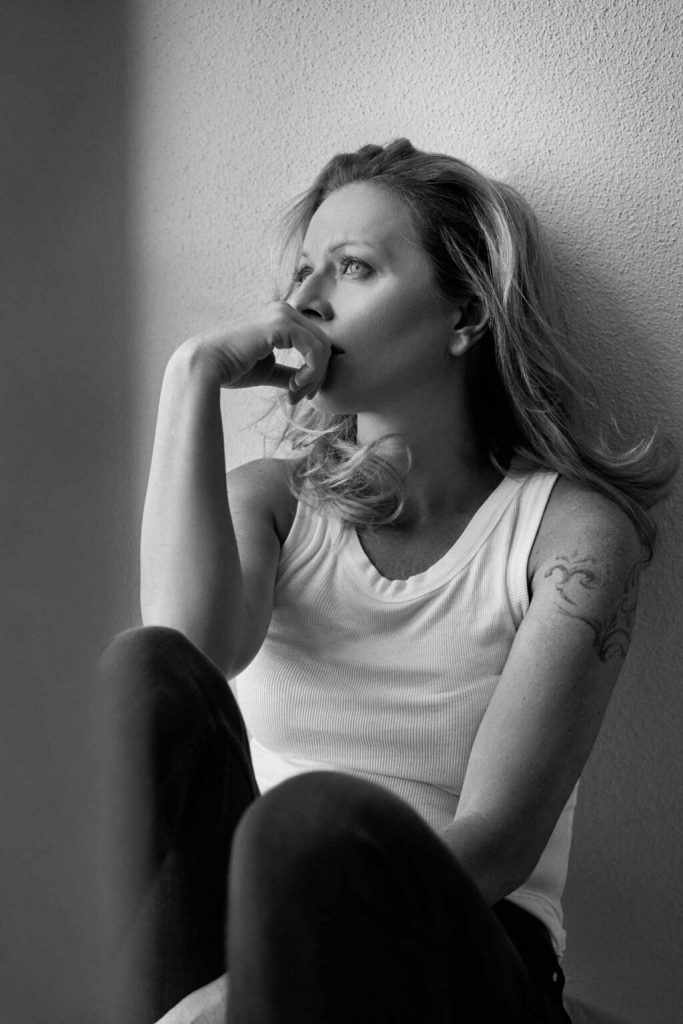
Anna Maria Jopek
He’d been away long enough that even the country’s biggest names had become strangers to him. He once sat next to a woman on a flight, and they got to talking, about “life and whatever’s going on,” as he put it. Only toward the end of the flight did she mention that she was a singer. He asked where he could find her music. She typed her name into his phone, and he says he nearly climbed out of his seat: she was Anna Maria Jopek, one of Poland’s most acclaimed vocalists, and he hadn’t recognised her — he hadn’t seen her, or lived in Poland, in twenty years. The contact between them didn’t end there. Jopek is now making a guest appearance at the festival’s opening gala.”
That deep dive into the genre left him convinced Polish jazz was more than a convenient geographic label. “I found out that Polish jazz has actually been perceived as a brand around the world, rather than just an adjective, like Korean jazz, or Czech jazz, or something,” he told me. He points to the pedigree: Urszula Dudziak, who headlines the festival’s second night, has recorded with Nina Simone and Herbie Hancock. Warner Music runs a dedicated sub-label called Polish Jazz that reissues and releases recordings internationally. And the scene right now, in his description, spans “the old guard, the contemporaries, and then a very, very unique youth scene” all at once.
I didn’t need convincing. Long before the pandemic, Jazz in Europe ran a piece called A Listener’s Guide to Polish Jazz, tracing that same history back to its roots. It’s an old article now, but it still pulled more than 120,000 reads — proof, if any were needed, that the appetite for this music runs deeper than one festival programme.
Some of that distinctiveness has darker roots too, and it’s clearly on Droździel’s mind as well. A couple of weeks before we spoke, the Polish journalist Piotr Metz had sent him an article about what’s known as the “catacomb period” of Polish jazz — the 1950s, when the music was effectively driven underground. “I didn’t realise there was a catacomb period,” Droździel said. He’s since listened to recordings from that era: “You wouldn’t believe some of the strangest, weirdest things that were going on there,” he said, putting it down to nerves, rebellion and repression — the pressure of playing music that could get you caught, in a country cut off from the rest of the jazz world at the time. It predates him by decades, but it’s the foundation he’s building on: a scene that developed its own harmonic language largely apart from Western commercial jazz, and one he says keeps “getting weirder and weirder as we go along.”
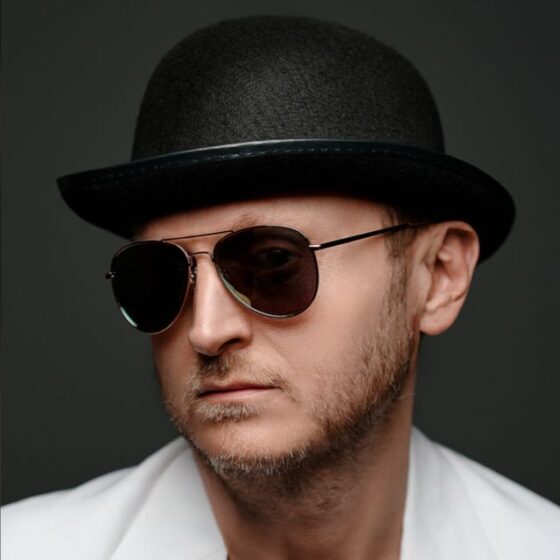
Łukasz Droździel
The first edition, staged last year, sold out. Droździel calls it, self-deprecatingly, “a well thought-out idea.” It was also a strategy that involved working with Polish schools, the Polish embassy and Polish cultural institutes in London to draw in the diaspora alongside British jazz audiences, including second-generation Poles in the UK who might not otherwise have been exposed to the music. This year’s edition, which I asked him to walk me through, is considerably larger — and a genuinely contemporary bill.
It opens on 11 September at Cadogan Hall with the first-ever full performance of Wstęp Wzbroniony, a Tomasz Stańko and Andrzej Trzaskowski collaboration from the 1970s, played in its entirety by the Wrocław group EABS. Droździel told me the Wojtek Mazolewski Quintet follows with new material, joined by Anna Maria Jopek — the singer from the plane — for her guest appearance. The next night, also at Cadogan Hall, belongs to two very different generations of Polish women in jazz: Kayah, one of the country’s biggest pop stars, performing her first jazz record, Jazzayah, in full, and Urszula Dudziak, the Nina Simone and Herbie Hancock collaborator, making one of her rare London appearances.
The 13th moves to Union Chapel for what Droździel calls the Warsaw Jazz Takeover, built in cooperation with the city of Warsaw itself: the guitar trio HVMBLE, the Marcin Masecki Trio, and the eleven-piece Warsaw Village Band, recipients of the BBC World Music Prize, fusing folk, jazz and world music. Masecki, Droździel points out, is probably the country’s most acclaimed pianist alongside Leszek Możdżer, and outside jazz circles he’s best known as the primary arranger, pianist and musical consultant on Cold War, Paweł Pawlikowski’s Oscar-nominated 2018 film. The concert is preceded by a panel on Warsaw’s jazz history, moderated by Piotr Metz, freshly back from interviewing the Beatles producer Giles Martin, alongside Mike Flynn of Jazzwise. The whole evening, Droździel told me, runs from five in the afternoon until three in the morning, closing with Polish jazz-tinged DJ sets.
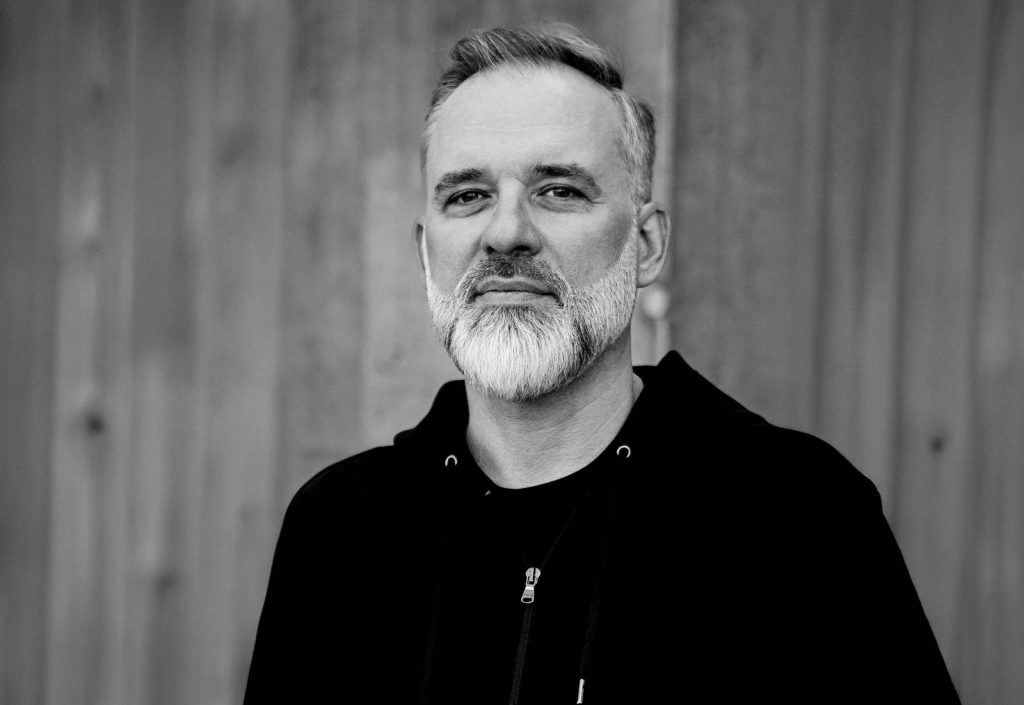
Mariusz Szypura | photo by Filip Ttrzaskowski
The closing weekend, on the 26th and 27th, is the most adventurous stretch of the programme, and the one I was happiest to see. Cadogan Hall hosts the European premiere of Chopin Residue, a project by the Polish sound artist Mariusz Szypura that strips the piano out of Chopin’s compositions and rebuilds them from the resonance left behind. Droździel compares the result to Pink Floyd, though it still follows the structure of the original scores. Taking Chopin apart has real precedent in Polish music. Jazz in Europe covered this same lineage back in 2015, in a series on the country’s jazz pianists, from Sławomir Jaskułke’s Chopin for 5 Pianos project to Marcin Masecki’s own reworking of Bach for Decca. Masecki, who plays this same festival two weeks earlier with his trio, has built a career on treating classical repertoire as something to dismantle rather than preserve. Szypura’s version, with the piano removed entirely, is the most radical extension of that instinct I’ve come across. The list of collaborators includes Adrian Utley of Portishead and Sonic Youth’s Lee Ranaldo, among others, and Szypura, named a finalist at the European Design Awards 2026 for the project’s visual work, is also planning a separate, invitation-only Dolby Atmos listening session for press in the days that follow, alongside an accompanying art exhibition. The same night, in a separate concert, Leszek Możdżer performs a tribute to Krzysztof Komeda, with the guitarist Rob Luft expected as a guest, though Droździel was still finalising the full guest list when we spoke. Kosmonauci, a young outfit fusing cosmic textures with jazz, close the festival at Kings Place on the 27th — a group Mike Flynn is already preparing a feature on for Jazzwise‘s September issue.
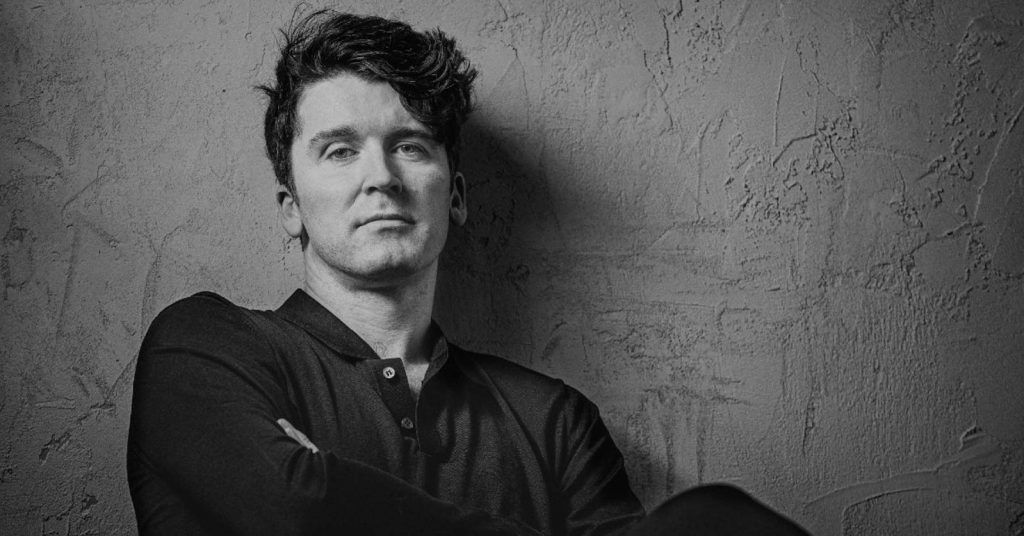
Marcin Masecki | photo by Magda Hueckel
Droździel is blunt about what his job actually involves. “My job is fairly easy,” he told me, “because all I got to do is bring the patients to the doctor, and then the rest of the artists sell the rest.” He undercuts the modesty almost immediately: “I’ve programmed a lot of festivals over the years, and bringing the patients to the doctor is not the easiest job.” London, he says, is “a Mecca for jazz, one of the biggest places in Europe for it,” and also one of the most competitive, which means finding the right formula rather than assuming an audience will simply show up.
That search for the right formula is already extending beyond London. Droździel is building what he describes as a network of Polish jazz festivals, and the next stop is Hamburg, where he has secured four venues for a three- or four-day event in February: the Grand Hall of the Elbphilharmonie for a gala evening with four or five artists, the smaller, roughly 600-capacity Laeiszhalle, the club Nika for a younger, more contemporary bill, and a small, picturesque room called Jazz Hall. The approach, he told me, is deliberately incremental: “starting small, all over different countries, in order to spread the word and build the brand.” He’s already talking about a possible Dutch edition somewhere down the line. Inviting well-known local artists alongside the Polish lineup, he adds, is central to the strategy in every country: it opens the music to a wider local audience and tends to produce collaborations that wouldn’t otherwise happen. For 2027, he’s already thinking bigger again — a single large-scale gala in London, at a venue on the order of the Barbican or the Royal Albert Hall, recorded with an eye toward a possible live release.
It’s a smart way to grow. Building outward from a single, specific national style, rather than folding everything into a generic “European jazz” banner, is exactly what makes a scene like this exportable — and I’m glad to see the Polish Jazz Festival land in Hamburg first.
Droździel is aware of how unusual his own route into all this has been: a Polish emigrant who spent three and a half decades in the United States and the UK before deciding to become the person putting Polish jazz in front of British audiences. He doesn’t seem bothered by the irony. “I’m happy to be the ambassador of it,” he said, and then went back, as he did throughout our conversation, to the music itself — recordings from the catacomb years that still sound stranger than anything else from the decade, and a current scene he says just keeps “getting weirder and weirder as we go along.”

Polish Jazz Festival 2026 Line-Up:
Friday 11 September | Cadogan Hall
EABS & Wojtek Mazolewski Quintet – Opening Gala
The festival opens with two of the most influential forces in contemporary Polish jazz. Acclaimed collective EABS present the first-ever live performance of Wstęp Wzbroniony, the landmark collaboration between Tomasz Stańko and Andrzej Trzaskowski, before bassist and composer Wojtek Mazolewski and his quintet premiere new material alongside special guests.
Saturday 12 September | Cadogan Hall
Kayah – Jazzayah
One of Poland’s most celebrated artists reimagines her repertoire through the lens of jazz. Blending original material, reworked classics and jazz standards, Jazzayah presents a new chapter from a performer whose career has spanned pop, soul, world music and beyond.
Saturday 12 September | Cadogan Hall
Urszula Dudziak
A rare London appearance from one of the most influential vocalists in European jazz. Across a career spanning more than six decades, Dudziak has collaborated with artists including Krzysztof Komeda, Herbie Hancock, Bobby McFerrin and Sting, establishing herself as a singular voice in international jazz.
Sunday 13 September | Union Chapel
Warsaw Jazz Takeover
A celebration of one of Europe’s most dynamic music cities, featuring the virtuosic Marcin Masecki Trio, rising jazz outfit HVMBLE and the internationally acclaimed Warsaw Village Band, whose innovative approach to Polish folk music has earned worldwide recognition including a BBC World Music Award for “Best Newcomer”.
Saturday 26 September | Cadogan Hall
Chopin Residue
The UK premiere of an ambitious multidisciplinary project reimagining the music of Frédéric Chopin through experimental electronics, improvisation and contemporary composition. Created by producer and writer Mariusz Szypura, the project features an international cast including Adrian Utley (Portishead), John Stanier (Battles) and Sean O’Hagan (The High Llamas).
Saturday 26 September | Cadogan Hall
Leszek Mo?d?er: An Evening with Komeda
One of Europe’s leading jazz pianists pays tribute to Krzysztof Komeda, the legendary composer whose work helped define a distinctly European jazz aesthetic and whose film scores included Rosemary’s Baby and Knife in the Water.
Sunday 27 September | Kings Place
Kosmonauci
One of the most exciting young groups to emerge from Poland’s new jazz generation. Drawing on jazz, hip-hop, drum & bass and improvisation, the quartet has rapidly built a reputation across the European festival circuit for its adventurous, high-energy performances.
The Polish Jazz Festival takes place across London from 11–27 September 2026. Presented in partnership with the Polish Tourism Organisation, Warsaw Tourism Organisation, and co-financed by the Ministry of Culture and National Heritage. More info at polishjazzfestival.com
Last modified: August 18, 2026