 Written by
 I wasn’t sure what to expect when the Delirious Ears promo landed in my inbox. A reissue of two 1981 recordings by a Cameroonian artist I’ll admit I knew only by name — promising, but I’ve been disappointed before. Then I pressed play on Phone Me Tonight, and within thirty seconds I was reaching for the volume. This is the real thing.
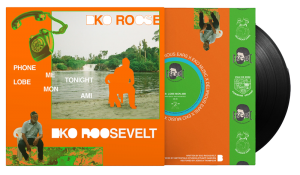 I have been spending time with the remastered versions of these two tracks over the past week, and what strikes me most forcefully is not nostalgia — these recordings don’t trade in nostalgia — but urgency. Phone Me Tonight sounds like it was made last year. The Yamaha DX7 that sits at the centre of Roosevelt’s arrangement still crackles with purpose; the rhythm section still moves with that irresistible loose-tight quality that separates great dance records from merely competent ones. The remastering is excellent: the low end is fuller and better defined, the mix has a clarity that the original pressings couldn’t quite achieve, and crucially, nothing has been over-processed. The warmth and the grain are still there. Whoever made these decisions understood what they were working with.
What they were working with, it turns out, is one of the more remarkable figures in the history of African popular music. Born in 1946 on the Cameroonian coast — in the coastal community of Lobé, where he lives to this day as Traditional Chief — Eko Roosevelt’s story reads more like mythology than biography. Local lore recalls how, at the age of ten, he killed a serpent near the waterfalls of La Lobé, an event that became woven into his legend long before his music did. He discovered his passion in church, pursued his studies in Dakar, where he also met his wife Nicole, and eventually made his way to France — first with the Dikalo Group, later as a solo artist building what he called his ‘Funky Disco Music’ sound from the ground up.
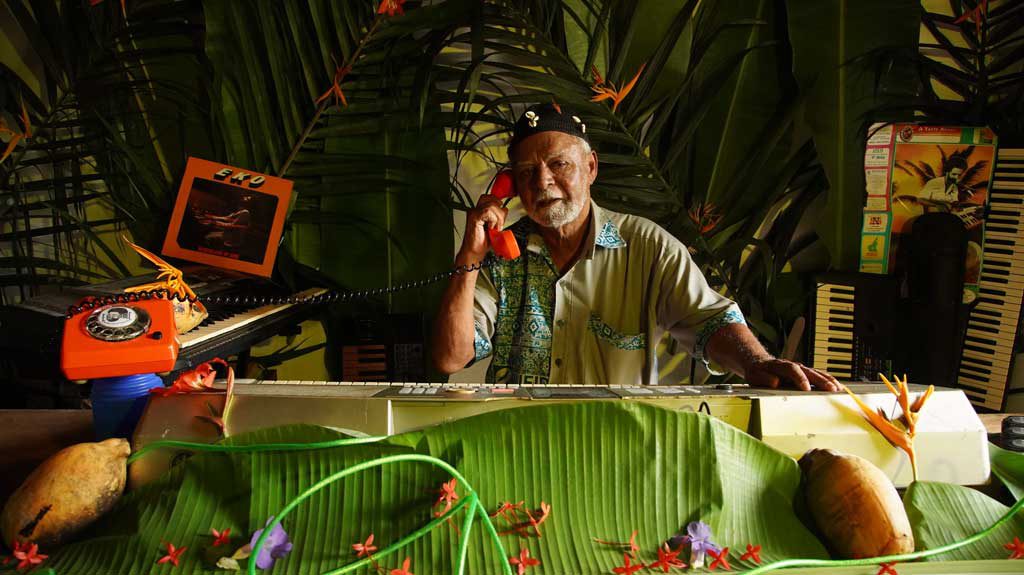
Between 1976 and 1981, he released nine albums, collaborated with Manu Dibango, Miriam Makeba, and Claude François, and directed the National Orchestra of Cameroon. He shared stages and worked in the studio with artists including Toto Guillaume, Marthe Zambo, M’Pongo Love, and the visionary Francis Bebey. His influence reached Kassav’, who he says were directly inspired by his sound in the 1980s. And yet for much of the world beyond Cameroon — where his status as a national figure has never required any reconfirmation — Roosevelt remained largely unknown outside a dedicated circle of African music specialists and the deeper end of the digging community.
The template for what Roosevelt was doing on Phone Me Tonight — African rhythm and soul filtered through the vocabulary of funk and disco, with jazz and Brazilian music woven into the DNA — is precisely the template that contemporary producers and DJs have been returning to for the past fifteen years. Call it what you like: Afrobeat before that label hardened into a genre, or Afro-funk, or simply what happens when a musician of Roosevelt’s creative level picks up the instruments and ideas available to him in Paris in 1981 and uses them entirely on his own terms. Roosevelt himself puts it with characteristic directness: “Me and my band used to play Kool & the Gang, but we would put some more African soul into it. I also drew inspiration from Osibisa, a band that plays rock music with an African twist.” That synthesis, stated so plainly, is the thing. He was doing it first, and he was doing it better.
Phone Me Tonight was recorded at Studio Maïa in Bondy — then one of the most creative hubs for artists of the African diaspora operating in France — with producer Gabriel Nahas, a figure well known for his work with Manu Dibango and others. The extended version on the vinyl is the one that has been carefully quantised for DJs, a subtle and intelligent adjustment that doesn’t compromise the feel of the original but makes it genuinely useable in a club context. The accompanying video, filmed at the Lobé Waterfalls and documented with Roosevelt’s community throughout 2025 and 2026, is a beautiful piece of work — it brings his connection to the land and people of Lobé to life in a way that gives the music its full context.
 The second track, Lobé Mon Ami, presented here in its rare original version for the first time, is a different proposition entirely — more intimate, more personal, weaving Batanga and French into something that functions simultaneously as love song and cultural memoir. “I was travelling a lot and would miss my village,” Roosevelt has said. “To express my love for Lobé, I wrote this song.” Listening to it alongside Phone Me Tonight, you get the full measure of the man: the dancefloor craftsman and the community poet, held together in the same artistic vision.
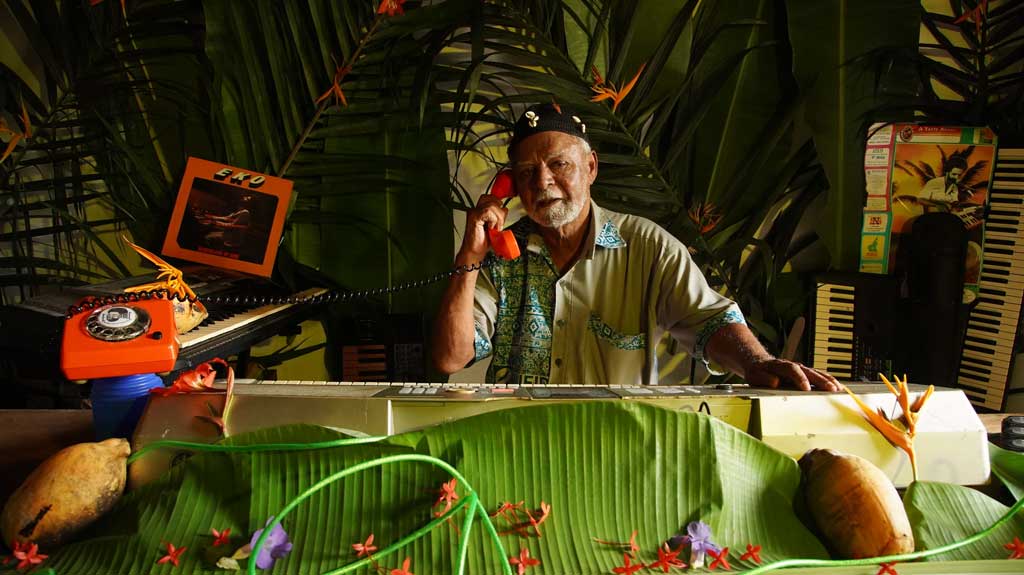
The vinyl release from Delirious Ears is a proper artefact. A printed inner sleeve, a blue-and-orange-accented sticker label designed for visibility under club lighting, a special zine featuring rare, previously unpublished photographs of Roosevelt at work in his home studio in Lobé — including the original DX7 — and exclusive bonus tracks available only to vinyl purchasers. The digital release adds the original version of Phone Me Tonight and a Kribi version of Lobé Mon Ami. This is a label that has thought carefully about how to present an artist of Roosevelt’s stature.
That label, Delirious Ears, was founded in 2025 by a young Belgian music lover named Levi Adriaenssens, and the story of how it came into being is worth telling. In 2022, at the Nyege Nyege Festival in Uganda, Adriaenssens found himself sharing a hotel room with Roosevelt for a week. The conversations that followed — over bottles of wine, stories of Roosevelt’s encounters with Ray Charles, Bob Marley, and Manu Dibango — sparked something that took years to bring to fruition. “Being a young music lover this obviously sparked my excitement,” Adriaenssens has said. “During our talks we realised he wasn’t fully aware of how big his track with Disclosure is in Europe. He’d also mention how he often had difficulties with other record labels.” That candour, and the trust that grew from it, led to Adriaenssens visiting Roosevelt in Cameroon multiple times, setting up a recording studio in his home, documenting his life and community, and beginning work on a documentary alongside Cameroonian director Steve Happi. This is not a label extracting value from an archive. It is a genuine partnership built on time spent and trust earned.
 Roosevelt’s route back to global visibility began in 2020, when Disclosure revisited his 1982 single Tondoho Mba and introduced him to a vast new audience. The reach of that remix — championed subsequently by Folamour, GUTS, and others — clearly came as a revelation to the man himself. “I started seeing videos of people around the world playing the remix in nightclubs,” he has recalled. “That’s when I started to realise it was a big success.” The producers and DJs drawn to his catalogue now read like a roll call of the contemporary leftfield dancefloor: Gilles Peterson, Diplo, ANOTR, Jax Jones, Sonny Fodera, Daphni. All of them, knowingly or otherwise, following a trail that Roosevelt laid more than forty years ago.
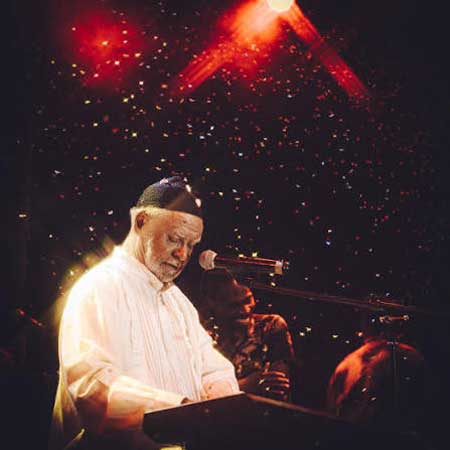
Now in his late seventies, he shows no sign of resting. He remains the Traditional Chief of Lobé — a title he formally assumed in 1996, following in the footsteps of his grandfather, His Majesty Bevigna Eko Louis — and he continues to perform regularly across Cameroon, where entire crowds sing along to Lobé Mon Ami and classics like Nalandi and Attend-Moi. He is working on new material. He has three albums of Catholic music still awaiting release. And this July, he will perform at Tomorrowland in Belgium — one of the largest music festivals on earth — on the 24th, at the Melodia Stage during Belgian DJ Jeroen Delodder’s Disco Zonderdag programme. The format is a hybrid: Delodder mixing Roosevelt’s catalogue while Roosevelt himself sings live, plays piano, and performs with a small horn section. The Melodia Stage is one of Tomorrowland’s more intimate spaces, set this year at the lake edge beneath a vast harp sculpture. The contrast between that setting and the Lobé Waterfalls where the Phone Me Tonight video was filmed could hardly be more striking — and yet there is a continuity to it that feels right. Eko Roosevelt has always moved between worlds.
“I would love to experiment more with electronic music,” he says. “I like working with young people and I get inspired by new sounds and experiments. I feel timeless as an artist.” On the evidence of Phone Me Tonight / Lobé Mon Ami, that is not hubris. It is simply an accurate statement of what forty-plus years of making music on his own terms has produced. This reissue is both a vital reintroduction and a reminder that the story is far from finished.
Phone Me Tonight / Lobé Mon Ami by Eko Roosevelt is released on 3 July via Delirious Ears on deluxe vinyl and digital. The lead single Phone Me Tonight is available from 19 June. Eko Roosevelt performs at Tomorrowland, Melodia Stage, on 24 July, 19:15–20:00 CET.
Last modified: June 26, 2026