 Written by
 From 24 to 27 September 2026, Cologne becomes the centre of gravity for European jazz and improvised music, as the Europe Jazz Network convenes its annual conference in Germany for the first time. More than 200 member organisations from 38 countries will gather under a theme that feels less like a conference title and more like a declaration of intent: Who We Are, What We Stand For.
There are moments when the arts are asked to do more than entertain — when they are called upon to articulate something that political language alone cannot. This is one of those moments. Across Europe and beyond, cultural institutions are navigating a landscape that has shifted sharply and, in many cases, uncomfortably. Funding frameworks are being redrawn. Political winds are blowing in directions that have historically been unkind to the arts. Audiences are evolving, costs are rising, and the organisations that have spent decades building infrastructure for jazz and improvised music are asking some very hard questions about sustainability, purpose, and identity.
The European Jazz Conference 2026 is where those questions will be asked — and, with any luck, where some of the answers will begin to take shape.
I’ve attended several EJN conferences over the years, and what strikes me consistently is the seriousness of purpose that runs alongside the inevitable warmth and camaraderie of people who genuinely love this music. This year’s edition, co-organised by EJN alongside three Cologne-based partners — Stadtgarten Köln, Cologne Jazzweek, and the Monheim Triennale — carries an additional weight. The theme is not aspirational, it is as the EJN itself has framed it, a response to a world in which “governments in the US and parts of Europe are using culture as a tool to drive nationalistic, divisive agendas.” Against that backdrop, a gathering of jazz and improvised music professionals from 38 countries is itself a kind of statement.
The Europe Jazz Network is the connective tissue of the European jazz sector. With more than 200 member organisations spanning festivals, concert venues, labels, artist development programmes, and advocacy bodies, it represents a reach and a collective weight that is genuinely significant. For four days in September, those organisations will be in the same rooms, across multiple venues in Cologne, sharing strategies and developing the kind of cross-border trust that makes collective action possible.
The professional programme is built around that ambition: panels on sustainable funding models and cultural policy advocacy sit alongside sessions on mental health in the context of precarity within the cultural field — an acknowledgement that the people running these organisations are under real strain — as well as discussions on fair practices, digital visibility, and the role of jazz as a catalyst for democratic participation. These are not abstract topics. They are the daily realities of anyone working in this sector right now.
The conference opens with a keynote address from British pianist Alexander Hawkins. His reflection on the conference title — who we are, what we stand for — is likely to set a tone that is challenging rather than comforting, and that feels exactly right. The opening panel that follows will examine the responsibility of cultural institutions in times of crisis, with contributions from Isabel Pfeiffer-Poensgen, former Minister for Culture and Science of North Rhine-Westphalia, Shabnam Parvaresh of the Morgenland Festival, Eric Birath of Fasching Club and Stockholm Jazz Festival, and Daniel Zimmermann, former Mayor of Monheim am Rhein. The range of perspectives — political, institutional, artistic — signals a conference that is not content to stay within its own walls.
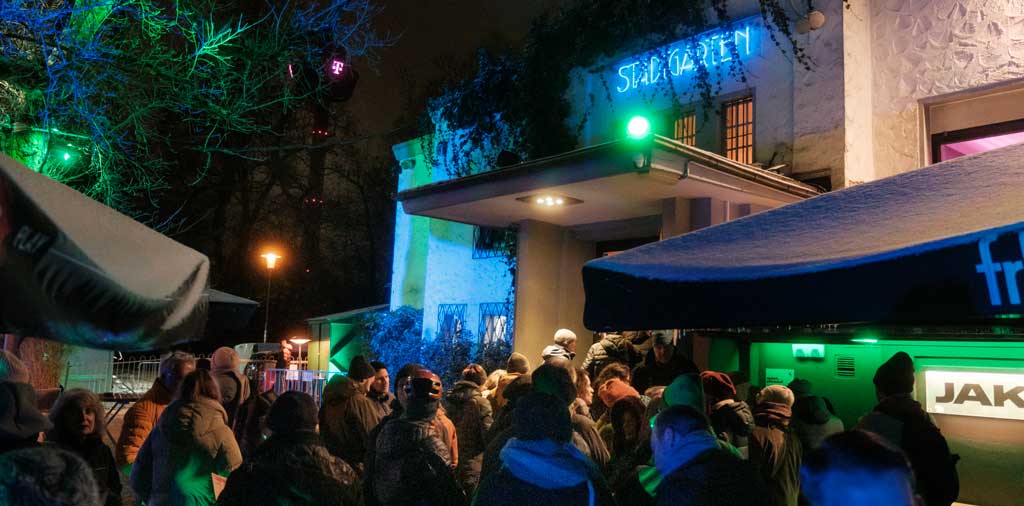
Cologne is a fitting host for all of this. The city has long been one of the most significant nodes in the European jazz network — not just as a place where music happens, but as a place where the infrastructure around music is taken seriously. At the centre of that infrastructure is Stadtgarten Köln, one of the EJN’s founding members, and this year the venue turns 40 — a milestone that is, in no small part, why the three Cologne co-organisers put their hand up to host the conference. The anniversary will be celebrated separately, earlier in the month: on 4 September 2026, the date the concert hall first opened its doors in 1986, Stadtgarten marks the occasion with the Night of Stadtgarten, a multi-stage concert event, and the publication of a book charting the history of the venue and the Initiative Kölner Jazz Haus e.V.
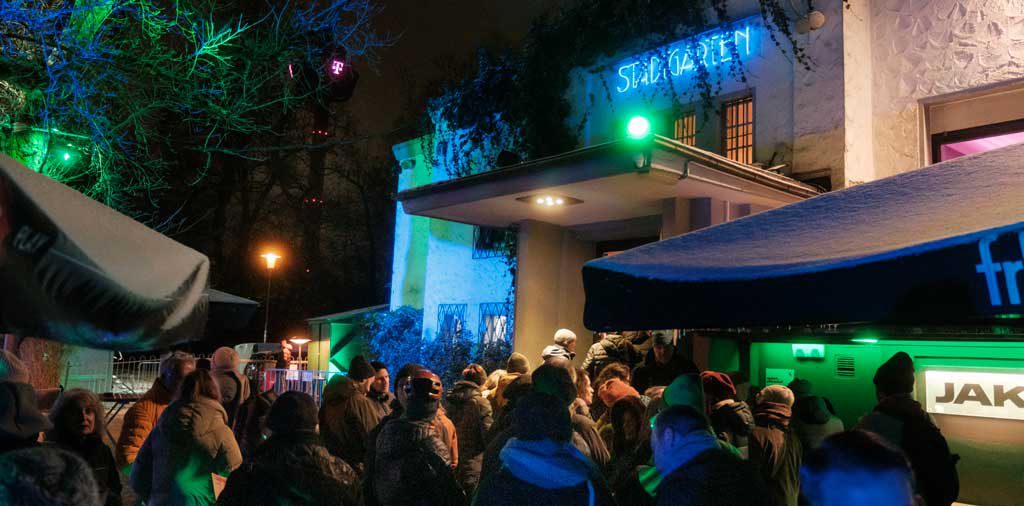
Stadtgarten Koln | Photo by Niclas Weber
By the time the EJN community arrives in Cologne three weeks later, that celebratory mood will still be in the air. It is also worth noting that the EJN General Assembly on 24 September will be the network’s 40th — two institutions, the same number, the same city, the same autumn. Since 2017, in partnership with the City of Cologne and the state of North Rhine-Westphalia, Stadtgarten has been developed into the “European Centre for Jazz and Contemporary Music,” an initiative that includes the NICA artist development programme, which supports exceptional artists in jazz and contemporary music at pivotal stages in their careers.
Cologne Jazzweek, though only founded in 2021, has moved remarkably quickly to establish itself as one of Europe’s most compelling festival platforms, presenting more than 50 concerts across 20-plus venues each year. The Monheim Triennale, which concluded its remarkable three-year cycle with its final edition in 2025, has shaped the regional landscape in ways that will be felt long after it. Between them, these three organisations represent something coherent: a city that has chosen to invest in the infrastructure of creative music, and has done so with genuine artistic ambition.
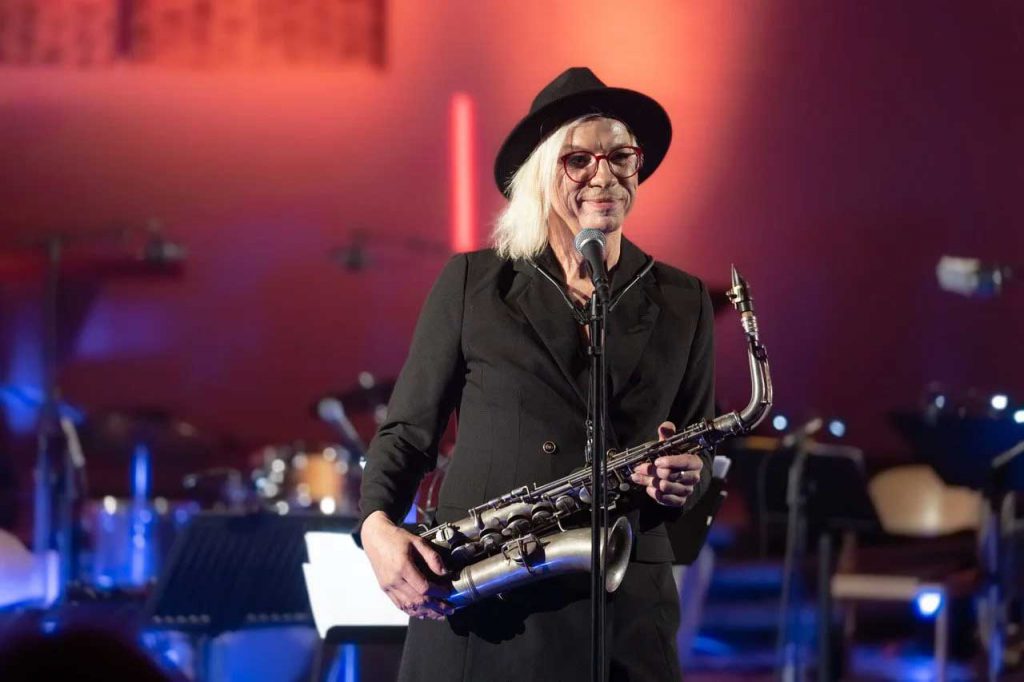
Holly Schlott
Running alongside the conference programme is a showcase festival that presents thirteen projects from the current German jazz scene — and if the selection is anything to go by, that scene is in excellent health. The conference itself is primarily aimed at industry professionals, however the showcase festival includes concerts open to the public.
Foe the event the EJN selection committee has assembled a programme that ranges across formats and approaches with impressive breadth. The Olga Reznichenko Trio brings metrically complex, rhythmically exploratory chamber jazz that repays close listening. Rabih Lahoud’s MASAA quartet — featuring the Lebanese singer alongside Reentko Dirks on guitar, Demian Kappenstein on drums, and Marcus Rust on trumpet — builds one of the most distinctive bridges I know between European jazz, Arabic maqam, and the intimacy of shared storytelling.
Holly Schlott’s eleven-piece ensemble Unique offers something different again: chamber jazz that dissolves orchestral convention and makes a philosophical argument for music as a space where opposites can coexist. Cologne-based bassist Florian Herzog leads his quartet through the productive tension between free improvisation and rhythmic structure, while MASAA’s co-presenter on the programme, the Sheen Trio led by clarinetist Shabnam Parvaresh, draws on the Persian musical tradition without ever making that heritage feel like a costume.
Big Breeezy’s Mumble Mafia — led by the masked young saxophonist Victor Fox, who performs with a ski mask pulled over his face — brings a Gen Z restlessness and a punk-inflected urgency that feels deliberately, productively abrasive. GANNA, the Ukrainian vocal artist born Ganna Gryniva, performs material from her album “Utopia,” blending folk melody, synthesizer loops, and field recordings from Ukraine into something that is genuinely its own thing.
MALSTROM’s trio of saxophone, guitar, and drums operates without a bass player by conscious choice, building a collective language that spans free improvisation, drone, and raw noise. Neon Dilemma, the collaborative trio of pianist Elias Stemeseder, bassist Robert Landfermann, and drummer Leif Berger, takes the piano trio format and subjects it to the musical sensibilities of the present. The full programme — thirteen acts across Stadtgarten Köln, LOFT, JAKI, and the Sartory Hall — offers a genuine cross-section of where German jazz is right now, and it is a more diverse and adventurous scene than is perhaps widely recognised.

Ganna Gryniva
The programme also includes the EJN Awards 2026, among them the 15th EJN Award for Adventurous Programming and the 8th EJN Music & Community Award. And there will be a concert by Hyphen Dash, the Kyiv-based ensemble who are Grand Prix winners of the inaugural Ukrainian Jazz Prize, blending jazz, hip-hop, electronica, and fusion in a set that will carry its own particular resonance given the context of this year’s conference.
Registrations for the European Jazz Conference 2026 are now open via Eventbrite, for both EJN members and regular participants. Whether you are an industry participant, musician or simply someone who cares about the future of this music and the institutions that sustain it, this is worth your time. The conversations that happen in Cologne in September will matter — not just for the sector, but for the wider argument about what culture is for and who it serves. That argument is more urgent now than it has been for a long time. Jazz has always known how to hold that kind of tension. Four days in Cologne might remind the rest of us of the same.
European Jazz Conference 2026. Cologne, 24–27 September 2026. Co-organised by Europe Jazz Network, Stadtgarten Köln, Cologne Jazzweek, and the Monheim Triennale. Registration open at Eventbrite. Further information at europejazznetwork.eu.
Last modified: May 7, 2026