 Written by
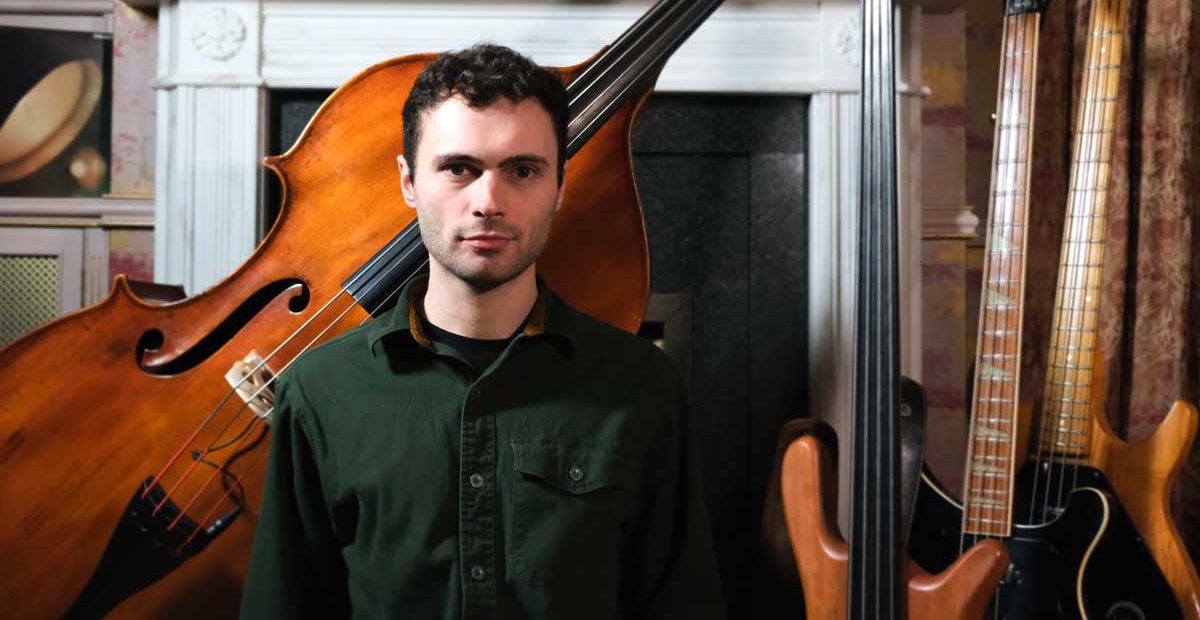
 There are debut albums that announce an arrival, and there are debut albums that feel like they could only have been made by one person, rooted in one place, shaped by one very particular set of experiences. Michael Dunlop’s Bede is firmly in the second category. The Sunderland-born bassist and composer has made a record that draws its identity from the landscape, folk tradition, and musical instincts of the North East of England — and filtered them through a sensibility that is unmistakably contemporary, spacious, and assured.
 The title is a nod to the Northumbrian monk Bede, and the sense of place runs deep throughout. During lockdown, Dunlop found himself back at his parents’ home with time to walk, think, and work through a book of local folk tunes — learning how they were constructed and beginning to reimagine them in a jazz context. That period of quiet rediscovery gave the project its backbone. The connection to Scandinavian jazz — its clarity, its melodic directness, its willingness to let space do the work — is equally present, and the two influences sit together on this record with a naturalness that suggests they were always close relatives.
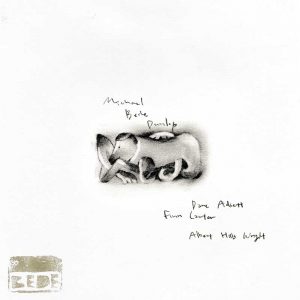
The ensemble grew organically out of live playing rather than deliberate assembly. Dunlop met saxophonist Albert Hills Wright and pianist Finn Carter through the Guildhall School network, and the initial concept was a drummer-less trio — partly practical, partly a way of pushing Dunlop himself into greater rhythmic responsibility as the sole foundation of the rhythm section. Drummer Dave Adsett was brought in later when certain pieces demanded a fuller sound, and the result is an album that divides naturally into two complementary worlds: quartet and trio. On vinyl, that division is architectural — one side each — and it gives the record a satisfying structural logic that rewards listening as a complete sequence rather than in pieces.
It opens with “Derwentwater’s Farewell,” Dunlop’s arrangement of the first Northumbrian folk tune he revisited, and it grabs your attention immediately. A fast-flowing bass and piano ostinato underpins a strong folk melody with real urgency, a fine sax solo develops and builds before dissolving back into the ostinato’s controlled turbulence. It is a confident, well-judged opening that sets the terms of the record clearly. “A68” follows and shifts the mood entirely — a pastoral, contemplative quartet piece that evokes the wide skies and open horizons of Northumberland National Park at night, its subtle pulse and airy lines doing exactly what Dunlop describes: channeling nocturnal solitude into music. “Pub Corner,” reportedly written in an hour at the studio, has a nod to fugue structure in its opening before developing into something more asymmetrical and harmonically interesting — unpretentious and direct, much like the pub that gave it its name I would supose.
“Bonny at Morn” is one of the North East’s best-known folk tunes, and Dunlop’s arrangement is a genuine highlight of the quartet side. It opens with a lovely bass motif before moving to a unison statement of the melody shared between sax and piano, and what follows is a true ensemble piece — understated, beautifully balanced, with a particularly fine bass solo from Dunlop himself. The interplay here is exactly what this kind of writing demands: everyone listening, everyone contributing, no one overreaching.
The trio side opens with “Bog,” and it is immediately clear we are in different territory. A bass melody built on double stops provides harmonic grounding while the band enters with a haunting, floating texture that sits somewhere between composition and sound design — quite avant-garde in its approach, but never loses its thread. “The Breamish,” drawn from Pete Loud’s folk collection, opens as a duet between Dunlop and Wright, the traditional melody passed between bass and sax with admirable restraint before the full trio enters. “The Hermitage” is, for my money, the album’s single finest moment — a track with exceptional feel and an arrangement that shows Dunlop’s compositional voice at its most developed and most personal.
“Thank You to a Flower” is as delicate as its title suggests, and the Scandinavian influence is at its most audible here — a beautiful piano introduction sets the scene before Wright’s saxophone carries the melody with a lightness of touch that is genuinely affecting. Then comes “California Lullaby,” the album’s lead single and one of its undisputed highlights. Its evocative, meditative quality is captivating from the first bar, and Dunlop’s bass solo here is among the best playing on the record — technically vulnerable and emotionally open in equal measure. The album closes with “Derwentwater’s Reprise,” a warmer, quieter trio reading of the opening track, recorded spontaneously with harmonium and dulcitone adding unexpected colour. It is a near-perfect way to bookend the set — the same melody, a different light entirely.
What I admired most about Bede is that it is not a soloist-with-rhythm-section record. It is a genuine ensemble album, and that distinction matters. The players extend the material into more open, occasionally atonal territory throughout, yet never lose the thread back to the folk melodies at the music’s core — which is no small achievement. The folk connection is the red line that runs through the entire set, giving the diversity of feel and approach a coherence it might otherwise lack. The sound quality, recorded at The Old Church Studio in Thropton, is exceptional. The running order is carefully considered and rewards the full listen. Michael Dunlop has made exactly the debut album he set out to make. Highly recommended.
Track Listing:
1. Derwentwater’s Farewell – 3:56 | 2. A68 – 3:21 | 3. Pub Corner – 2:48 | 4. Bonny at Morn – 4:31 | 5. Bog – 6:12 | 6. The Breamish – 3:26 | 7. The Hermitage – 5:33 | 8. Thank You to a Flower – 4:05 | 9. California Lullaby – 5:20 | 10. Derwentwater’s Reprise – 2:25
All compositions by Michael Dunlop except tracks 1, 4, 6 & 10 Traditional
Line-Up:
Michael Bede Dunlop – Double Bass | Finn Carter – Piano | Albert Hills Wright – Alto Sax | Dave Adsett – Drums
Release Date: 27 March 2026
Format: CD | LP | Streaming
Label: Self Release
Last modified: April 17, 2026