 Written by
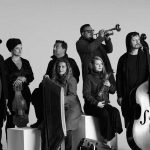
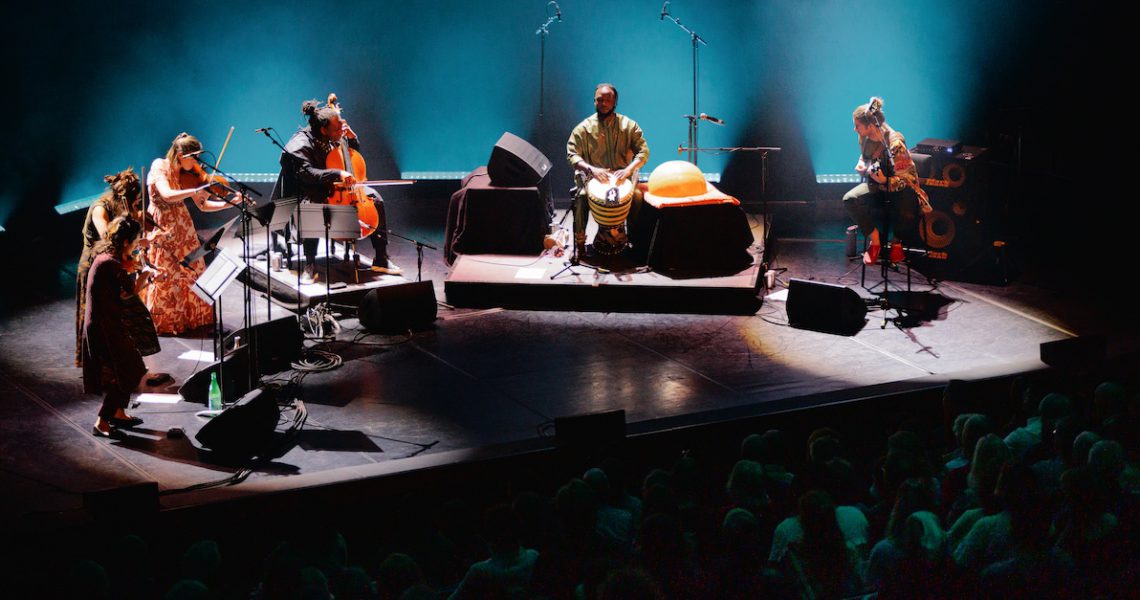
 Manchester Collective and Abel Selaocoe – Sirocco. November 14, The Purcell Rooms, Southbank Centre, London, England
“”Music is a great blessing. It has the power to elevate and liberate us. It sets people free to dream” Nelson Mandela
It’s 6:50 pm on a cold London November night. I anxiously make my way to the Purcell Rooms. I had pre-booked this show all the way from Athens, and having lived in London until recently, I knew that if I had a week in London, I needed to see performances that well, quite frankly I couldn’t experience anywhere else in the world. I needed to be reminded of great and meaningful music, stories that would inspire me to go back and create.
I had no idea that ‘Sirocco’ would be that transitory moment. It’s not customary for journalists to be so personal, especially if they’re musicians themselves, but I feel I have to in this case. What we witnessed on November 14 was nothing short of a call for unity, joy, and healing. It was also the one of the few times I felt that the entire audience was tuned in from the second the music started. It was as if we were one giant, beating heart changing our pulse and tempo according to the multitude of frenetic grooves and ethereal notes of cellist Abel Selaocoe and the Manchester Collective.
Mike Skelton Photos
Obviously, it was made clear that this was one of the many inherent aims of ‘Sirocco’– a love letter if you will be serving both its musical aim to unite the worlds of classical and African Music under the unifying concept that we are all, in fact, as Abel said many times throughout the concert, one and the same . All we have to do is just listen to each other. I couldn’t agree more: the music played, so carefully and yet organically introduced and performed each time seemed to consistently strengthen the belief that you can indeed unite through music. Each musician elevated this in their own, virtuosic and ultimately loving way .
Beginning with Selaocoe’s own ‘ Qhawe’ , ‘Hero of Heroes’. Before he took to his cello, a truly extended part of who he really is as a musician really, he introduced the song as a call to ask our ancestors: ‘Where should I go? What should I be, and What should I follow?’ As far as opening a setlist goes, this was genius. It set the tone for what was to follow, truly captivating the listener into their own journey of self-discovery. His majestic voice is obviously one that seems to come from the Earth itself, lifting into space whenever the expression calls for it. Straight into an improvisational piece of ‘Chesaba’, with an ever calm and strummed bass guitar from the fantastic Alan Keary, responding to the conversational mastery of percussionist Sidiki Dembele .
Moments from Henry Purcell’s “The Fairy Queen” were highlighted by the Manchester Collective’s incredible re-imagining of this timeless music by way of improvisation. Ruth Gibson, and sisters Simmy Singh and Rakhi Singh playing was nothing short of exquisite. It felt that they were really ‘telling’ the story of the Fairy Queen. It made me reflect on the way audiences interact with classical music; rarely have I seen a live concert of classical instrumental music, such as Purcell with the narrative in mind, at least not in that way before. I was personally extremely delighted to hear their rendition of the Danish String’s Quartet traditional ‘Polska’. I’d been following their arrangements and music for some time, and the way they paid homage to the original with African and folk inflections was once again, demonstrative of their outstanding musicianship.
Selaocoe ‘s ‘Lerato’ , one of the more meditative moments highlighting his ethereal voice qualities and hymn-like singing from the collective, followed by a traditional Malian ‘Takamba’ once again bridged any gap you thought existed between classical and African music. Excellent and masterful playing from Dembele, using only a Jembe and Calabash, to beautiful choral harmonies from all, with Selaocoe’s cello meandering the lines between human and instrument. I don’t think I ever wanted an intermission to be over as quickly frankly, and as I sat down for the second act, I felt like I was part of a world that felt, well, like home.
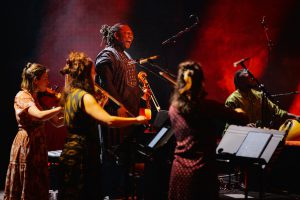
Mike Skelton Photos
Once again, Selaocoe reminded us of the link between African music and from what I could surmise, one of his favourite classical composers, the works of Benjamin Britten. The ‘March from Three Divertimenti’ was handed to us on a plate of the fiercest energy, cascading strings, and perfect rhythmic precision. It could be said that the same techniques used in African music such as the almost improvisational use of dynamics and South African choral harmonies somehow made its way into Britten’s music. That’s what makes music: when it becomes relatable to all, everyone can enjoy it and have access to it. Groove is naturally also essential to all music and is another binding force between musical traditions, and so this piece was aptly followed by ‘O Fredrik, O Fredrik’ by contemporary Norwegian composer Johannes Rusten. Funky electric bass delivered effortlessly from Keary and stellar groove from ‘Dembele’ ( who I’m convinced is a drum kit himself) was also joined by a sweeping jazz- electrifying solo from Simmy Singh– certainly a standout moment for a violin solo!
‘Hokomela’ ( take care)- another original from Selaocoe was masterfully performed fusing elements of western folk, West African alternating rhythms and once again beautiful singing from everyone involved. It actually worked as a prequel to Joseph Haydn, String Quartet Op. 76/1 Hob. III: 75, II. Adagio Sostenuto which provided a warm welcome to a more minimalist yet by no means whatsoever fewer compelling sounds of just the string section and Selocoe. Truly outstanding and played as if for the very first time, pure in sound and performance .
The standout number, if I were to choose , would be Selaocoe’s own Ibuyile iAfrica – Africa is back. He brought tears to my eyes as he introduced the piece, hearkening back to his ancestors and reminding us of the stories we carry, and how we must learn from them. Stories after all are at the heart of songs, lyrically and just by way of instruments. We just have to listen, says Abel.
I had a feeling the Collective would perform their most popular song ‘Ka Bohaleng’ of this outstanding collaboration of ‘Sirocco’ as their encore . After 5 minutes of a standing ovation, the collective moved with the kind of energy that can only be described as otherworldly . It felt as if they could have gone on forever; maybe that’s what they wanted. Maybe, in our own everyday soundtrack, we can embody this kind of energy of hope, fervor, resilience and the ability to dance through life’s struggles through music.
Find out more at https://manchestercollective.co.uk/sirocco
Last modified: December 12, 2024