 Written by
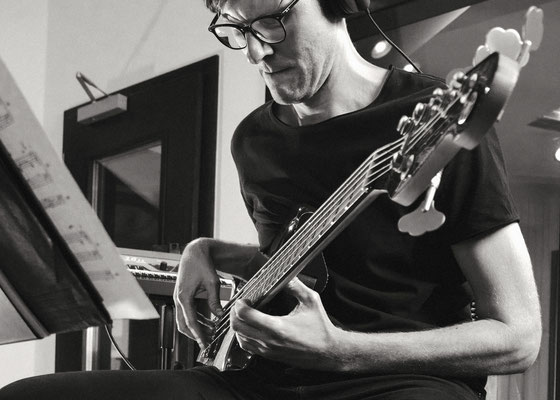
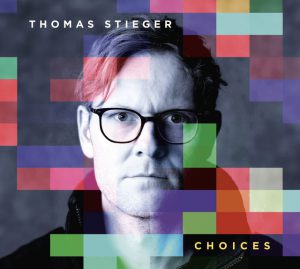
 Many people have heard his bass tones, but far fewer know his name. That should change with “Choices” (Leopard / Jazzline), the debut of the electric bassist Thomas Stieger, who was otherwise in the bands of the German pop queen Sarah Connor, in the bands of Wolfgang Haffner and Nils Landgren, who played together with drummer Felix Lehrmann. If you hear material from the fusion band Marriage Material or Torsten Goods, it’s worth listening to.
After years of reliable, tastefully grooving and yet always exciting bass lines on over 100 recordings or behind an artist in the spotlight, the Berlin electric bassist is now taking a step forward: the bassist presents his musical world in eleven original compositions. The regular line-up with Wolfgang Haffner on drums and Simon Oslender on keyboards is expanded with guests Randy Brecker (flugelhorn), Alma Naidu (voice) and the two electric bassists Will Lee and Tim Lefebvre.
 Angela Ballhorn: First question: Why a solo album and then the second question: Why now?
Thomas Stieger: I often asked myself these questions. I don’t know why only now. I know a lot of great musicians that I could ask and I had enough pieces, some of which were older. I took the fact that I still liked them as a sign to finally record them with some of my favorite musicians. That was the impetus. Why didn’t I do it sooner? No idea. Maybe no time? That’s always the easiest excuse.
AB: Of course, you also travel a lot as a sought-after sideman.
TS: The main reason was that I didn’t really take myself seriously as a composer.
AB: But don’t you also write material for the fusion band Marriage Material, which you lead with drummer Felix Lehrmann, guitarist Arto Mäkelä and vibraphonist Raphael Meinhart?
TS: That definitely helped. There were moments when you realize that not everything you write is complete nonsense. It’s important to have someone like Felix to push you. Or in “Choices” the drummer Wolfgang Haffner. He was immediately ready to take part in the recording.
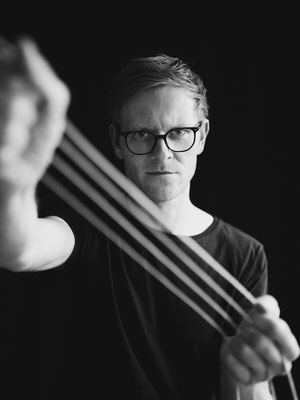 AB: You say yourself that you are influenced by Jaco Pastorius’ way of playing as well as composing. Especially on his self-titled debut “Jaco”, despite solos, it’s more about the compositions.
TS: As a composer, I like the idea that it’s less about the bass as an instrument and more about the music. I wanted to create atmospheres and not push myself to the fore as a player, that’s not in my interest. That’s enough for me on stage, which is probably why I chose my instrument, so that I don’t have to be in the foreground.
AB: How long did your production keep you busy? How long did it take from viewing the compositions to the final form?
TS: That was a two-year period. I selected and finalized the songs. It took a while until I realized the line-up and which musicians I would like to be there. The production itself took a year with recordings, overdubs and mixes.
AB: The line-up with a string quartet is rather unusual, but it’s about sound aesthetics, you didn’t want keyboard strings.
TS: I’ve wanted to do this for a long time. I also like listening to string quartets and I’ve always wanted to write for string quartets.
AB: It’s much more unusual that you brought in other bass players to record. So you ask yourself, why? Probably because they are good bass players and good friends, right?
TS: I think Will Lee and Tim Lefebvre are great as musicians, and I love them as people too. As soloists they also fit the songs well. Both of them agreed immediately. I didn’t want to have the usual cast and do something unusual.
AB: If you already have Aly Keïta on the balafon on the recording, why not two electric bass players?
TS: I’ve met both of them repeatedly over the past two years, so it made sense to ask. They also went well with the two numbers, Tim is more of an unusual bassist and soloist and Will Lee likes harmonically complex and interesting music, he plays so wonderfully melodically. Of course I could have played a solo myself, but I thought it was better that way.
AB; And Randy Brecker came along because he was on tour with Wolfgang and you?
TS: Exactly, and he agreed immediately. Randy’s aesthetic fits well with the Changes, I think. Part of the song was also inspired by Randy’s way of working with slash chords. Everyone in the studio encouraged me to ask Randy. He liked the piece and was happy to take part, as were Tim and Will. That was great support and validation, they never made me feel like it was below their level to be on “Choices.”
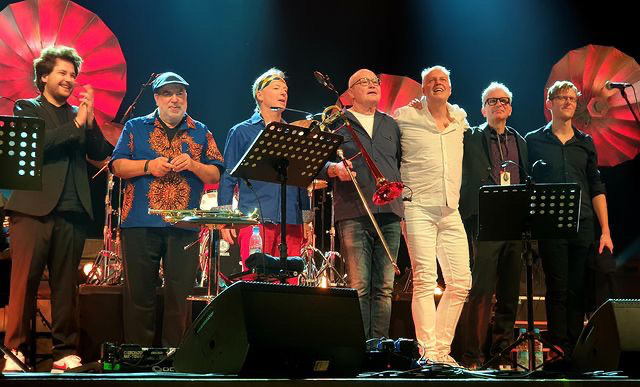
AB: Can you tell us something about the first video release “Noemi’s Song”?
TS: I wrote “Noemi’s Song” for my godchild, who is now 14. I started collecting ideas when she was born, and then the topic of part A came to my head. She likes the piece, but instrumental music isn’t really her thing at the moment.
AB: The song has a special sound aesthetic with voice, flugelhorn and balafon.
TS: That came after we recorded the rhythm section. Aly is a good counterpart to Randy because he can only play diatonic and pentatonic on the balafon. No chromatic tricks and licks like Randy does. These slash chords in the C section are inspired by Randy’s way of composing. There will be a video for almost every song, I don’t know why this is the first, but it felt good as the first piece.
AB: Of course it could have been the title track “Choices”.
TS: It’s almost a little too special, “Noemi’s Song” is a little more accessible. Not entirely complicated, but also for people who listen to music on the side. Joachim (Becker, producer and label owner) said that the song was a good first single that drew attention to the record.
AB: You also said that you listened to the stuff over and over again – when is a production finished?
TS: At some point you have to say “Stop” yourself. When you do so much yourself, it’s really hard to find the right time. At some point you know that things won’t get any better. Then there comes the point at which it just becomes too much or worse. You have to trust your instincts. I keep listening to it, if it still gives me something, then it’s good enough, then I can put it out into the world. For some songs it takes a while, for others it’s instantaneous.
AB: After the record release will there be a solo career and fewer sideman jobs?
TS: If it happens like that, then so be it. I want to play and put together a small tour for next year.
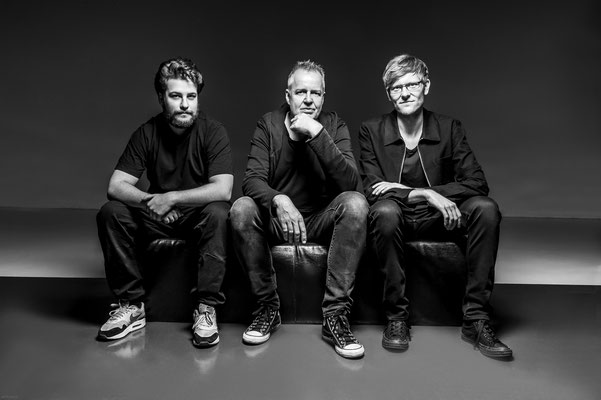
AB: I’m always interested in why someone chooses their instrument, Can you tell me what led you to the Bass?
TS: It’s always the question of whether you choose your instrument or one instrument chooses you. I started with classical guitar. When I was nine, I realized that playing and practicing alone wasn’t fun. There was a school big band that needed a bass. My guitar teacher encouraged me to try bass. “Your personality reminds me of a bass player,” he said to me. And: “If you can play bass, you always have work.” So I borrowed a bass and started practicing. When I played in the band, I realized that it was exactly what I wanted to do. Playing with others, especially playing in a band with a drummer, was eye-opening. It was totally clear to me that I didn’t want to do anything else. Bass and bands, being on stage with other people, that’s me.
AB: What influences do you have, bass-wise and musically? Can you remember your first CD where you noticed the bass?
TS: I think the first one was a Monk record or it was “Heavy Weather” (Weather Report) that was lying around our house. Then I discovered Dollar Brand’s “African Marketplace,” which I heard up and down. Pretty soon I also had a band in which we tried to recreate songs like “Teen Town”. Monk influenced me quite a bit, even if you might not hear it straight away. Weird chords, I really like these #11 stories. Jaco was of course just as much an influence as Pat Metheny, I listened to him up and down for a while. I heard his “Travels” often, but also the trio “99-00”. Charlie Haden’s “Silence” and “Nocturnal” with Gonzalo Rubalcaba. I always found his way of soloing to be totally melodic. It is never too much or too little. And I think everything about Scofield is good, he really writes very uniquely. He also has this great trio with Steve Swallow. He also composes great, I’ve heard a lot of his trio stuff with Chris Potter.
AB: And because you also have African influences on your album: Richard Bona is probably important too?
TS: It was through Mike Stern’s records “Voices” and “These Times”, through which I came to Richard Bona and of course through Joe Zawinul. And through Zawinul I discovered Linley Marthe. I’ve been trying to move in this direction for a while. The trio with Wayne Krantz and Keith Carlock is still important, with Tim (Lefebvre) playing. And Anthony Jackson shouldn’t be forgotten either.
AB: Now you had everything in your own hands for your first album. So a lot of work – would you do it again?
TS: Definitely, when I have the opportunity, I’m a bit of a control freak. When you play as a sideman, you have to stay out of it. I let my buddies hear the tracks, that was important to me, especially in the mixing process. I actually enjoy it when you have the time and the leisure to listen to the music often enough and let it work.
AB: Do you even have time for that with your busy touring schedule?
TS: I made time for it, I’m usually on the road a lot. I specifically took on fewer gigs because I just wanted to finish. I would do a few things differently today, but I really enjoyed it. I would definitely do this again.


Last modified: November 13, 2024