
 Written by
 Every so often a drummer-led record comes along that reminds you why this format still has somewhere new to go, and Terje Evensen’s Reclusive Mountain is exactly that kind of record. This is an excellent album for the adventurous listener, one that folds electronics and acoustic drumming into a single, unified voice rather than treating them as separate ingredients. If this is one of the directions contemporary jazz is heading, then count me in for the ride.
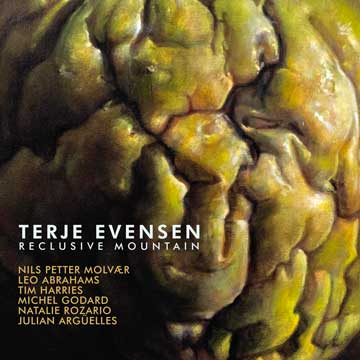 Evensen is credited with drums and electronics, and what strikes me immediately is how completely those two elements merge. There is no sense of a drummer sitting behind a laptop, or of electronics being bolted on as texture. Across these five compositions, the drums and electronics function as one instrument, and that instrument becomes the rhythmic and atmospheric engine that everything else in the band responds to. It is a smart, simple concept, executed with real conviction: each piece builds from that Evensen core, with one guest voice stepping forward to provide the melodic or textural detail on top. The result is a record that feels tightly conceived rather than loosely assembled, and very moody in the best sense — this is late-night, headphones-on listening.
The title track opens the album on a strong groove, and what I appreciate most is how patiently the feel is allowed to evolve rather than being stated and repeated. Rhythmically this is a very strong piece of writing, and above that shifting foundation, Nils Petter Molvær’s trumpet floats with real presence. It is a haunting sound, almost like a call heard from somewhere in the dark, and it sets the emotional temperature for everything that follows.
“Leap Year,” written as a tribute to Evensen’s late friend and collaborator Martin France, makes excellent use of loops in its opening bars, establishing a scene before the rhythm takes hold. This is a track where Evensen’s drumming is unmistakably the lead voice — fully percussion-driven, urgent, and propulsive — and it stands as one of the strongest performances on the record. Rather than sitting in mourning, the piece channels France’s creative spirit into forward motion, and that choice pays off.
 “Moody Zoo” takes the record somewhere more surreal. Julian Argüelles’ saxophone sits beautifully over the shifting backdrop Evensen builds beneath it, gliding through a texture that is part urban night-scene, part imagined broadcast from somewhere stranger. It is a genuinely interesting piece, and one that rewards close listening. “Red Dot” then hands the spotlight to Tim Harries’ bass, and it works extremely well — the bass carries multiple layers here, anchoring the groove while leaving space for the electronics to drift and colour the edges. This is one of my favourite moments on the album.
The closing piece, “Glimpse of Closeness,” is where the record’s most striking choice reveals itself: the presence of the serpent, played by Michel Godard. Most readers will not be familiar with this instrument, so it is worth explaining. The serpent is a wind instrument dating back to the late sixteenth century, built from wood and traditionally bound in leather, with a snaking, folded shape that gives it its name. It is played with a brass-style cupped mouthpiece, like a cornett, but its finger holes and low, breathy register place it as the bass voice of that historic cornett family. To my knowledge, this is the first time I have encountered the serpent on a contemporary jazz recording, and Godard uses it beautifully, entering with a distinctive, breath-rich voice that is ancient, resonant, and deeply expressive, shaping the piece like a slow, contemplative sermon. As Harries’ bass introduces a restless undercurrent and Evensen’s electronics gradually fracture the stillness, the music dissolves into overlapping, long-resonating tones. It is a genuinely moving way to close the record, and a rare instance of an unusual instrumental choice actually deepening the emotional impact of the music rather than simply decorating it.
Reclusive Mountain succeeds because Evensen never loses sight of his own compositional voice, even while drawing on such a distinctive cast of collaborators. The concept of drums and electronics as the connective thread running through every track, with each guest musician adding a single, well-chosen layer of detail, gives the album a coherence that drummer-led projects do not always achieve. This is a very moody, atmospheric record, and one I recommend highly to anyone looking for something a little different from the usual contemporary jazz playbook.
Track Listing:
1. Reclusive Mountain | 2. Leap Year | 3. Moody Zoo | 4. Red Dot | 5. Glimpse of Closeness
Personnel:
Terje Evensen, drums & electronics | Nils Petter Molvær, trumpet | Leo Abrahams, guitar | Tim Harries, electric bass & double bass | Natalie Rozario, cello | Michel Godard, serpent | Julian Argüelles, saxophone
Release Date: 22 May 2026
Format: CD | LP | Streaming
Label: Records Abstract Goat

New Release Spotify Playlist
The Jazz In Europe New Release playlist features tracks from the new releases reviewed on Jazz In Europe. Updated weekly, it is the best place to discover music selected by our editors — not algorithms. Follow the playlist to keep up with the kind of records we believe deserve attention and to stay ahead of the curve.
The best way to keep up to date with all the latest releases is to follow the playlist on Spotify.
Just click the button below.

Last modified: July 7, 2026