 Written by
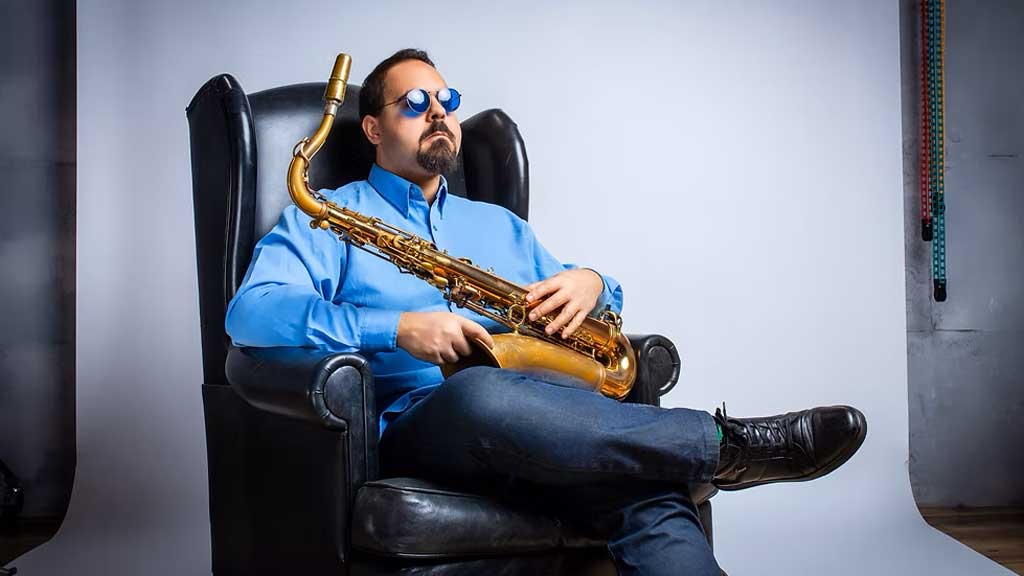
 In a Kyiv studio kept alive by a generator through the worst blackouts of the war, Carlo Muscat and a Ukrainian ensemble recorded an album of ballads. It isn’t a protest record. It’s quieter than that, and harder to categorise: a document of four musicians who had every reason to cancel the session and didn’t.
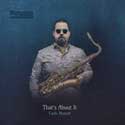
Studio Komora in December was running on two hours of power for every twenty without it. That was the winter’s rationing schedule across Kyiv, and it held for roughly three months. Air raid sirens sounded with enough regularity that they stopped being news. In the middle of that, kept lit by a mechanical backup generator, Carlo Muscat and three Ukrainian musicians recorded That’s About It, Muscat’s eighth album as a leader.
I want to be careful about the word I use for this record, because the obvious one is wrong. That’s About It is not an angry album and it doesn’t read as a wartime protest in the way we’ve come to expect that term to mean. There’s no siren sample, no rhetoric. It’s a set of spacious, unhurried ballads, and the fact that the session happened at all is really the point of it. The music is the evidence.
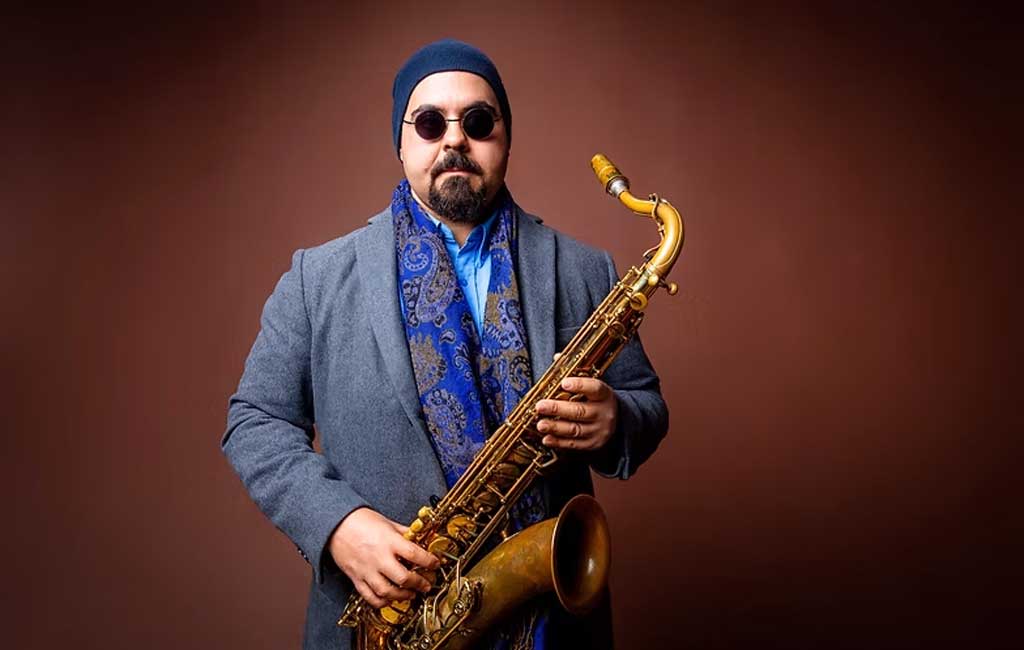
As a writer for Jazz in Europe and based in the South of France, which is to say I write about this scene from a country where the lights stay on. I have covered a number of Ukrainian jazz festivals over the years, I know a fair number of Ukrainian musicians, and I remember exactly what the mood was in February 2022, when everyone with the means to leave was leaving. Muscat had just arrived. He stayed. What follows is an attempt to understand why, and what three years of staying produced.
Structural Pavements: From Valletta to Paris
Muscat’s first serious discipline wasn’t music. He grew up in Malta, stayed until 2013, and trained and graduated as an architect — a path he’d wanted since childhood. It’s a detail that’s easy to treat as trivia, but it isn’t. The ballads on That’s About It have a clean structural logic to them: space left deliberately, nothing added that the composition doesn’t need. Muscat doesn’t dwell on the connection when he talks about it, but it’s there in the writing.
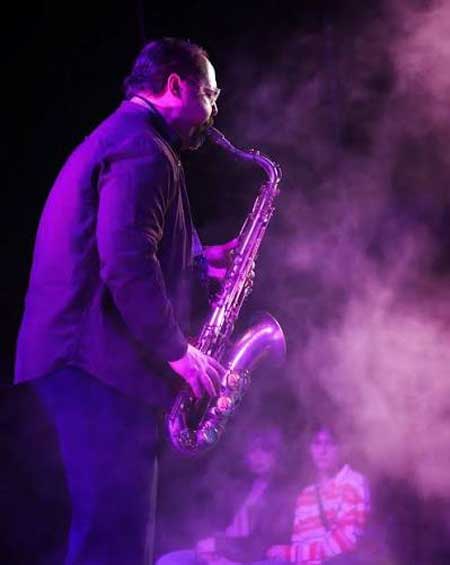 The saxophone came almost by accident. He started on violin at eight, lost interest within a few years, and asked his parents — for reasons he still can’t fully explain — if he could switch to saxophone instead. What followed was over a decade of private tuition in Malta under Vinnie Vella, who’d spent the 1970s and ’80s playing big band gigs six nights a week around Valletta, back when the island could still support that kind of working musician’s life. Vella’s teaching method was direct: he’d ask the young Muscat if he knew Dizzy Gillespie or Charlie Parker, get the honest no, and turn up the following week with a burned CD. “One of my first CDs was a ‘Best of Big Bands’ compilation featuring a lot of Duke Ellington and Count Basie. That is really where it all started for me.” The whole of that big band and bebop vocabulary reached Muscat through one teacher’s own record collection, one disc at a time.
By his early twenties, degree in hand, Muscat had run into the limit of what Malta’s jazz scene could offer — not a lack of talent, but a lack of density: not enough players, not enough rooms, not enough traffic through the island to build a serious career on. A half-scholarship to Berklee proved too expensive to take up. Paris became the alternative, and it remains, by his own account, the only formal music education he’s had. He stayed a year and a half, studied for one of those years, recorded his debut album, and started building the international network of players he’s maintained ever since, returning every six months or so to keep it alive even after he moved back to Malta.
He also kept building physical spaces for music, not just networks of musicians. In 2019, back in Malta, he helped open a venue there. It’s a small fact, but it says something about how he works: he isn’t only a bandleader who assembles musicians wherever he lands. He’s someone who understands that music needs rooms to survive in, and who has been willing to help build them — first in Valletta, later, in far less stable form, across Ukraine.
The Choice to Stay: Building the Ukrainian Bridge
Muscat’s connection to Ukraine goes back before the invasion by several years and several records. He began working with classical pianist Olena Pogulieva in 2019, recording a duo album of adapted Ukrainian classical repertoire in Kyiv while he was still based in Malta. A second Kyiv session followed in 2020, during a brief lull as the first wave of COVID subsided — a visit meant to last a couple of weeks that stretched into an album, Wool, recorded with a full Ukrainian lineup after a couple of rehearsals and a single day in the studio.
Then, in mid-January 2022, Muscat moved to Kyiv properly. The signs of what was coming were already there, in the way they usually are only in hindsight. “The signs were there that something was going to happen, but with the way the media works, you don’t really know how real it is unless you are actually there.” A month later the invasion began, and a decision he’d already made — to build his musical life around Kyiv rather than Malta, drawn by the depth of players there and by being on the European mainland — took on a very different weight.
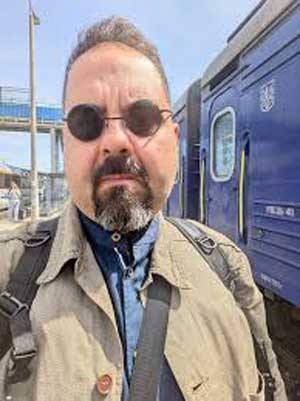 Muscat is upfront about the asymmetry in his own position. He holds a foreign passport. He can leave Ukraine whenever he chooses, in a way the Ukrainian musicians he plays with cannot. He doesn’t need to be asked twice about it. What he describes isn’t bravado, but something closer to principle: a refusal to let an invading force dictate his plans, and a decision, renewed continually over three years, to treat his presence in Kyiv as a vote of confidence in the culture rather than a stunt.
Three years on, he spends roughly 80 percent of his year in Kyiv, travelling back to Malta two or three times annually depending on what’s happening there. He’s played across a good stretch of the country, including regular trips to Lviv, and has recorded two albums under wartime conditions. Some venues have closed. Others have opened. A handful of serious jazz rooms in Kyiv have kept running through all of it. What Muscat has built across those three years, between the two cities, is closer to a bridge than a scene — Malta stable on one end, Kyiv and Lviv shifting on the other, with him moving back and forth, insisting the traffic keep running in both directions.
Anatomy of That’s About It: What Endures
The ensemble in the room at Studio Komora that December was Sasha Mashovets on guitar, Yehor Abramov on bass, and Pavlo Halytskyi on drums — a Ukrainian group tied to Muscat not by contract but by something closer to an agreement that, whatever was happening outside, the session would go ahead. These aren’t musicians flown in for a project and flown out again. They live under the same blackout schedules and sirens Muscat does, and they chose, alongside him, to spend December in a room recording ballads rather than not recording them.
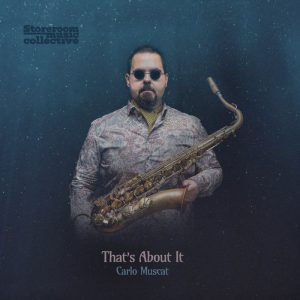 The record they made sits in deliberate contrast to Muscat’s previous Kyiv album, The Body’s Only Light (2024), cut in the same studio with a different lineup. That record was raw and aggressive by design, a trio format chosen so the anger of what Muscat was living through could come out unfiltered. That’s About It goes the other way. After three years of conflict, the choice was to document stillness rather than anger, to let the compositions breathe instead of push. Muscat traces this back to how he learned to play in the first place — years spent almost entirely on ballads, to the point that his up-tempo technique lagged and had to be rebuilt later. [PULL QUOTE: “That style of playing is really the space where my music lives.”] For him, the ballad isn’t a mode he adopts for effect. It’s closer to a default setting.
What keeps the album’s calm from reading as escapism is the context Muscat won’t let listeners forget. This was the worst winter of the war so far — twenty-hour blackouts followed by two hours of restored power, on a three-month cycle. The whole session ran on generator power. Then, near the end of the day, with the band nearly finished tracking the record’s last notes, the main grid came back on. Five o’clock, right as they were wrapping the session. It’s the kind of detail that would look too neat in fiction, but it happened as described: the lights returned just as the final ballad was finished.
There’s something worth sitting with in that timing, intended or not. A group of musicians spent a season making something deliberately quiet while the infrastructure around them failed and recovered, failed and recovered, on a cycle none of them controlled. What they built in that room — a repertoire of restraint, a working trust between four players who kept showing up — didn’t depend on the power grid. It depended on each other. The generator kept the microphones running. The music is what the microphones caught. By the time the lights came back on, the record was already finished, which is one way of saying the thing Muscat and his ensemble were actually building in Kyiv these past three years was never really about the power at all.
That’s About It is out now via Storeroom Music Collective. You can find it now on Bandcamp and all the usual streaming platforms. More info on Carlo can be found at his website.

Last modified: August 21, 2026