 Written by
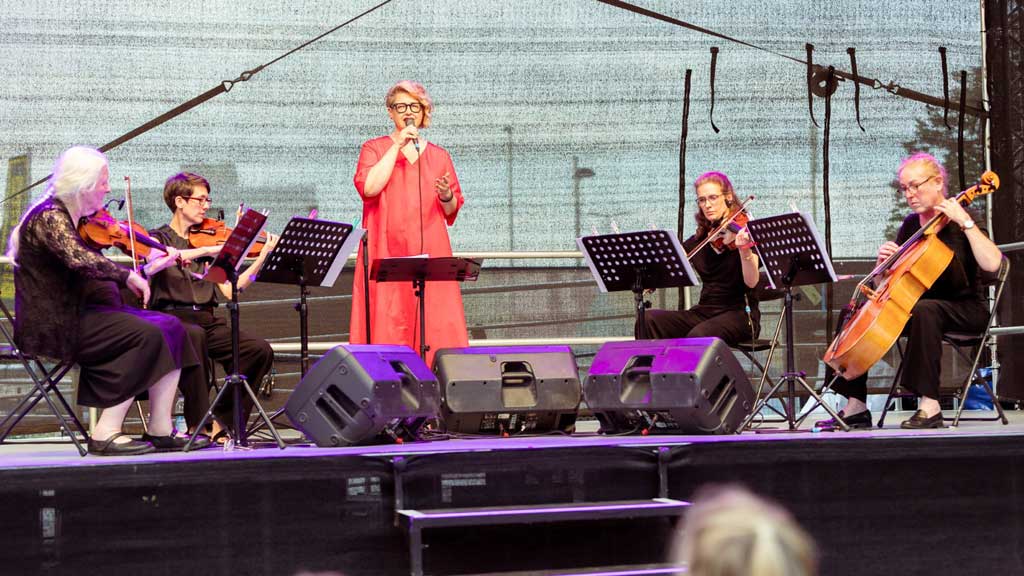
 Some albums just defy categorisation, and Spring Again by the Austrian-German ensemble High Fiddelity is very much one of them. To call it a straight jazz album would be imprecise; to call it a classical record would miss the point entirely. What violist, composer and arranger Natalia Brunke has created here sits somewhere altogether more interesting — a world of jazz influenced chamber music that recalls, in the best possible way, the refined traditions of 1930s Berlin cabaret and the French chanson sensibility. It is modern music, drawing on jazz-inflected harmony and wearing its influences lightly and with considerable sophistication.
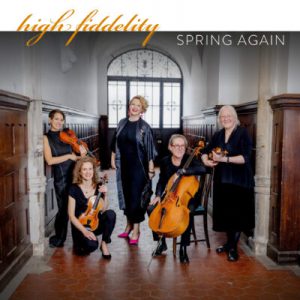 I came to this album with a background in classical music, which is precisely why it caught my attention. The question of how to integrate strings into a jazz context is one that has been answered in many different ways over the years — lush orchestral backdrops, improvising string quartets, hybrid chamber-jazz ensembles of varying success. What Brunke has done here is something different again. The string writing is highly through-composed, functioning not as a jazz rhythm section substitute but as a genuine chamber ensemble in its own right, one that frames and supports the vocal line with real compositional intelligence. Think of the way Gershwin sits between the concert hall and the popular song — that is the territory Spring Again occupies, and it does so with confidence.
The album lives or dies, however, on the strength of its songs and the voice that carries them. Both deliver. Brunke’s eleven original compositions are genuinely lyric-driven — these are songs that begin with something to say, and the music serves the text rather than the other way around. Karin Bachner, the Viennese vocalist who has been close to Brunke since their student days, is a deeply impressive interpreter throughout. Winner of the Jazz Fest Vienna Vocal Award, Bachner possesses a voice that is at once warm and precise, capable of tenderness and sudden emotional directness in equal measure. She does not impose on the material; she inhabits it. The album is very well recorded, and the balance between voice and strings is beautifully judged.
The opening track, “Love Is All There Is,” sets the tone immediately — brooding and atmospheric, with a chorus that arrives with something close to a declaration. The string quartet is deployed with real care here, the ensemble sound adding weight without ever crowding the voice. It is one of the album’s strongest moments, and an astute choice as an opener.
“Drip Drop” has an easy, Gershwin-esque charm, the strings swinging with the slightly self-conscious lilt of classical players in a jazz context — not entirely comfortable, but not without its appeal. “Look Around” is more successful: a song that resembles chanson in its intimacy, almost impossible to pin down lyrically, just a story being told with the camera panning slowly. It is quietly unique.
 “See You In My Dreams” is one of the high points. The lyrics are vivid and theatrical — images of a life consumed by routine, of dreams that offer the human contact that waking hours deny — and Bachner makes every word count. The arrangement is direct and uncluttered, which suits the material perfectly. “Learning to Fly,” meanwhile, is arguably the album’s finest track: the vocal performance is exceptional, the arrangement among the most successfully realised on the record, and the song itself — a tentative reaching toward self-belief — has a quiet emotional authority that stays with you.
The instrumental “A Long Way From Home” provides a pleasing change of pace, carrying a gentle folk quality in its melodic character. “I Got Used to You” shares some of the warmth of “Learning to Fly,” and the string writing here is particularly well-crafted. “Lost Game” is the album’s darkest moment — fittingly so, given lyrics that chart loss and the unexpected liberation that can follow — and Bachner navigates its emotional terrain without a trace of melodrama.
The album closes with “Komm Mir Entgegen,” sung in German, which feels entirely natural — a reminder that this music is rooted in a Central European tradition as much as in jazz. It is a fitting end to a record that has its own clear identity and does not apologise for it.
Spring Again will not satisfy listeners looking for improvisation or rhythmic edge. But for those drawn to the songwriting tradition, to the intersection of the composed and the performed, to music in which the lyric is genuinely the thing — this is a thoughtful, well-crafted album, distinguished above all by the quality of Karin Bachner’s singing. Natalia Brunke has found a musical language here that is genuinely her own. That, in itself, is no small achievement.
Track Listing:
1. Love Is All There Is | 2. Drip, Drop | 3. Look Around | 4. See You In My Dreams | 5. Tell Me | 6. Learning To Fly | 7. A Long Way From Home | 8. I Got Used To You | 9. Spring Again | 10. Lost Game | 11. Komm Mir Entgegen
Personnel:
Karin Bachner, vocals | Johanna Jonas, violin | Corinna Schröder, violin | Natalia Brunke, viola, composition & arrangements, | Bea Bou, cello
Release Date: 12 June 2025
Format: CD | Streaming
Label: Mons Records

New Release Spotify Playlist
The Jazz In Europe New Release playlist features tracks from the new releases reviewed on Jazz In Europe. Updated weekly, it is the best place to discover music selected by our editors — not algorithms. Follow the playlist to keep up with the kind of records we believe deserve attention and to stay ahead of the curve.
The best way to keep up to date with all the latest releases is to follow the playlist on Spotify.
Just click the button below.

Last modified: June 29, 2026