 Written by
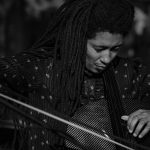
Photo by Jumoké Fashola
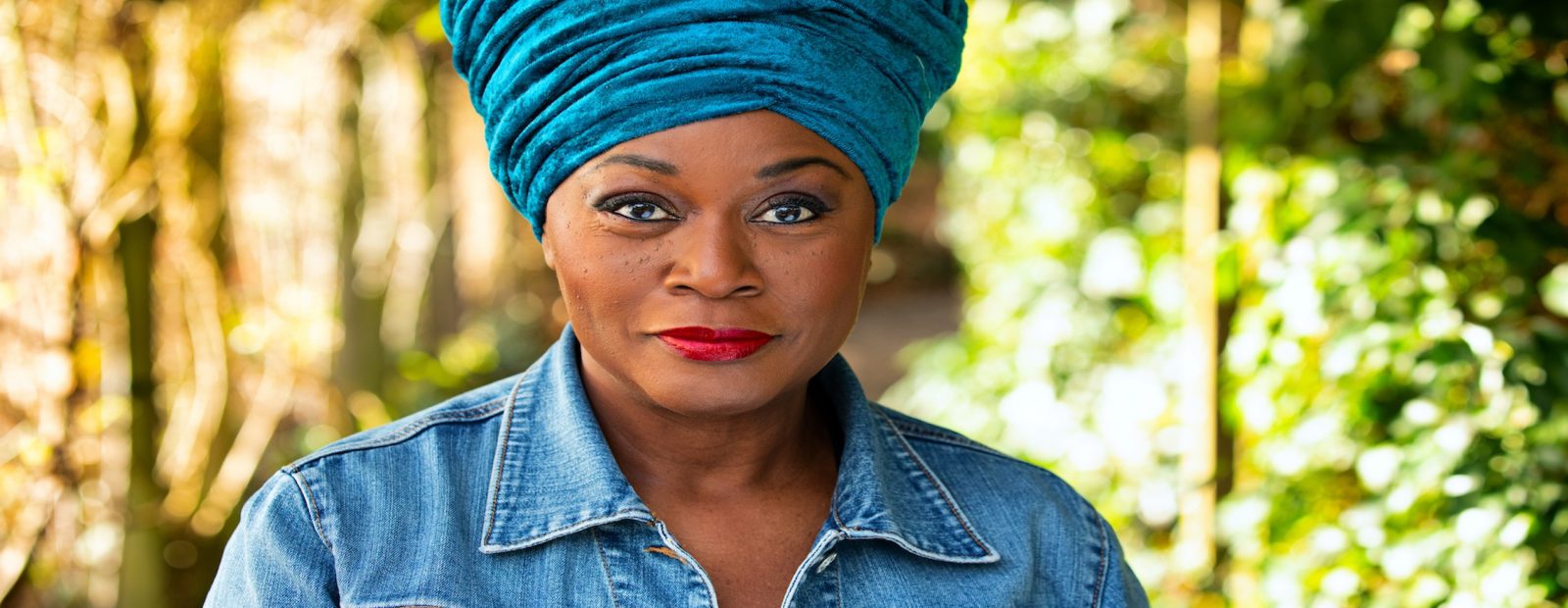
Famed journalist, vocalist, broadcaster, actress, live literature curator and all round tour de force Jumoké Fashola shared with me the many ways in which her professional and personal life have been entangled with jazz music. From the sort-of meta conversation about interviews within an interview to touching anecdotes about her first moments of jazz listening, Fashola has a palpably engaging and elegant way of conveying her thoughts and experience. Though it is just one of the hats she wears, when I think of women in jazz media, she is the first to come to mind.
Think of your favourite current jazz artist; Jumoké Fashola has probably interviewed them. The likes of Jon Batiste, Bobby McFerrin, and Dianne Reeves have all been in conversation with Fashola over the years, to name some of her highlights. This time, I had the pleasure of interviewing her.
The art of interviewing, in Jumoké Fashola’s words, is “an imprecise science”. In an era saturated with short-form content, Fashola reminds us that to have a longer amount of time with an artist is a luxury. She advises that a journalist’s responsibility is to “know about the subject they are talking about” and “to show appreciation for the music.” Building on this: “often, the art of the interview is how you connect with the person that you are interviewing”, and the journalist should know when they have “tapped in” to the interviewee as a person.
For Fashola, interviews are always about the moment where the interviewee says “I’ve never thought about that before” as “that’s really where [the interview] begins”. Fashola doesn’t stick to the press release, she will ask things about the artist that intrigue her, that she wants to know more about.
During an interview with Chaka Khan live at Ronnie Scott’s Jazz Club, Fashola enquired about a story regarding something along the lines of Khan, a gun, and a lover: “she looked me in the eye and said ‘you really know me!’, and I said ‘I don’t know you Chaka I just want to know about this situation!’ The story came out and she told it brilliantly. […] Everybody has a little anecdote or detail that tells you a bit about why this artist might be the way they are.” Sometimes, for Fashola, interviews are all about surprising the artist, not with a “gotcha” moment, but by curating a moment of unexpected stories, information, or ideas. Fashola states that “the artist should be the one that sparkles – that’s my job”; “my job is to be a conduit for who you are as a human being.”

Photo by Jumoké Fashola
If there is one thing that Jumoké Fashola would change about jazz media, it’s that there should be more of it. When I asked her thoughts on the landscape of jazz media today, she responded: “I’m just grateful that people are covering jazz. […] Although it is a music that continually shifts and morphs into different forms, but really is still attached to its roots, and therefore will always exist, getting it covered can be tricky.”
When she saw a landmark concert featuring Theon Cross, Gary Bartz, Ego Ella May at Southbank Centre last month, she described it as “extraordinary”, “so exciting”, and that Bartz was “playing like he’s in his 20s”. Blown away by the performance, Fashola was left with the question “who is covering this?” Fashola shared that she gets excited when she does see a jazz artist on the broadsheets during her Sunday morning show on BBC Radio London, as they are often absent from wider media. She emphasises how both traditional and social media need to be harnessed to best serve the artists at stake.
There are two key challenges to jazz media that Fashola acknowledges: one is the existence of a “silo of musicians” that are covered, giving the illusion that there is “so much going on”, so all the excitement is centred around the same collection of artists, until you get a band like Ezra Collective that “breaks it out”. The second challenge is one of accessibility, Fashola stated that the word “jazz” can feel “alienating”: “like oh it’s jazz, like it’s this odd beast of music that you need a PhD to understand, which is not true at all. But if your first encounter with jazz is something quite intricate, it can be challenging. […] We need to work harder and make it accessible. […] That’s why it’s so lovely when we get breakthrough artists like Nubya Garcia.” Fashola names contemporary British jazz giants Ezra Collective and Nubya Garcia as artists who, in the nature of their work, demand change in the landscape of jazz media.
Fashola is not just a woman in jazz media, she has a portfolio career that spans theatre, TV, singing, broadcasting, and journalism: “my passion basically is my work.” She clarified: “I am a jazz journalist, but it’s not the only thing I do. […] There are people who specifically focus on jazz; I am not one of those people. I write about jazz, I broadcast about jazz, I’m a huge cheerleader for jazz, but I wouldn’t put myself in just one box.” Some of the jazz journalists that Fashola admires are Peter Jones of Jazzwise magazine who “writes phenomenally for jazz vocalists”, and Ted Gioia, whose substack “The Honest Broker” is, in her mind, a work of “genius”. Fashola is particularly inspired by the way Gioia describes the “interrelation of life and music”:
“What I like about Ted is he just takes strands from everywhere. […][Writing] is ephemeral anyway, music is down to personal taste […] You are being the critic. I don’t care what anyone says, you are never neutral. […] But I think that’s why I like jazz because jazz is the stuff of life if you are willing to listen to it. Jazz is that moment of heartbreak, jazz is that moment of joy, jazz is the middle of the night where nothing is going around. It’s all of that, and pulling those elements into writing, for me makes it sizzle.”
The entanglement of jazz and life began for Jumoké Fashola in Nigeria during her university days.
“When I was in university, this was in Nigeria, I had a boyfriend who every week would bring me a sort of mixtape and go ‘listen to this, listen to it and decide bits that you like and bits that you don’t like.’ So it would be anything it would be a John Coltrane, it would be Sarah Vaughn, it would be Ornette Coleman, it would just be all of these people that he’d put on one CD and go ‘have a listen’. And so some of it I loved, some of it I hated, a lot of it, it was the first time I’d really heard jazz. […] That’s how I came to jazz, like this music that was completely unknown to me, that had no societal connection to me at the time. […] Slowly but surely it pulled me in.”

Photo by Jumoké Fashola
Miles Davis’ Bitches Brew became a favourite record of hers, along with the work of Carmen McRae.
“I like that passion that Carmen McRae brings to the music, she has a way of, it makes you feel like ‘oh yeah she means what she’s saying’. […] Carmen had to work for it, I like musicians who have to work for their music. I like knowing that you are working really hard; I like to see my musicians sweat.”
Across her singing and hosting careers, there are resemblances to a history of Black British art movements. I asked Fashola: as someone who spent a significant part of her life in Nigeria, do you feel connected to Black British jazz movements, or is your jazz background more informed by Nigerian scenes?
“I think it’s probably more connected to the scene there [in Nigeria]. […] The music I was hearing was definitely more African, so when I think about it, I love African jazz probably for that reason. There is a cadence and a rhythm, that is inherent in the music, that you often pick up. That’s why for instance I love talking drum, you know, there’s a tonality within the music that I think is very rooted in Africa. So, as much as I love British jazz, if you were talking about my roots, the influence has definitely come from that.
I mean the first time I ever sang a jazz song, which was ‘Summertime’ at my distant uncle’s jazz club, […] even with that it was still about the drums and that rhythm and it was all of that kind of stuff.
So when I listen to somebody like Nduduzo Makhathini, for instance, you know that music will always move me because there’s something about the roots in that, for sure.”
Jumoké Fashola is listening to Ego Ella May, Cécile McLorin Salvant, Nina Simone, and the album Sopranista by Samuel Mariño at the moment, saying that “I just listen to music that moves me.” There are whispers in the wind of a new broadcasting project from Fashola which will synthesise the many threads of her career:
“Radio Auntie is a new platform I’m developing, based on my years behind and in front of the mic and a career spanning news, jazz, theatre, ethics, religion, and live on‑air conversations. Still pre‑launch, it marks a natural next chapter—expanding my on‑air practice into mentorship, insight, and a commitment to championing other voices.”
Tune in to Jumoké Fashola’s BBC Radio London shows on Friday afternoons and Sunday mornings, and look out for her interview with Angelique Kidjo coming out soon.
Header photo by Dan Fearon
Last modified: April 7, 2026