 Written by
 In 2026, marking 100 years since Miles Davis’ birth, the Brussels Jazz Orchestra presents What’s Not There featuring trumpeter Ambrose Akinmusire. This project reinterprets Davis’ music from the 1960s to 1980s through new arrangements and added compositions. The tour runs from 23 April to 3 May 2026 across eight European venues. It coincides with an artistic leadership change at the orchestra.
The title comes from Davis’ own advice: “Don’t play what’s there, play what’s not there.” Arrangers Guillermo Klein and Lennert Baerts selected pieces from Davis’ catalogue. They built arrangements around Akinmusire’s trumpet playing. The project adds new material instead of repeating the originals. Akinmusire approaches the music with detailed knowledge of Davis’ recordings. The focus stays on space for improvisation and interaction. Brussels Jazz Orchestra members double as soloists. This mirrors Davis’ bandleading, where he assembled players to interpret his vision through listening and silences.

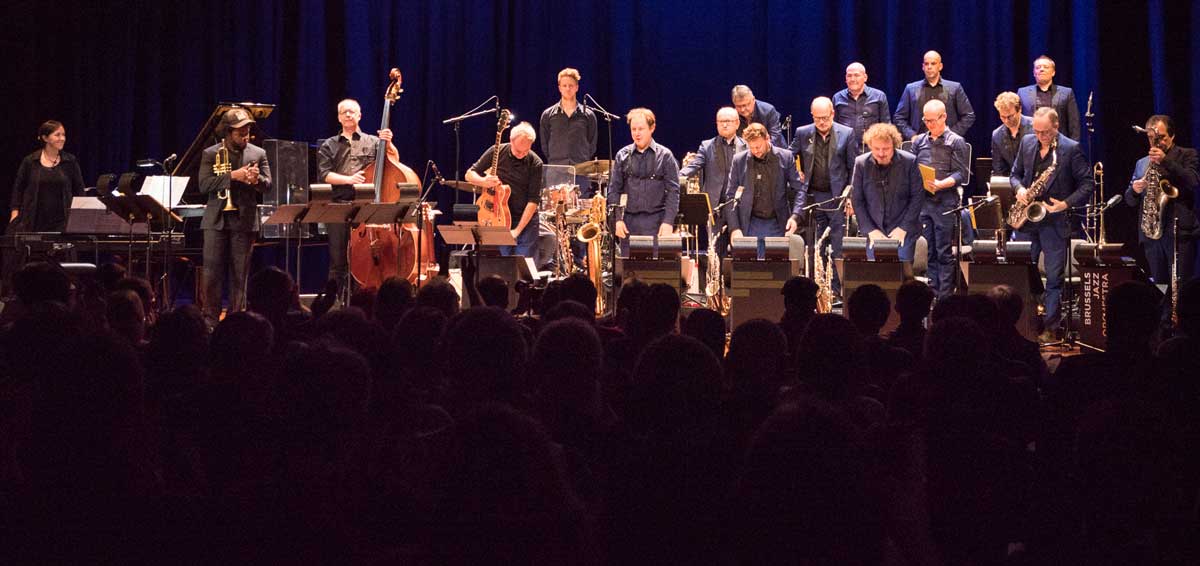
Ambrose Akinmusire with the Brussels Jazz Orchestra | Photo by Gerard Beckers
What’s Not There is the second project led by Lennert Baerts with the orchestra. It follows his audio walk Path of Virtues at Ghent’s Museum of Fine Arts. Baerts also handled arrangements for this Davis programme. The tour opens 23 April at Budapest’s Müpa, then hits Tilburg on 24 April. Key dates include 28 April at Amsterdam’s Concertgebouw, 1 May at Bozar in Brussels, and the close on 3 May at Hamburg’s Elbphilharmonie. Full dates and tickets are listed below.
This leadership shift marks a turning point. Saxophonist and founder Frank Vaganée has directed the orchestra since 1993. He will hand over to Lennert Baerts from 2028. Baerts joined the saxophone section in December 2025. The two will share duties in the years ahead to ensure continuity. Vaganée co-founded the ensemble with Serge Plume, Marc Godfroid and Bo van der Werf. Under his direction, the group released more than 20 albums. Collaborations included Joe Lovano on the Grammy-nominated Wild Beauty, Philip Catherine on Meeting Colours, and Tutu Puoane on We Have A Dream. The orchestra also contributed to the soundtrack for The Artist, which won Academy Awards.
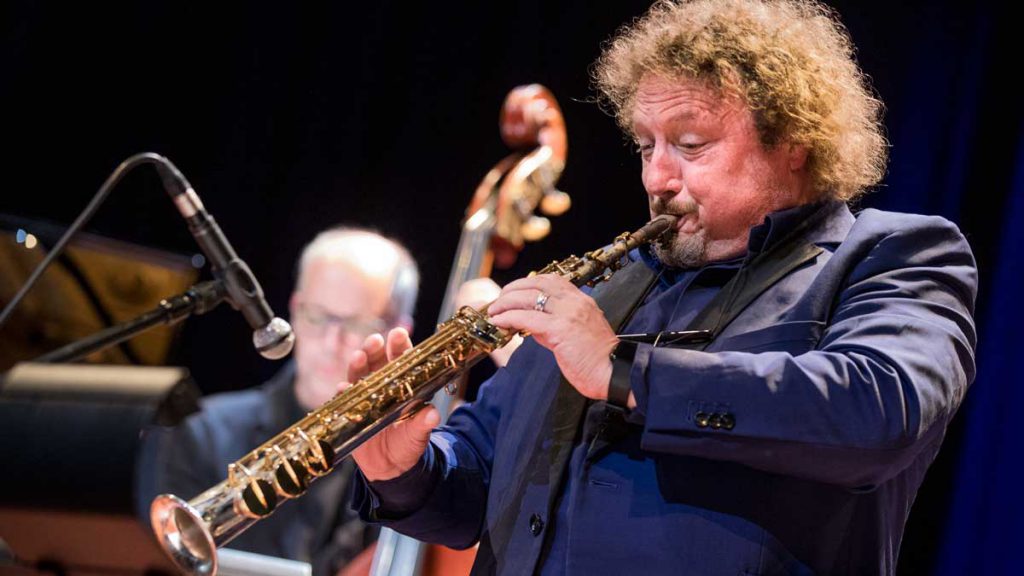
Frank Vaganée | Photo by Gerard Beckers
Akinmusire fits naturally into this setup. The trumpeter has recorded extensively for Blue Note and worked with big bands before. His approach to Davis material emphasises multiple viewpoints. The programme reflects Davis as bandleader and innovator without treating the music as fixed. Instead, it uses Davis’ selections from the 60s, 70s and 80s as a starting point. Klein and Baerts reshape them for today’s players. This keeps the essence of Davis’ legacy—connection, depth and forward movement—while applying it to a contemporary orchestra.
The tour schedule places the project in major European halls. Amsterdam’s Concertgebouw on 28 April brings the music to a venue where the orchestra has appeared before. Bozar’s Henry Le Bœuf Hall on 1 May serves as a homecoming in Brussels. Hamburg’s Elbphilharmonie on 3 May caps the run in one of Europe’s landmark spaces. These stops follow dates in Tilburg, Birmingham, Luxembourg and Bruges. The full list of dates, times and venue details appears at the end of this article.
Brussels Jazz Orchestra sits within Belgium’s active jazz scene. It shares traits with ensembles like Germany’s NDR Big Band or Sweden’s Boilerhouse Big Band, which also commission new works for large ensembles. The orchestra’s model relies on project-based collaborations with soloists and composers. This has built its catalogue over three decades. The Davis programme continues that approach. It connects a 20th-century icon to players born after his death, like Baerts and Akinmusire. The result shows big band jazz adapting in 2026.
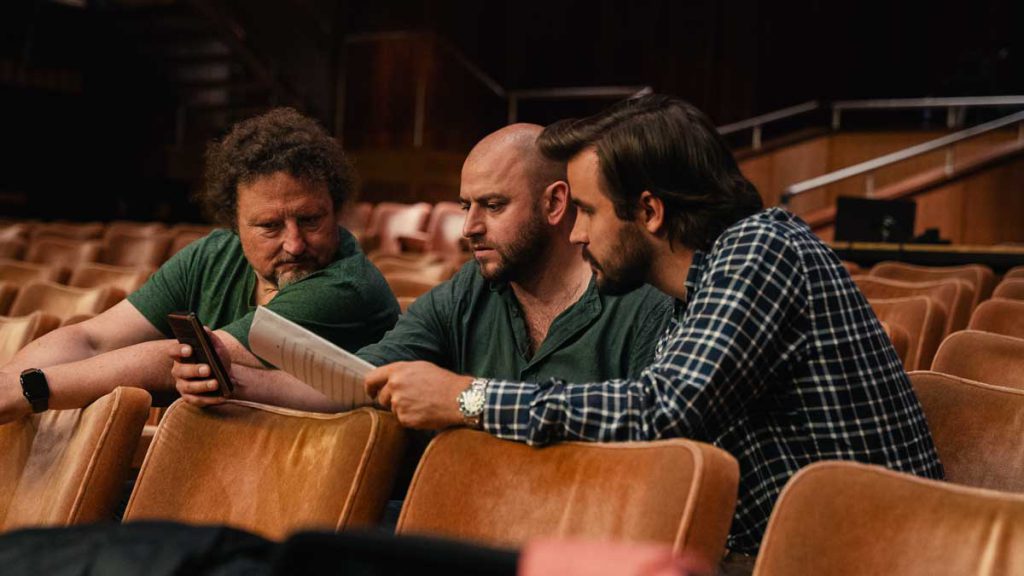
F – Frank Vaganée, Thadeus Jolie, Lennert Baerts | Photo By Robin Todde
Vaganée’s three decades set a benchmark. His projects often paired the orchestra with strong voices—vocalists like David Linx or Tutu Puoane, guitarists like Philip Catherine, or horns like Joe Lovano. These built a profile beyond Belgium. Baerts steps into that lineage with a project that balances respect and invention. His arrangements alongside Klein’s show command of the orchestra’s sound. Akinmusire’s role as lead soloist adds weight. The trumpeter’s lines will carry Davis’ spirit through fresh contexts.
Most readers will know Brussels Jazz Orchestra from festival appearances and residencies such as Jazz Middelheim in Antwerp and North Sea Jazz in Rotterdam and of course their Flagey residency that keeps the group active in Brussels. This tour extends that reach into Central Europe with Budapest and across to Hamburg. It positions What’s Not There for listeners tracking big band evolution. The programme avoids straight tribute sets. Instead, it asks what Davis’ ideas mean when filtered through today’s improvisers.
The full tour reflects careful planning. It starts in Eastern Europe, moves west through the Netherlands and UK, then circles back to Belgium and Germany. Venues range from national concert halls to city philharmonics. Each stop suits the orchestra’s scale. Promoters can expect a programme that runs 90-120 minutes, blending Davis anchors with open spaces. Sound checks will prioritise balance for Akinmusire’s trumpet against the full ensemble.
2026 is bound to be a strong tribute year marking the 100th anniversary of not only Davis’ birthday but also that of Coltrane and Tony Bennett and this project stands out in the centenary calendar. Other groups mark the date with repertory bands. Brussels Jazz Orchestra takes a different path. It uses Davis to signal its own next phase. Baerts’ leadership begins here, with Vaganée’s guidance. The music stays rooted in Davis’ call for invention. Players fill the gaps he left open. In my mind this one is one to catch.
Full Tour Dates
-
23 April 2026, 8pm: Béla Bartók National Concert Hall, Müpa, Budapest (HU)
-
24 April 2026, 8pm: Schouwburg Concertzaal, Tilburg (NL)
-
27 April 2026, 7:30pm: Town Hall, Birmingham (UK)
-
28 April 2026, 8:15pm: Het Concertgebouw, Amsterdam (NL)
-
30 April 2026, 7:30pm: Philharmonie, Clausen, Luxembourg (LU)
-
1 May 2026, 8:30pm: Henry Le Bœuf Hall, Bozar, Brussels (BE)
-
2 May 2026, 8pm: Koninklijke Stadsschouwburg, Bruges (BE)
-
3 May 2026, 8pm: Elbphilharmonie, Hamburg (DE)
Last modified: March 6, 2026