 Written by
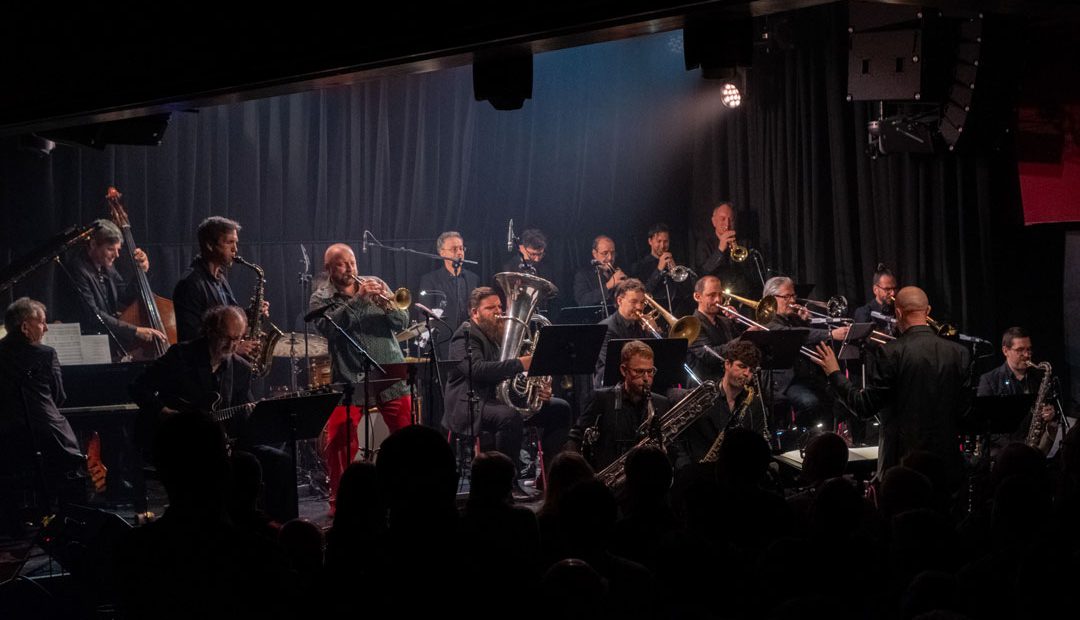
 2025 is a milestone for Zurich Jazz Orchestra (ZJO), their 30th anniversary. Having followed the band over many years, this milestone presents the perfect opportunity to take an in-depth look at one of Europe’s long-standing professional jazz big bands. Since its founding in 1995, the ZJO has established itself firmly within the continental jazz landscape by exploring new musical directions, expanding its repertoire, and nurturing the vibrant jazz culture native to Zurich and beyond.
In the coming month, we have a detailed interview scheduled with Ed Partyka, the orchestra’s current conductor and musical director. In this conversation, we’ll explore the band’s latest release, delving into the compositional approaches and artistic vision driving their evolving sound. This article offers a retrospective look at the ZJO’s history and ongoing contribution to jazz as both a creative art form and a dynamic cultural institution.
The Zurich Jazz Orchestra (ZJO) was founded in 1995 with a clear purpose: to serve as a rehearsal band and creative forum for local composers and arrangers within the Swiss jazz scene. From the outset, the ensemble was envisioned as a platform to nurture home-grown talent and present new works alongside traditional big band repertoire. André Bellmont, a key figure in the Zurich jazz community, played an instrumental role by organizing monthly rehearsals at Miller’s Studio, providing musicians a space to collaborate and experiment.
In its early years, the orchestra balanced performing established jazz pieces with premiering compositions by Swiss artists, carving out a space rooted in tradition yet forward-looking. Leadership changed in 1999 when saxophonist David Regan expanded the ensemble’s reach, securing a weekly performance slot at Club Inkognito in Zurich’s Westend, moving beyond initial monthly engagements and establishing a consistent public presence.
The turn of the millennium brought structural refinement. Under Stefan Schlegel’s musical direction from 2000, the ZJO tightened its organizational framework and established a patron association to secure financial and institutional support. Crucially, the ensemble began a partnership with Jazzclub Moods, securing a concert platform central to its activities.
In 2003, Frank Sikora became musical director and led the orchestra into its first studio recording, resulting in the 2005 release of Beyond Swiss Tradition. His tenure featured artistic expansion and multimedia integration, alongside collaborations with Zurich’s jazz education institutions to cultivate emerging composers.
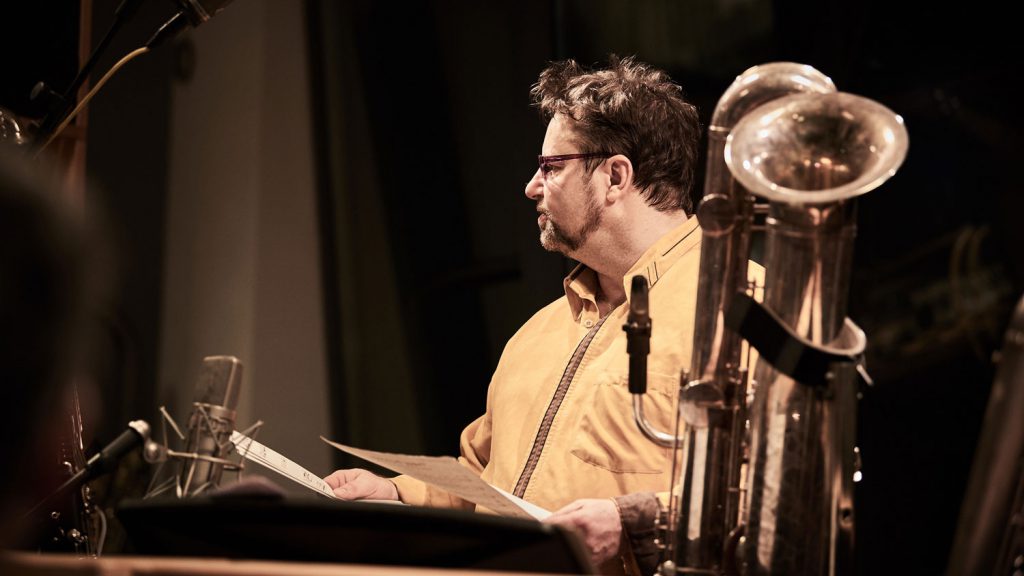
Stephan Schorn during the Three Pictures Recording Sessions
From 2006 to April 2013, Rainer Tempel’s leadership saw the orchestra undertake ambitious projects, including international tours, new commissions, and a theatrical production interpreting the music of Miles Davis and Gil Evans. This period cemented the ZJO’s profile as a versatile big band capable of honoring tradition while innovating within the genre.
By Tempel’s departure, the ZJO had evolved from a rehearsal collective into a fully professional ensemble with a respected presence in Europe’s jazz community. Its early decades were marked by steady growth, artistic risk-taking, and a commitment to fostering Swiss jazz talent—foundations that continue to support its evolving role today.
Following Tempel’s departure in 2013, the ZJO entered a new phase with Steffen Schorn’s appointment as musical director in 2014. Schorn, a seasoned multi-reedist, composer, and arranger rooted in the European big band tradition, brought a fresh compositional voice and expansive repertoire. His initial concerts—most notably at the Zurich Film Festival and Jazznojazz Festival alongside drummer Jojo Mayer—marked a period of adventurous programming exploring the full spectrum of big band jazz.
Under Schorn’s leadership, the ZJO transformed from a regional ensemble into an internationally recognized band with a distinctive sound. Over six years, he delivered over 100 original compositions and arrangements, with each concert featuring a complete new programme. Though demanding on rehearsal time, Schorn viewed this approach as fostering “alertness of the moment,” encouraging dynamic interplay between structure and spontaneity.
The band’s 2017 studio recording, Three Pictures (Mons Records), the first under Schorn’s direction, was a turning point, showcasing an expanded expressive range—from subtle textures to powerful rhythmic drive. The album featured notable soloists including Schorn on C-melody and alto saxophones, and guest guitarist Theo Kapilidis, whose fiery improvisations enriched the sound palette.
Follow-up albums Dedications (2021) and To My Beloved Ones (2022) further developed Schorn’s integration of diverse compositional approaches within a cohesive sonic identity. His arrangements drew on Gil Evans’ influence, emphasizing lush harmonies balanced with orchestral power. The projects highlighted soloists from the reed section wielding instruments such as contrabass clarinet and tubax, alongside brass players whose solos punctuated compositions ranging from groove-driven riffs to tone poems.
Schorn’s influence extended to performance practice, pushing the band through complex meters, elaborate voicings, and a rich spectrum of timbres requiring technical precision and expressive freedom. As both conductor and occasional soloist, he fostered a deep musical dialogue within the ensemble.
Toward the end of 2019, Schorn transitioned to composer-in-residence, enabling him to concentrate on composing fresh works and reimagining earlier pieces. His tenure solidified the ZJO’s status as a leading European big band, combining rigorous craft with vibrant musical exploration.
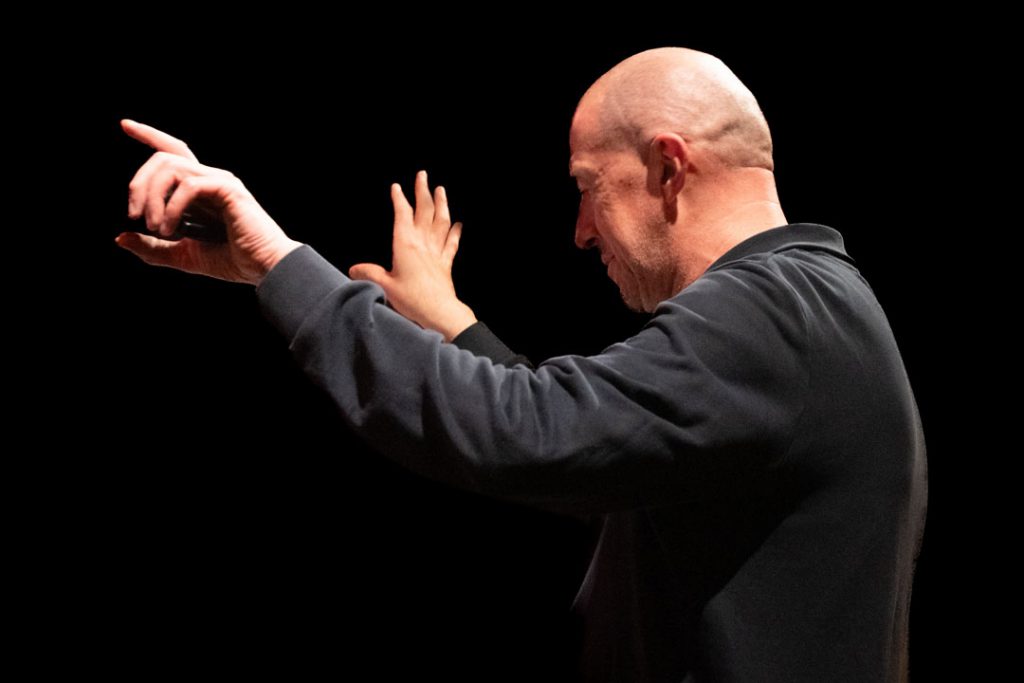
Ed Partyka
Following Schorn’s transition, trombonist and arranger Ed Partyka assumed musical leadership in late 2019, opening a new chapter for the orchestra. Partyka, with a multifaceted background including roles as a bass trombonist, tubist, composer, arranger, and conductor, holds extensive international experience. Hailing from Chicago, he studied at Northern Illinois University and earned a master’s in jazz trombone performance from Cologne Conservatory. His collaborations span the Bob Brookmeyer New Art Orchestra, Vienna Art Orchestra, WDR Big Band, Concert Jazz Orchestra Vienna, and UMO Helsinki Jazz Orchestra—references that speak to his broad expertise in large ensemble jazz.
Since taking the helm, Partyka has focused on consolidating the ZJO’s repertoire while nurturing its artistic evolution. His leadership balances detailed composition with spontaneous ensemble interplay, underpinned by deep understanding of jazz orchestration and rhythmic complexity. The band continues to engage audiences through imaginative programming, exploring rhythmic and harmonic diversity while maintaining the virtuosic ensemble sound developed in previous decades.
A key milestone in the ZJO’s evolution was securing the Jazzhaus as a dedicated rehearsal and workspace, firmly grounding the band in the Swiss jazz scene. Situated at Heinrichstrasse 69 in Zurich’s Kreis 5 district, the Jazzhaus occupies a historic building from 1893, adapted to meet the needs of a large jazz ensemble. Bettina Ullman played a central role in realizing this project, providing the vision and drive necessary to establish a facility tailored to the orchestra’s artistic and practical requirements.
Created out of necessity due to limited big band rehearsal spaces in Zurich, the Jazzhaus serves primarily as a production house—supporting rehearsal, composition, recording, and administration rather than functioning as a concert venue. Its design features a spacious two-story rehearsal room built into a natural depression, offering an acoustically refined and intimate environment for the orchestra’s complex sound. Additional spaces upstairs include smaller rehearsal rooms, administrative offices, and music storage, alongside recording capabilities for live sessions and studio projects.
Supported by the Dr. Stephan à Porta Foundation in partnership with the ZJO, the Jazzhaus represents a major infrastructural advance in the ensemble’s 30-year history. Beyond serving the orchestra, it acts as a cultural hub supporting professional and amateur musicians alike, contributing to Zurich’s reputation as a vibrant jazz city. The Jazzhaus complements the local jazz ecosystem by providing an artist-centered space that fosters creativity and collaboration.
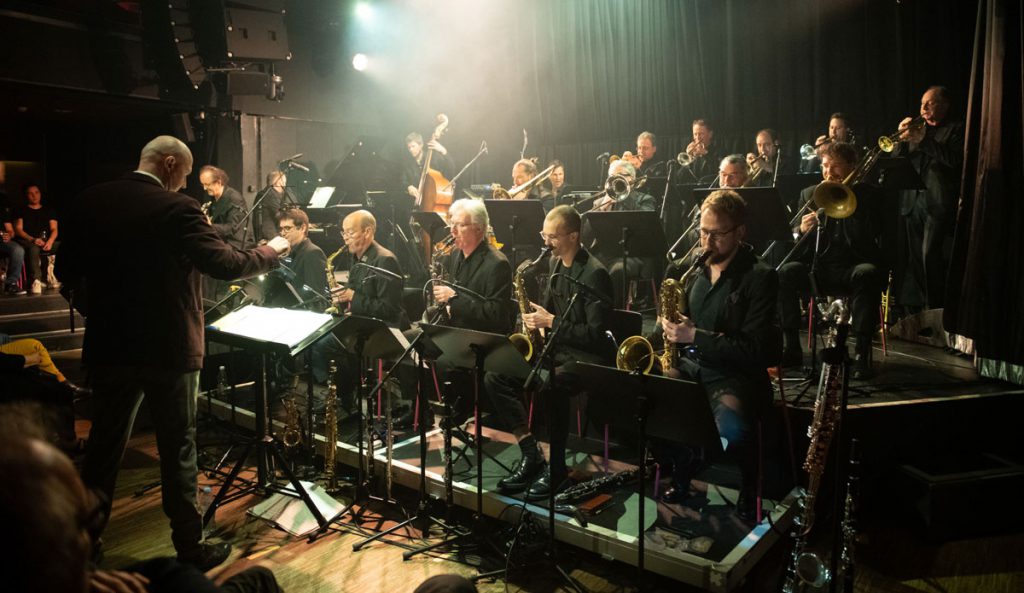
The Zurich Jazz Orchestra Live at Moods Jazz Club
The ZJO’s 30th anniversary in 2025 marks three decades of artistic development and significant contribution to European jazz. The band is marking this with a series of events culminating in a major concert at Jazzclub Moods in Zurich on October 2, 2025. The program revisits highlights from the orchestra’s vast repertoire, including compositions and arrangements that have shaped its sound and influenced audiences and musicians alike.
In addition to well-known works, the program features lesser-performed pieces and archival material, broadening the view of the orchestra’s artistic journey. The anniversary performances pay tribute to the band’s rich history while underlining its commitment to stylistic diversity and innovation.
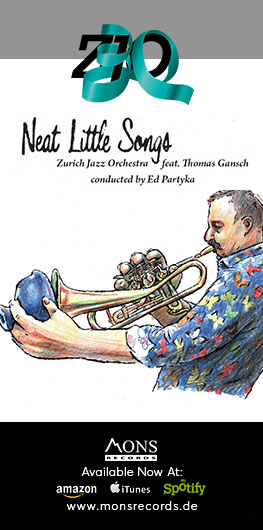
Coinciding with the anniversary is the release of a new album on Mons Records. The bands new release, “Neat Little Songs” released in May on Mons Records, spotlights the partnership between the ensemble and Austrian trumpeter Thomas Gansch, with arrangements by Ed Partyka. The album, the first under Ed’s leadership, presents nine original works composed by Gansch, with a myriad of influences from jazz, classical, folk, and cinematic soundscapes. Partyka’s arrangements amplify this diversity with sophisticated writing, providing the orchestra and soloists ample space to interpret Gansch’s distinctive material, which ranges from groove-heavy numbers to tongue-in-cheek stylistic explorations.
“Neat Little Songs” is a culmination of eleven years of collaboration, Gansch and the ZJO have developed a rare synergy. “We have known each other for so long, but I never had the opportunity to arrange his music for jazz orchestra. I am very happy that this has finally become possible and that we can present this special program with new arrangements with the ZJO on a joint disc.” Ed explained. The album features standout solo work from Gansch himself as well as key ensemble members, bridging the Vienna-Zurich axis and offering listeners a fresh take on modern big band music. (for a detailed review of this album, check out Peter McLarren’s review of the album on the Jazz In Europe website -Ed)
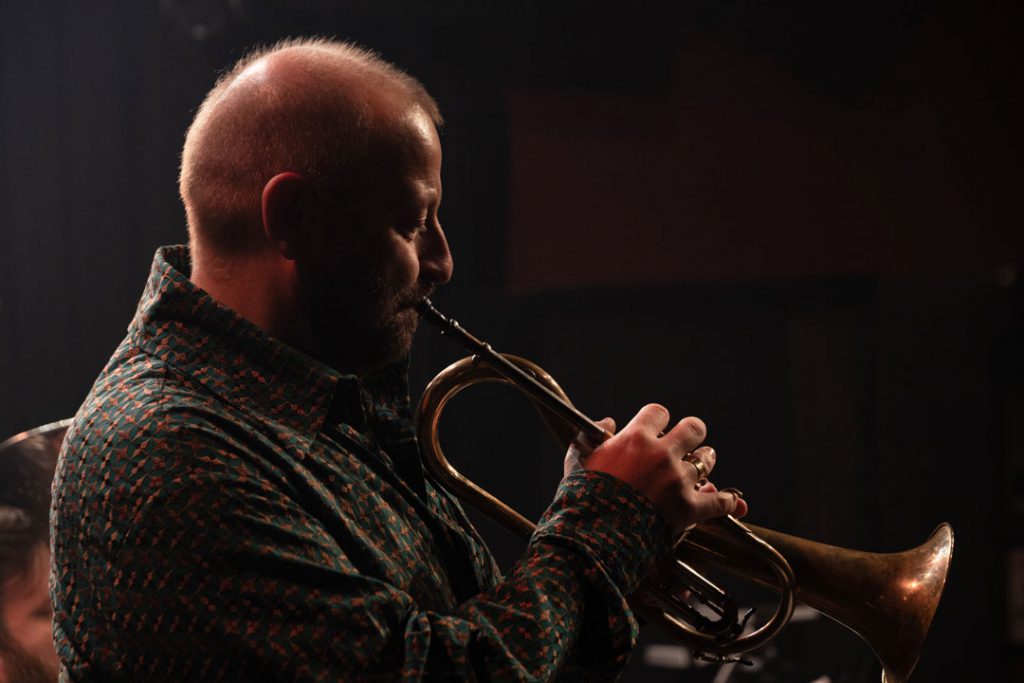
Thomas Gansch during The CD Presentation for “Neat Little Songs”
Since taking over the musical leadership of the Zurich Jazz Orchestra in 2021, Ed Partyka has been focused on deepening the ensemble’s distinct voice while respecting its established tradition. Drawing on decades of experience as a composer, arranger, and conductor in both major European and American big bands, Partyka emphasizes the balance between intricate composition and ensemble interplay. His programming reflects a desire to both honor historically significant big band repertoire and to introduce fresh works that push the rhythmic and harmonic boundaries of the genre.
Looking ahead, the Zurich Jazz Orchestra is firmly cementing its place among Europe’s leading big bands. Under Ed Partyka’s guidance, the ensemble continues to build on its reputation for adventurous programming and high-level musicianship, consistently attracting attention both within Switzerland and internationally. The band’s commitment to expanding its repertoire with carefully crafted new works and dynamic performances positions it as a key player within the continent’s vibrant big band ecology. Partyka’s leadership fosters a sense of creative ambition that balances innovation with the ensemble’s rich tradition, securing the ZJO’s ongoing relevance and prominence on the European jazz stage.
Over the course of three decades, the Zurich Jazz Orchestra has evolved from a local rehearsal band into one of Europe’s premier big bands, developing a distinctive sound marked by stylistic flexibility and meticulous craftsmanship. The ensemble continues to serve as a vital platform for composers, arrangers, and soloists who navigate the changing musical and cultural landscape, regularly pushing creative boundaries while honoring jazz traditions.
It’s clear that within Europe’s well-established big band community, the ZJO stands out as a leading ensemble. Its reputation for artistic and adventurous programming has secured its position among the continent’s most respected large ensembles. With a sustained commitment to innovation and quality, the Zurich Jazz Orchestra remains a significant contributor to the rich and diverse culture of European big band jazz.


Last modified: September 30, 2025