 Written by
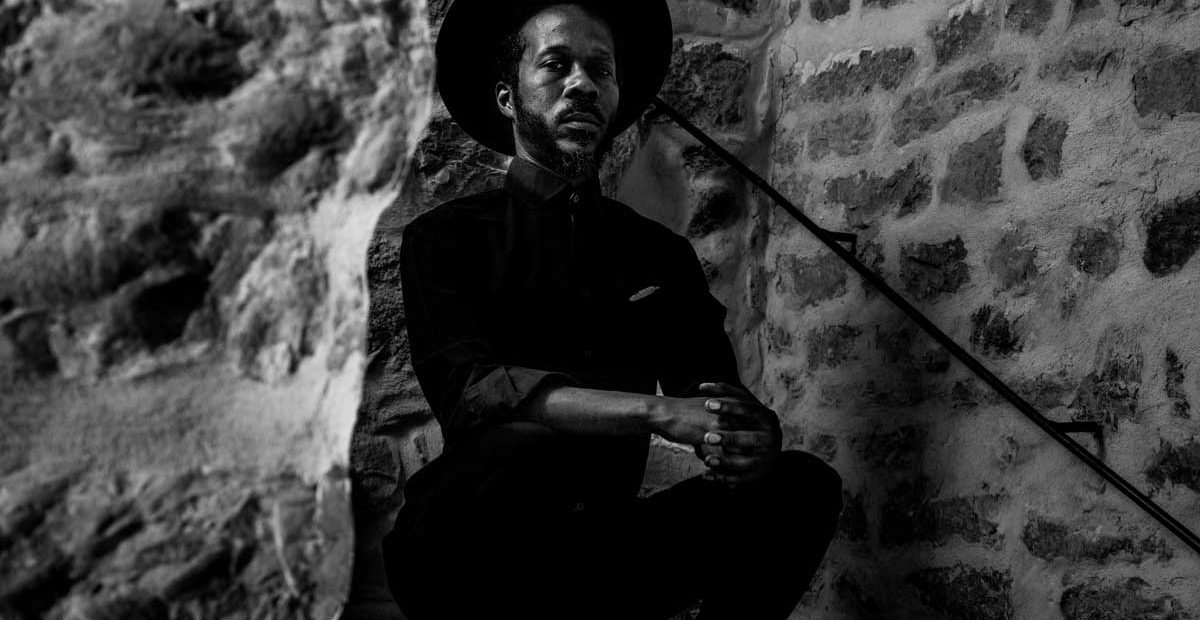
 Joe Sanders is an American bassist, composer, and producer whose career has taken him from Milwaukee to southern France, where he now calls home. Known for his dynamic versatility and emotive playing, Sanders is a graduate of both the Brubeck Institute and the Thelonious Monk Institute. Over the years, he has built a reputation as a sought-after collaborator, and sideman with groups like Kendrick Scott Oracle and the Gerald Clayton Trio to mention just a few. These aspects of Joe’s activity perfectly complements his ongoing efforts as a bandleader and composer, reflecting a career marked by both breadth and depth.
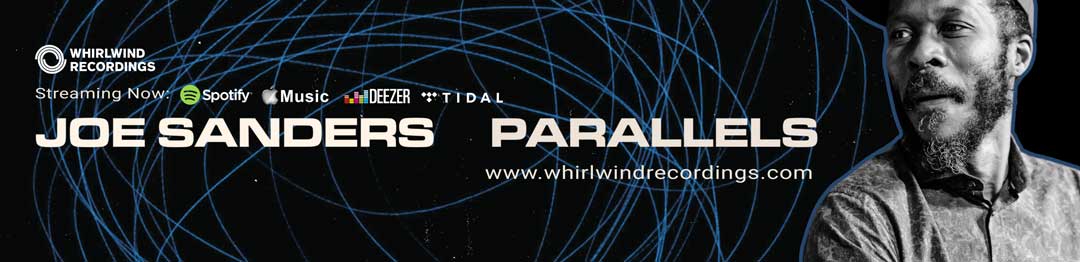
Sanders’ latest project, Parallels, released on October 11, 2024, via Whirlwind Recordings, marks his third album as a leader and showcases his evolution as both composer and producer. The album blends live and studio recordings, featuring tracks like “orangeblue,” which layers bass guitars and electronics, and the solo bass piece “Parallels,” highlighting his exploration of diverse sonic territories. Sanders describes the album as an effort to unify his musical influences, stating, “It’s all of my music here: not just jazz, not just inside, not just outside – putting all the sides together in parallel.” Currently on a major European tour, I recently had the opportunity to speak with Joe from his hotel in Palermo, ahead of the second concert on his current tour.
Andrew Read: Hi Joe, thanks for taking the time to speak with me today, Before we get into speaking about the new album, I’d like to touch on your background for those readers who may not be familiar with your work. So let’s kick of at the beginning, What first drew you to the bass?
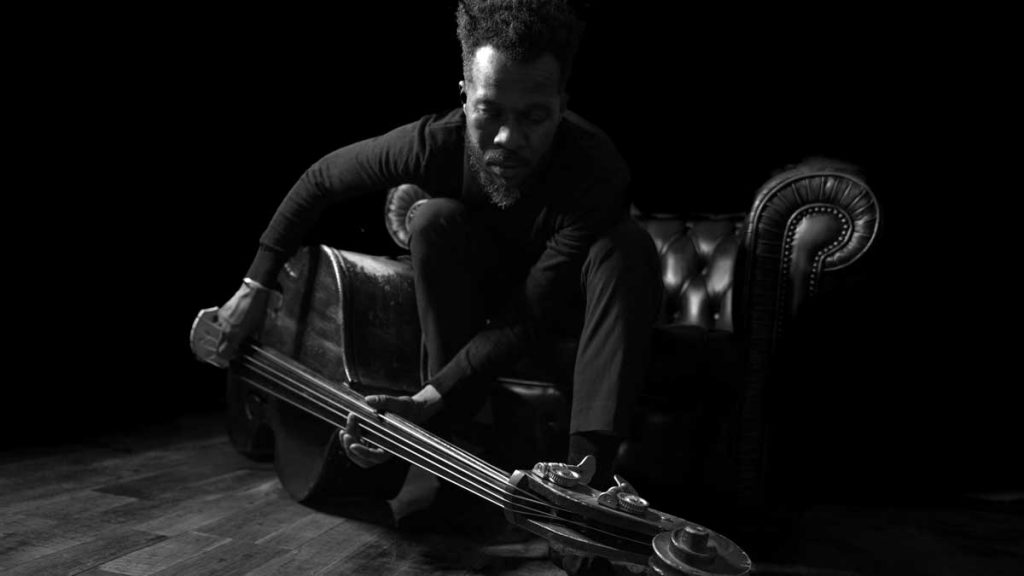
Joe Saunders: I always say I was called to the bass. When I was a kid, I went to church a lot—my dad was really involved, so I was there for Wednesday Bible study, Thursday choir rehearsal, all of that. The church band was just organ and drums. I was about 10 or 11, and even though the organ’s bass sound is great, I felt like something was missing. I didn’t know what a bass was or what it did, but I sensed there was a gap. Eventually, I realized it was the bass. I told my mom I wanted to play bass, and she got me an electric bass. I started learning by ear from the church’s organ player. It felt like a calling, not just picking an instrument for the sake of it.
AR: You started on electric bass, but when did you discover the double bass?
JS: That happened in fifth grade, when I was about 11. The next year, I wanted to go to a college-oriented middle school, but my grades weren’t good enough. My second choice was Roosevelt Middle School of the Arts in Milwaukee. Since I played bass, I chose music as one of my majors, along with dance. When I got to the orchestra room, there was a wall of double basses. I didn’t even realize at first that electric and double bass were related, but I picked up the double bass and took it home. As an only child, I just practiced constantly—sometimes seven hours a day. It wasn’t about getting better; I just loved playing. I got a scholarship for free lessons for inner-city kids, so from seventh grade through high school, I had classical lessons every week. I played in youth orchestras and school orchestras, eventually becoming first chair just from all the practice.
AR: I read in your biography that you studied at the Brubeck Institute. I’m not not aware of this school. Can you tell us a little more about this and what was that experience like?
JS: In high school, I auditioned for the high school band program run by the Grammy’s and amazingly I got in. That year, in 2002, the band included people like Gerald Clayton, Justin Brown, Marcus Gilmore, and Fabian Almazan. I remember there were a lot of college scouts looking at this band because it included some really great players.
One of these was J.B. Dyas, a bassist and jazz educator, started the Brubeck Institute, and coincendentaly 2002 was its inaugural year. I was in the first class, along with Justin, Fabian, Anthony Coleman (trumpet), and Tommy Morimoto (tenor). It was amazing, being on the University of the Pacific campus, we were like rock stars—nobody expected young people, especially young Black musicians, to be playing jazz at that level.
The most amazing part was getting to study with Christian McBride. I’d discovered his album “Number Two Express” a few years earlier and was blown away. At Brubeck, we got to study with him, and it was a fellowship program, so everything was covered. We also had the chance to play with Dave Brubeck himself. It was a unique experience that I’m really happy to have had the opportunity to be part of.
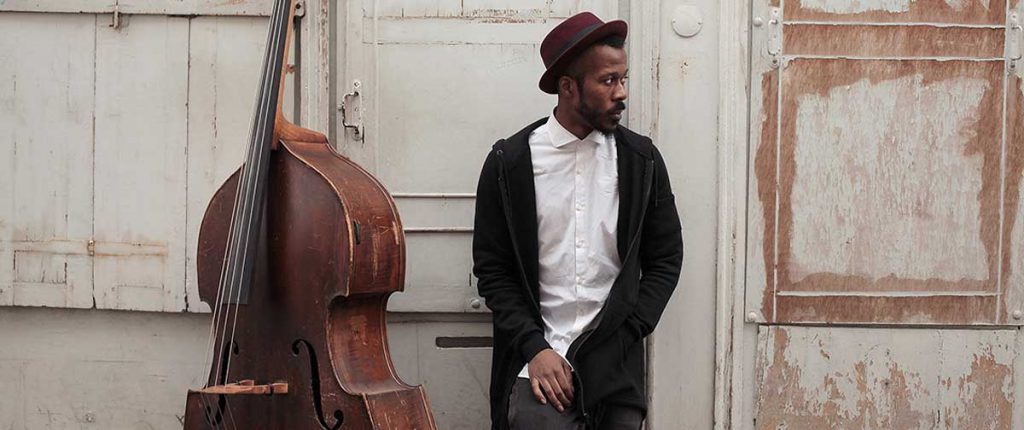
AR: Just before we continue with the interview, let’s take a look at Joe’s career before relocating to Europe. Prior to the move, Joe had already established himself as one of the most sought-after bassists on the international jazz scene. Based in New York, he built a reputation for versatility, deep musicality, and an inventive approach to both acoustic and electric bass, making him a first-call collaborator for leading artists. Some notable highlights from this period include appearing on Christian Scott’s “Live at Newport” and quickly establishing himself through key collaborations with rising stars of his generation. He contributed to Ambrose Akinmusire’s “Prelude… to Cora” and Theo Croker’s “In the Tradition” in 2008, followed by Gerald Clayton’s “Two-Shade” in 2009. Sanders continued this momentum with a featured role on Walter Smith III’s “III” for Criss Cross in 2010, and on Clayton’s “Bond: The Paris Sessions” in 2011.
The following year launched his career as a leader with the release of Introducing Joe Sanders on Criss Cross in 2012, marking a significant milestone in his artistic journey. Bringing together a vibrant ensemble with pianist Luis Perdomo, alto saxophonist Will Vinson, and drummer Rodney Green, the album garnered widespread critical acclaim and firmly established Joe Sanders as a compelling musician to watch.
In addition to this, Sanders also performed with jazz legends Herbie Hancock and Wayne Shorter as a member of the Thelonious Monk Institute band as part of the Institute’s UNESCO jazz outreach programs, in India and Vietnam. These formative experiences, along with his work with other luminaries such as Roy Hargrove, propelled Sanders to the forefront of contemporary jazz and laid the groundwork for his later artistic explorations as a leader and producer.
Looking at Joe’s early career highlights, it’s clear that his journey has been one of constant evolution and exploration. This drive for growth and new experiences ultimately led him to a significant turning point in his life and career: his move to Europe. Let’s get back to the interview.
AR: What motivated your move to Europe?
JS: Donald J. Trump. Seriously, I saw the writing on the wall in 2015 and decided I wasn’t going to stay in the US. By that point, New York had become just a place to do laundry and change bags between tours. I’d go to Europe for two weeks, come back for a few days, then head to Japan or somewhere else. I started thinking about my future and knew I didn’t want to raise kids in New York—it’s expensive and tough.
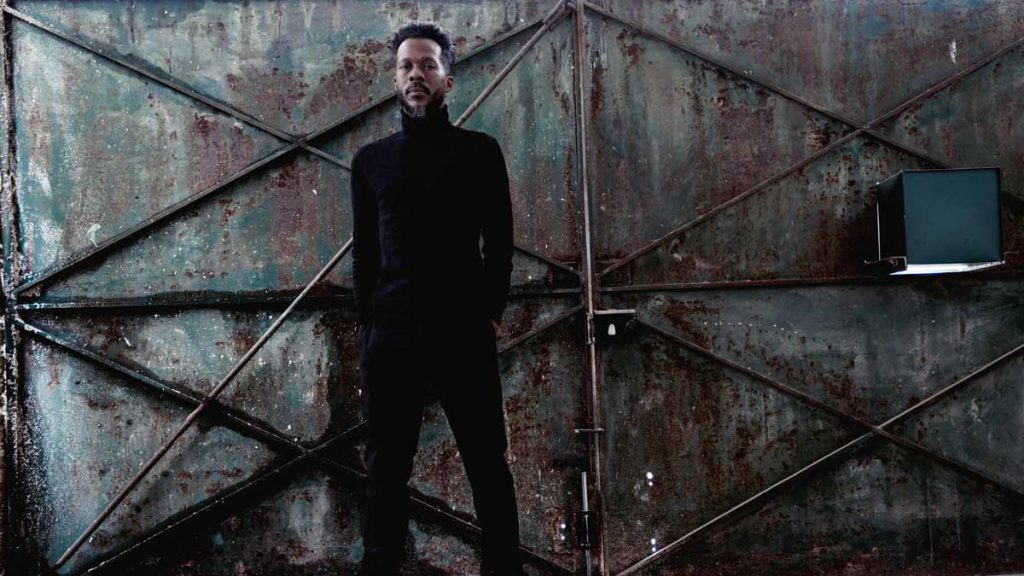
I loved the culture and pace of life in Europe, where people take time to relax and enjoy life. I’d been touring there for years and appreciated that vibe. I also reconnected with a French woman I’d met earlier, and that helped tip the balance. It wasn’t a meticulously planned decision, but I knew I wasn’t staying in New York.
AR: Why did you choose the south of France?
JS: We were in Paris for a while, but ultimately settled in the south of France, near Montpellier. The lifestyle, weather, and culture just felt right.
AR: We’re talking about your new album, which is out now on Michael’s label, Whirlwind. Can you tell me a little about the concept behind the album?
JS: The idea for the album was really twofold. It actually started with Xavier Ferriol at Jazz en Tête, who’s always been supportive of me. He suggested I do a concert as a leader right after COVID, which ended up being my first post-pandemic concert as a leader. That got me thinking about putting together a band, and I was really interested in exploring harmony—specifically, how to create a full sound without a piano in the line-up. That became a compositional challenge for me: could I write music that sounded complete with just bass and two saxophones? I did a lot of composing during the pandemic, so this was a chance to see if I could make it work.
They recorded that concert, and I realized it could be something special. At the same time, I had a bunch of other tracks that I’d been working on for years—stuff I’d been producing and developing on my own, especially during the pandemic when I got into producing, both in the sense of arranging and also making beats, hip-hop style. So the album became about bringing together these two sides: the live band, which is great for touring, and my own solo work, which shows where my music is heading.
AR: How did you approach the challenge of making music feel full without a piano?
JS: It forced me to really think about my harmonic concept and how to fill out the sound with just bass, drums and two saxophones. I saw it as a compositional challenge—could I do it? I spent a lot of time writing and experimenting, trying to make things sound rich and complete. It was also about pushing myself as a composer during the pandemic.
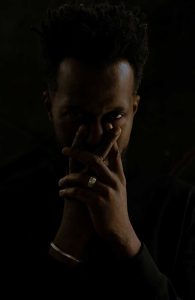 AR: The album has a second part with tracks you’d been working on for years. What was your process with those?
JS: Those tracks were things I’d been developing for a long time, just ideas and licks I saved up. As I said, during the pandemic, I got really into producing, both in the sense of arranging and also making beats. I wanted to show that side of myself, my self-sufficiency as a musician, and my development in terms of musical identity. The challenge was figuring out how I could eventually perform that material live—maybe in a few years I’ll do a solo concert where I play everything, but I want to avoid just relying on a loop station. For now, the live band covers one side, and the solo tracks show the other.
AR: The album is out on Whirlwind Recordings, how did you end up on the label and how did Michael (Janisch – Whirlwind Recordings Owner) respond to your concept for the album?
JS: In the past, I’d played on an album as a member of the quartet Anorok with Jure Pukl, Nasheet Waits, and Peter Evans on Whirlwind and I’d played with a lot of guys who have recorded for the label. I thought it would be a good fit so I reached out to Michael. I explained the concept to him, and he was really into it. He said nobody had done something like this, especially not a bass player, so he was excited to support the project. That gave me the confidence to move forward with it.
AR: You mentioned the band you’re touring with—can you talk about the musicians involved?
JS: The band is incredible. We’ve got Greg Hutchinson on drums, Seamus Blake, and Logan Richardson on saxophones. They’re all amazing musicians and also appear on the album. The first gig was so beautiful it made me cry—the vibe and sound of the band were just so emotional. My approach is that music has to be emotional, intelligent, and kinetic. It has to connect with people, and if it’s authentic, it will.
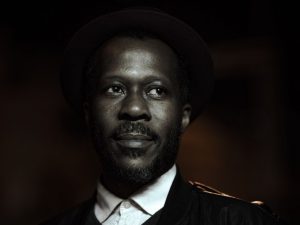 AR: We spoke a bit earlier about the roll of a producer, especially when recording jazz. What’s your philosophy on producing, both for yourself and others?
JS: For me, a producer’s job is to get the best out of everyone. I’ve produced five or six records so far, and I love being in the studio, whether I’m playing or just overseeing everything. I always try to be over-prepared, both with the main artist and the other musicians, so everyone’s on the same page.
The most important thing is making the artist comfortable, especially singers, so they can perform at their best. I’ve learned a lot from being in studios over the years, both from good and bad producers. You need to know when you’ve got the take and not push for endless takes, especially with vocalists. Sometimes the best takes come when everyone’s tired and just being honest.
AR: I know you have a sound check coming up so I don’t want to hold you up to much longer so, let’s finish up with on last question. After the tour, what’s next for you?
JS: Rest! After the tour, I’m looking forward to spending time with my family. I’ve been away a lot—recently I was in New York for two weeks, then home for four days, and now I’m out for another three weeks. So I need some time to reflect on everything that’s happened, to relax, and to appreciate the work we’ve done.
I’m proud of the album and the tour, and it’s still sinking in that I’m leading a band and bringing all this together. After all the work that the label and my agent Stefany (Calembert – Jammin’colors) and I have put in over the last year and a half, I’m really proud of the result.
AR: Well thanks Joe for taking time out from your tour schedule, It was a pleasure catching up and I wish you all the sucess for the rest of the tour.
JS: Thanks Andrew, it was a pleasure.
Speaking with Joe Sanders was a true pleasure, offering a glimpse into his artistic journey and the inspirations behind Parallels. The album, available on LP and all major streaming platforms, presents a compelling blend of live and studio recordings, reflecting his unique musical vision. For those interested in a deeper exploration, our full review is also available. I’m now even more eager to hear what Joe creates next.
Text by: Andrew Read. | Photos: Emra Islek & Wolf-Peter Steinheiser

Last modified: June 27, 2025