 Written by
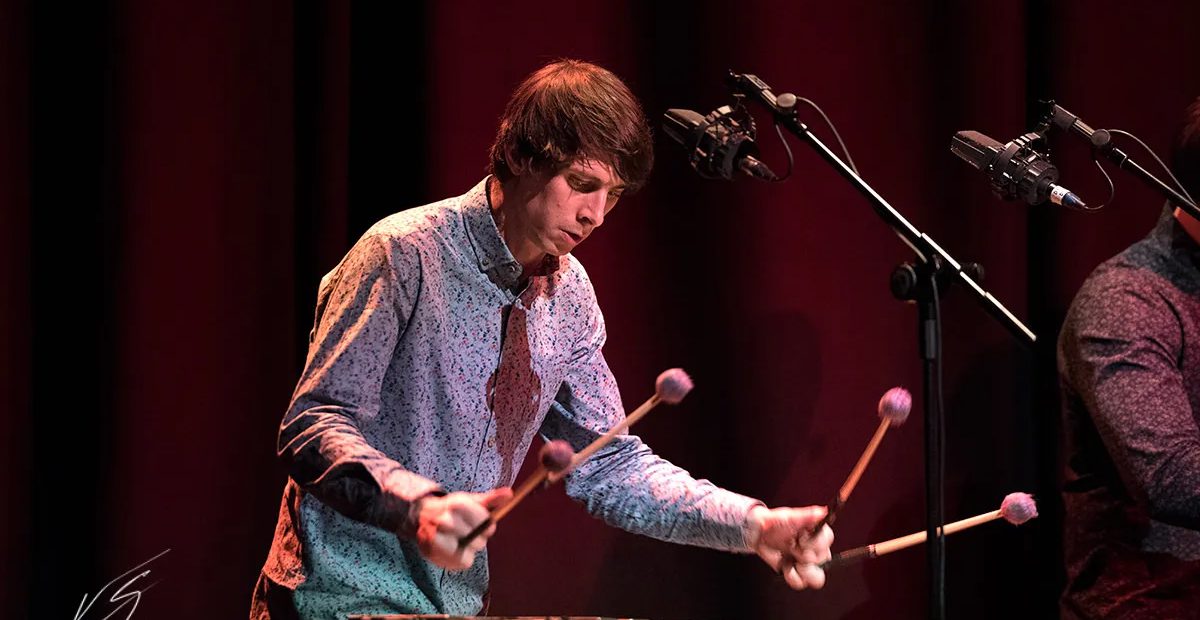
 Jim Hart has never been one to sit still, musically or otherwise. Whether he’s behind a vibraphone, a drum kit, or a piano, he’s always been drawn to the edges of what’s possible, curious about what happens when you blur boundaries—between genres, between composition and improvisation, between acoustic and electronic worlds. Sitting down to talk about his journey, his band the Cloudmakers Trio, and their latest album A Drop of Hope in the Ocean of Uncertainty, Hart’s conversation is as open-ended and exploratory as his music.
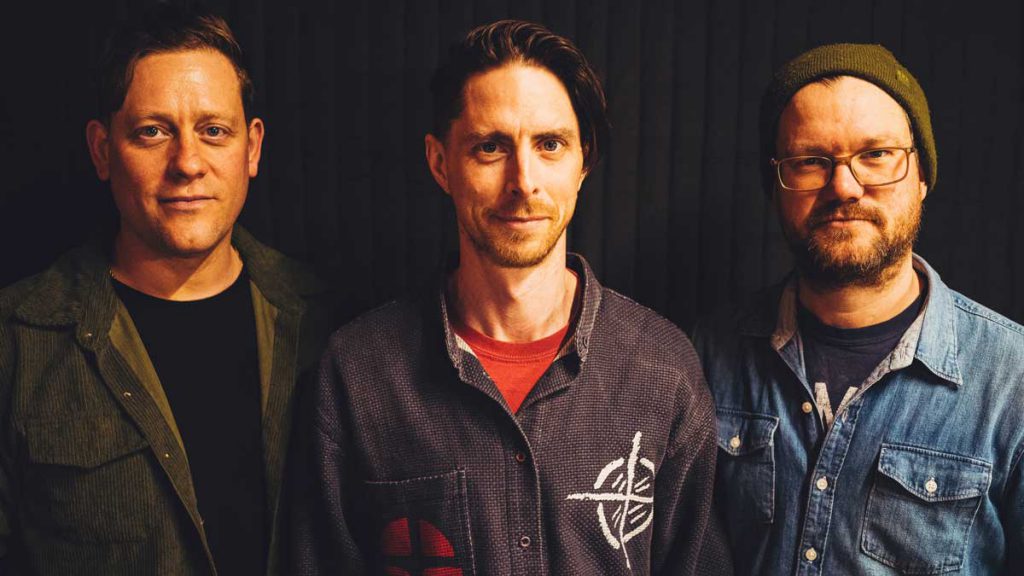
When I asked Jim about the beginnings of the Cloudmakers Trio, his answer was refreshingly straightforward. “It all started with Dave Smith, really. We were flatmates for nearly a decade in the early 2000s, playing together constantly. Dave was already in my old band, Gemini, so we had this shorthand.” The third piece of the puzzle was bassist Michael Janisch, who arrived in London just as Jim and Dave were looking for new musical challenges.
“Michael was organizing these gigs with international guests—he’d put together rhythm sections, and Dave, Michael, and I became the house trio for a while. We played with some fantastic musicians, like Yuri Pukl and Ralph Alessi. The gig with Ralph actually turned into a tour, and we recorded those nights, which became our first album as a band.”
When hearing the origin story of Cloudmakers, what struck me was how organic the trio’s formation was. There was no grand plan—just three musicians who clicked, rehearsing and gigging together until the chemistry became undeniable. Jim continued “I realized this was the direction I wanted to take for my next project. At the time, the jazz scene was saturated with piano trios, but vibraphone trios were rare. It felt like an unexploited format, so I thought, why not challenge myself?”
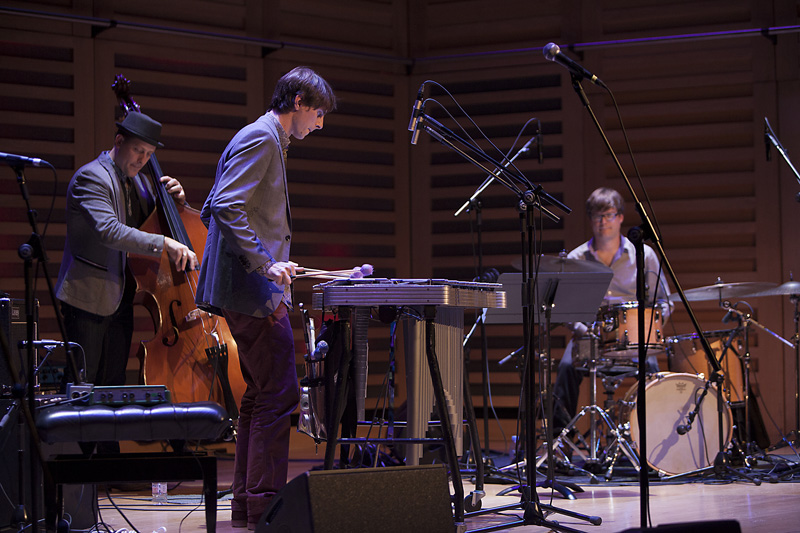
That sense of challenge and curiosity has propelled Cloudmakers ever since. After the Ralph Alessi project, they released some of the live recordings as a record, and things took off from there. “We’ve also expanded into larger formations like quartets and quintets. That was back in 2010, so it’s been about 14 or 15 years now. It’s been quite a journey.”
Collaboration is at the heart of Jim’s work, and the new Cloudmakers record, A Drop of Hope in the Ocean of Uncertainty, is no exception. “After focusing on the vibraphone as the central harmonic instrument for a while, I wanted to revisit adding a piano. I’ve played with great pianists before—like Ivo Neame, who’s fantastic—but I was ready to explore that sound world again with Cloudmakers.”
The question was: who? Over the past few years, Jim had played at the Bezau Beatz festival in Austria several times, always crossing paths with Leo Genovese. “Each time, Leo was there too. We got to know each other, and I followed his music closely. In 2023, I heard his trio at Bezau Beatz, and I was blown away. That was the moment I thought, ‘I have to do this with Leo.’”
It’s the kind of story that’s only possible in jazz: two musicians orbiting the same festivals, finally connecting at just the right time. “The first time I played at Bezau Beatz was with Cloudmakers, and Leo was there. He loved what we were doing, and I felt the same about his music. When I heard his trio that year, it just clicked. Writing music for him was inspiring, and it felt like the perfect fit.”
I was curious about the challenge of writing for both piano and vibraphone—two instruments that can easily crowd each other harmonically. Jim was candid: “That was a major consideration. I wanted to share the harmonic and melodic roles equally between the vibraphone and piano, almost like combining a piano trio and a vibraphone trio into a ‘trio quartet.’ Both instruments would be lead voices, playing melodies and harmony.”
He described writing parts where the instruments would double melodies or explore different voicings, sometimes extending the harmonic range by overlapping parts. “The vibraphone is limited to four notes at a time, so having the piano complement or reduce its role at times created some interesting textures. For example, the piano might play just three or four notes to double what the vibraphone is doing. It was about marrying the two instruments’ sounds and exploring all the combinations we could use.”
Leo’s skills on synths were also a factor. “He’s an amazing keyboard player, so I wanted to incorporate his skills on synthesizers like the Prophet 6 on some tracks. Mike Janisch played electric bass, which we hadn’t used much before with Cloudmakers, and Dave Smith used some live looping and effects on drums. So the album was an opportunity to explore electronics and expand our sound palette.”
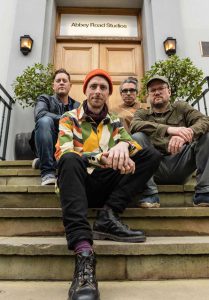 One thing that immediately struck me about the new album was how seamlessly it moves between composed and improvised material. I asked Jim if that was a conscious goal. “Yes, definitely. Because Leo is based in New York and has a busy schedule, we knew rehearsals would be limited. The music I write isn’t necessarily complex for complexity’s sake, but it’s how I hear it—clear architecture with simple ideas.”
The process was methodical: “Mike, Dave, and I rehearsed and workshopped the music extensively before sending recordings to Leo. We then had a three-hour rehearsal with him the night before recording. Leo is incredibly prepared and has this amazing ability to fit into any musical context and elevate it. He felt like a natural member of Cloudmakers immediately.”
Jim cited Wayne Shorter’s last quartet as a key influence. “That group blurred the lines between composition and improvisation in a way that deeply resonated with me. Leo’s connection to Wayne Shorter also inspired some of the material.”
Listening to the record, it’s clear that Leo doesn’t sound like a guest—he sounds like an extension of the band. I put this to Jim, and he agreed. “Leo fit so naturally into the music that it really is just the Cloudmakers Trio getting bigger. He has this chameleon-like quality—he always plays what the music needs. That versatility is a huge strength. He doesn’t impose a distinct ‘Leo sound’ but enhances the group’s sound, making it richer and more expansive.”
The new album features more electronics than previous Cloudmakers releases, and I was curious how deliberate that was. “It was definitely intentional. From the start of the writing process, I had certain tunes in mind that would benefit from synths, electric bass, and live processing on drums. I also used some acoustic preparations on the vibraphone.”
Jim was clear that the electronics weren’t just for show—they were integrated into the compositions from the ground up. “Mike’s electric bass and pedals, Dave’s live processing, and Leo’s synthesizers like the Prophet 6 all contributed to expanding our sonic landscape. The compositions were shaped with these sounds in mind. It was fun pushing further into that territory.”
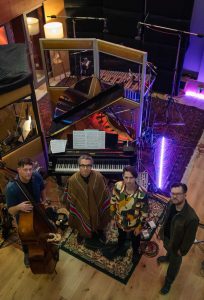 And despite the tech, the album is a document of live performance. “Everything on the album is played live, with very little overdubbing. There’s a bit of overdub on one track where Leo adds Prophet 6 over piano, but otherwise, it’s all live performance. That live energy is important to us.”
I’ve always been fascinated by the internal dynamics of bands, especially those with strong leaders. I asked Jim how collaborative Cloudmakers is. “It’s primarily my project. The music is mostly mine. But Mike and Dave are incredibly supportive and contribute ideas that help shape the work. Michael Janisch, who runs our label, also plays a big role behind the scenes. While it’s my band and music, it’s very much a collective effort in terms of performance and evolving the sound.”
Jim’s musical background is as rich as his playing suggests. “I grew up in Cornwall, in the southwest of the UK, in a very musical family. I was lucky to have excellent music teachers from an early age. I started percussion lessons with Russell Davis when I was about five, and simultaneously began piano lessons with Cecil Duval, who was from Philadelphia and had been a touring session musician for artists like Teddy Pendergrass.”
He credits his family with fostering a love of music. “My older brother is a trumpet player, and his teacher was a jazz musician, so there was a lot of jazz around the house. My dad runs choirs and stepped in to lead the local big band after the previous leader passed away. My mom even took up saxophone to play in it. So music was very much part of our family life.”
His formal studies took him to Chetham’s School of Music in Manchester, then to Guildhall in London, though he left before finishing to pursue gigs. “I played piano, drums, and mallet percussion in various settings but wasn’t playing jazz vibes much at the time. It was friends like Gwilym Simcock and Gareth Le Crane who encouraged me to focus on vibraphone, saying there weren’t many vibes players around and I should pursue it. That advice really stuck with me.”
As someone who’s spent years straddling different musical roles, I was keen to hear how Jim sees himself. “That’s a great question, and honestly, I think ‘percussionist’ is a good umbrella term for me, because it covers both vibes and drums. But, to be more specific, I really do see myself as both a drummer and a vibraphone player—equally. I love both instruments, and I consider them both my ‘first’ instrument, if that makes sense. I feel incredibly lucky to have both in my life.”
He talked about the inspiration he gets from working with other drummers and vibraphonists, and how switching between instruments keeps things fresh. “Whenever I’m busy on one instrument, I find myself practicing the other. If I’m gigging a lot on drums, I’ll spend my practice time on vibes, and vice versa. It’s a great way to keep things fresh—a change of headspace and a new musical perspective each time. So, yes, ‘percussionist’ fits, but at the core, I’m just a musician who loves both drums and vibes.”
Jim also plays marimba, though less often live. “I do play marimba as well. I have one at home and play it from time to time. When I was with Marius Neset’s band for about ten years, I played a lot of marimba as well as vibes. I still play marimba at home, but I don’t tend to gig on it very often. It’s a beast of an instrument—big, heavy, and not the easiest thing to cart around or get delivered as backline.”
He’s honest about the limits of the instrument for his live work. “Musically, I also find the marimba somewhat restrictive in certain contexts. If I’m going to play marimba on a gig, I’d usually want a vibraphone there as well. The two complement each other, but the marimba’s sonic world is a bit narrower for the kinds of music I like to play live.”
When it comes to electronics, Jim’s approach is pragmatic. “Not really, at least not in the way some people do. I used to have a pickup system on my vibes, which I’d run through effects pedals. These days, I use contact microphones and run those through a couple of pedals, but I try to keep things fairly analogue.”
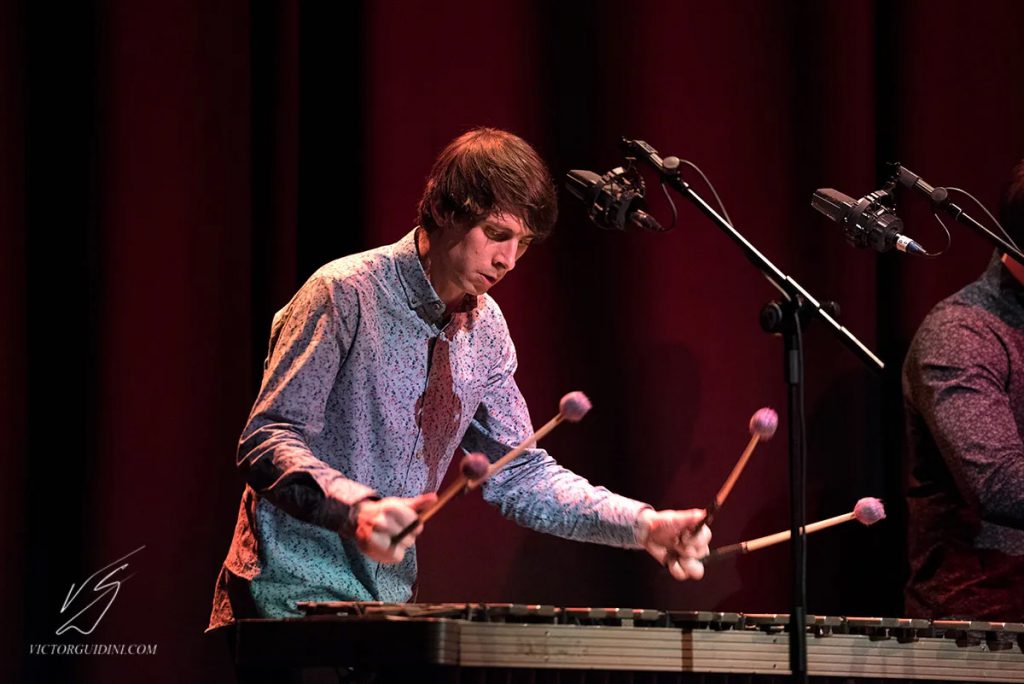
He admires musicians who dive deep into electronics: “I work closely with Petter Eldh, and I love his production work. I’m also really into artists like Flying Lotus. In fact, a couple of tunes on the last Cloudmakers record are indirectly influenced by Flying Lotus. But honestly, there are people who do that kind of thing extremely well, and keeping my vibes and drums playing at the level I want is already a lot of work. I don’t want to spread myself too thin.” But he’s not ruling anything out. “Sometimes I imagine running my mics into Ableton and processing things live. I’ve got some ideas for a solo project that might explore that territory, maybe next time there’s a big break—like, I don’t know, the next pandemic! But right now, I’ve got plenty on my plate with writing and performing.”
What I took away from my conversation with Jim Hart was a sense of perpetual motion—a musician always seeking, always questioning, always curious. Whether he’s leading Cloudmakers, collaborating with new voices, or dreaming up the next project, Jim’s approach is rooted in openness, rigor, and a genuine love for the craft. It’s a reminder that the best jazz is never static, and the best musicians never stop learning.
Text by: Peter McLarren | Photos by: Victor Guidini, Alex Bonney, Monika Jakubowska. Additional Photo’s courtesy of the artist.
Last modified: June 27, 2025