 Written by
 Editor’s Note:
This interview with Ola Onabulé is presented in two parts. You’re about to read part one, with part two coming soon—so keep an eye out for the rest of our conversation, including more on Ola’s creative process, his latest projects, and what’s next for him and his band.

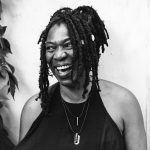
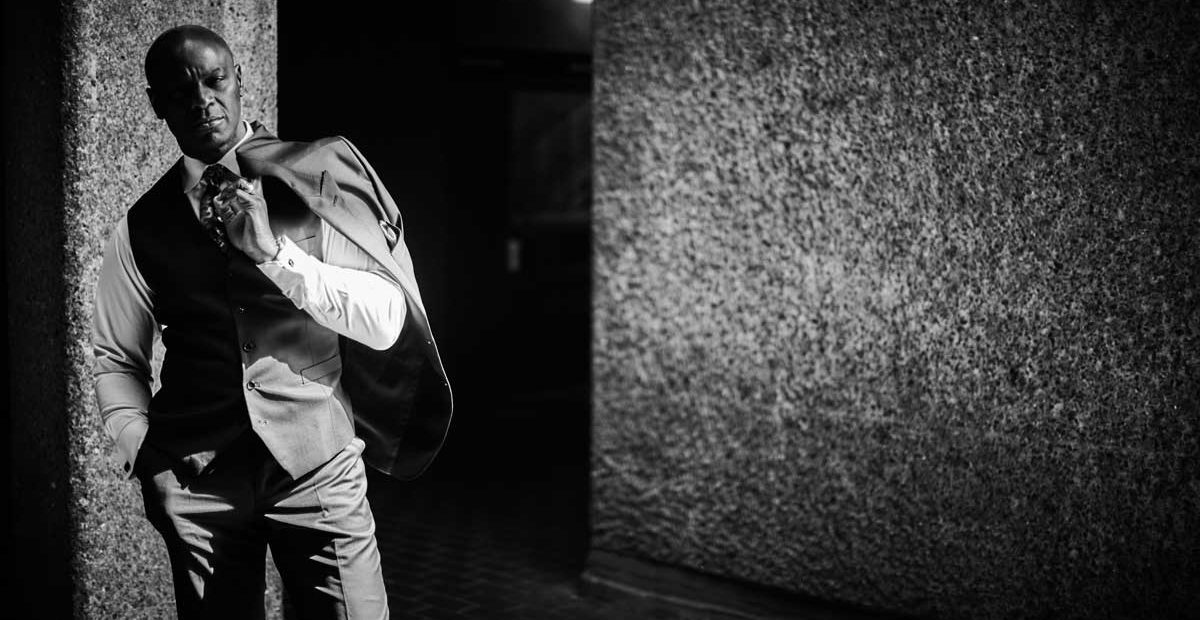
Ola Onabulé is a British-Nigerian singer, songwriter, and producer renowned for his powerful voice, thought-provoking lyrics, and genre-defying approach to music. Over a career spanning more than two decades, Ola has built an international reputation for blending jazz, soul, and world music influences into a sound that is uniquely his own.
He is celebrated not only for his dynamic live performances — often fronting big bands, orchestras, and small ensembles alike with arrangements of his own compositions — but also for his insightful songwriting, which frequently explores themes of identity, social justice, and the human condition. Ola’s collaborative spirit has led him to work with some of the world’s top musicians and orchestras, and his discography reflects both artistic depth and fearless innovation.
Having known Ola Onabulé for over ten years, I found it nearly impossible to conduct a formal interview with someone I consider a friend. Instead, I chose to present our conversation in an informal, conversational style, hoping to give readers the sense of being a “fly on the wall” as we caught up. The result is an informal, conversational exchange that reflects not just Ola’s artistry, but also the candid rapport we’ve built over the years. I hope you enjoy listening in as much as we enjoyed the conversation.
Andrew Read: Ola, let’s start with… I don’t think we need to go over your whole origin story—that’s already out there more than enough. So, let’s begin by asking: what have you been up to recently?
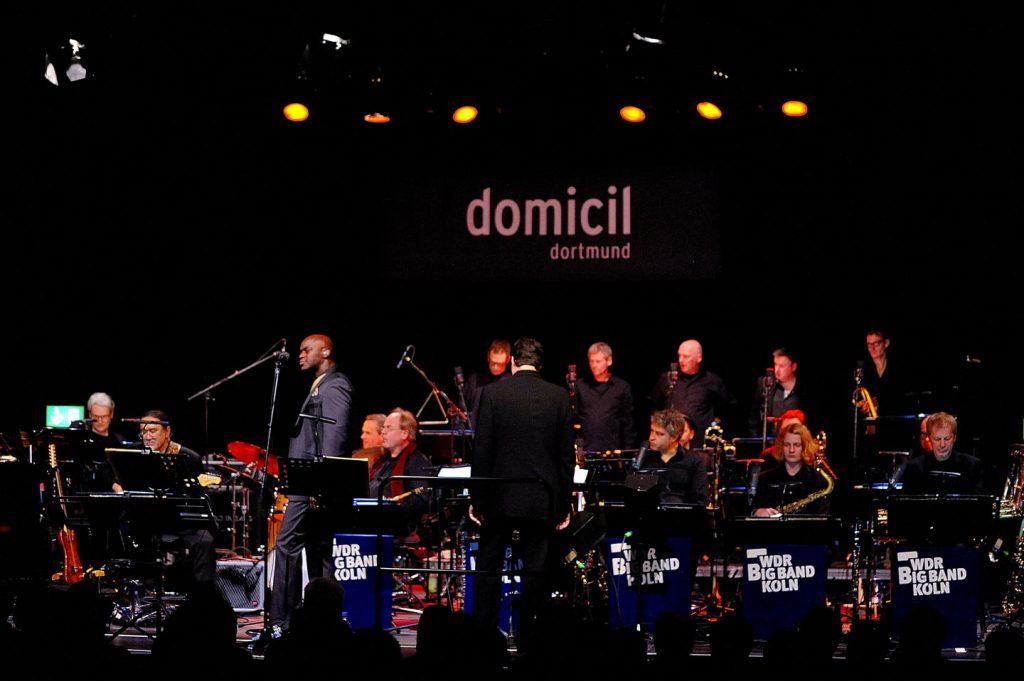
Ola Onabulé: Well, we’ve just finished a whole bout of traveling around the world, fronting big bands and large ensembles. We played with a philharmonic, did a chamber orchestra gig with five-piece strings and piano alongside Tobias Becker, and did a small number of gigs with that lineup. That’s been the last six months—quite intense, quite busy. Now that we’ve come to the end of that, I’m focusing on writing an album that, hopefully, will be released either in the year ahead or the year after. We’re also currently promoting an album I started writing in 2023 with Nicolas Meier, a Swiss world jazz guitarist. It was finished in 2024, mixed by George Witty, and is about to be released now. So, yes, a range of things.
Andrew Read: Yeah, exactly. Cool. I also heard through the grapevine that you spent some time working on a big band version of your “Pointless” album, right?
Ola Onabulé: Yes.
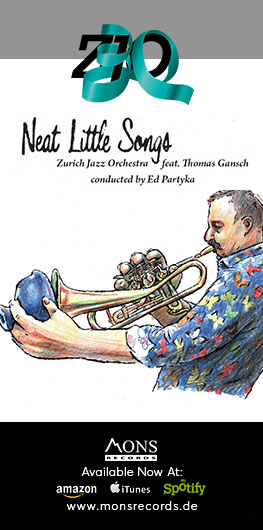
Andrew Read: With Ed Partyka?
Ola Onabulé: Indeed, in fact with Ed Partyka and the Latvian Radio Big Band, who are a pretty solid group of musicians and a bunch of nice people as well.
Andrew Read: So, I guess we’ve got plenty to talk about—more than enough to dig into.
Ola Onabulé: Yeah.
Andrew Read: OK, so where to start? Let’s kick off with the orchestral project. I’ve seen that’s been fairly highly publicized. Tell us a little bit about how that project came about.
Ola Onabulé: Well, before it was ever performed, an arranger and composer named Tobias Becker—who actually runs his own big band in Germany— was talking with my manager about my new album of the time Point Less. He listened to the songs from “Pointless,” and loved the concept. The whole album is built around one concept, and he liked that. He proposed arranging all the songs for symphonic orchestra so I said, absolutely, go ahead. The results were just so beautiful. He really bought into the whole idea.
At one stage there was this idea that it could become a musical or an opera. Maria, my manager, and I had talked about it, wondering, “Could it work?” I’m not a big fan of musicals myself. The whole thing of people breaking into spontaneous song—they might as well just burst into spontaneous fire. It’s just too surreal – incongruous and weird.
Andrew Read: Me either. I’ve never been a Musical fanboy.
Ola Onabulé: Exactly. But we were convinced by a friend in Mexico that, for certain things—especially something with such a clear and simple story as this—a musical format could be a good way to bring the music to life. Sometimes my music, even though it’s contemporary, can be considered a bit unapproachable or inscrutable, maybe because of the time signatures.
Andrew Read: Yeah, I could see it sitting more as a contemporary opera with a libretto. That would work really well.
Ola Onabulé: Yes, exactly, anyway, that idea fell through. Everyone we spoke to in that world made us realize, first, how much of a closed shop it is, and second, that the timeline for those projects can be many years—sometimes even decades. So, we let ourselves be convinced that Tobias’s approach—writing symphonic scores, with me singing the songs and narrating the story as it unfolds—was a much simpler and more “gig-able” approach.
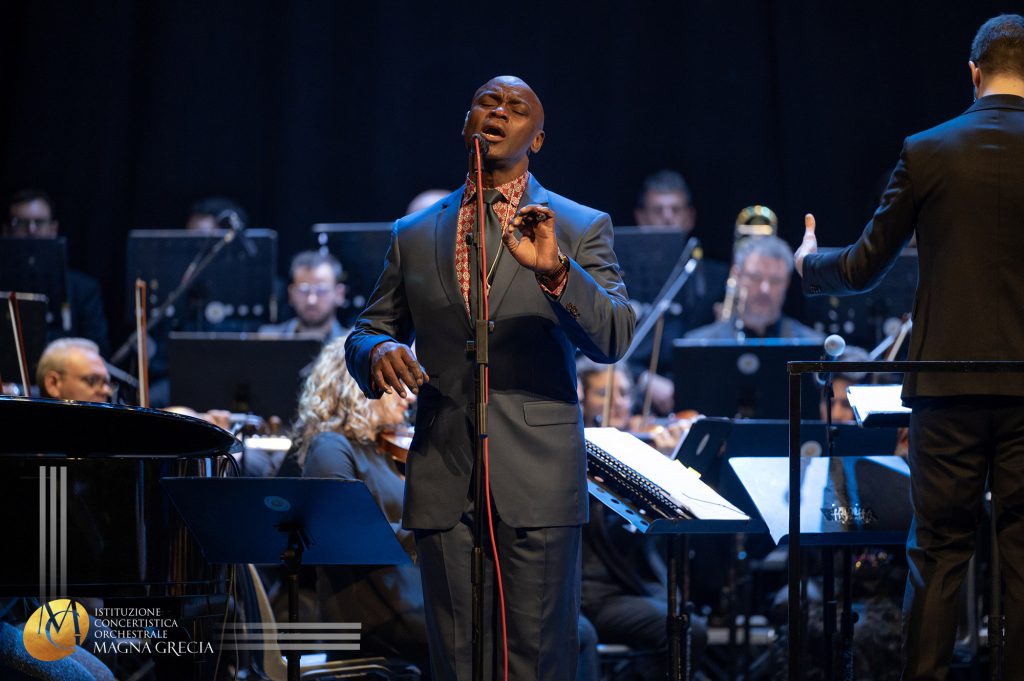
So we got that done, and it’s like that Paulo Coelho thing: you speak it out into the universe, and it answers back with a yes. Once we did it, Maria, my manager’s efforts to get orchestras interested started to bear fruit. We immediately did one with the Liep?ja Symphony Orchestra in Latvia, and then another in Italy—our Italian adventure. After that, we did one somewhere else, but I can’t remember exactly where.
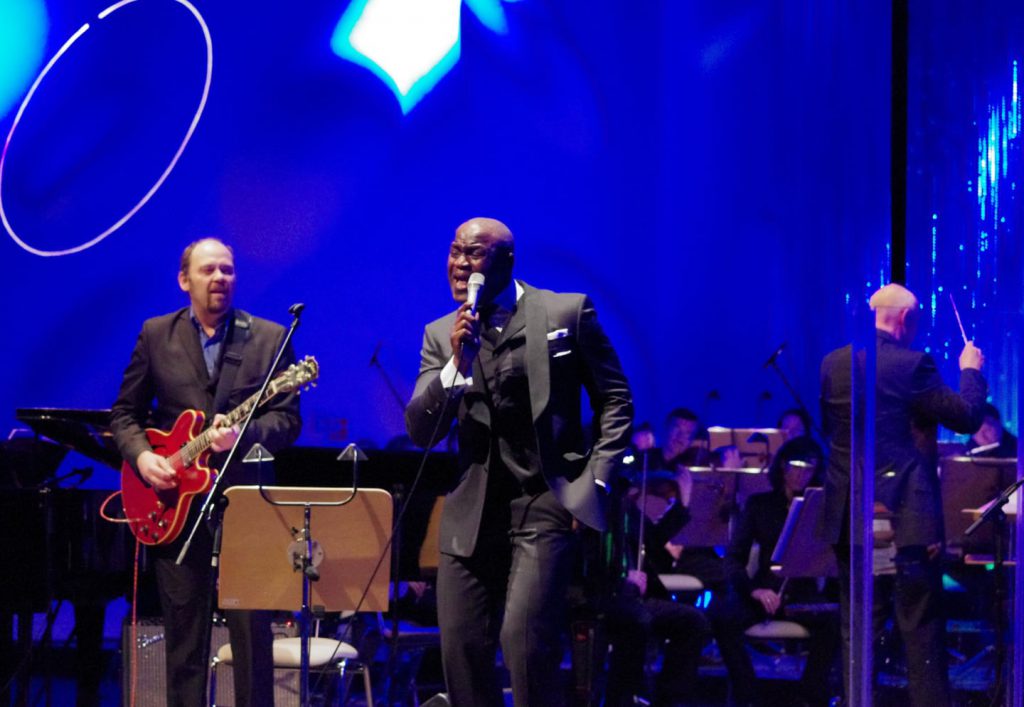
Subsequently, Ed, who works and arranges with the UMO Helsinki Jazz Orchestra, was asked if he wanted to do a project. He gets an opportunity once a year to do a combined UMO Helsinki Jazz and Helsinki Philharmonic Orchestra joint project. So they commissioned brand new arrangements that combined the big band arrangements and the philharmonic orchestra, creating a spectacular and memorable experience. These arrangements were totally different to how Tobias approached it.
Andrew Read: Cool. So you got to tell the story around “Pointless” once again, but in a new jacket. Man that album has more lives than a cat!
Ola Onabulé: Yes, exactly.
Andrew Read: So, tell me more about Ed’s arrangements?
Ola Onabulé: Yes, they are a totally different set of arrangements. Once again, the emotions that the songs are designed to elicit still worked in exactly the same way, but it was fascinating to me how two people can find completely different ways of expressing the same thing.
Andrew Read: I can imagine there must have been a substantial juxtaposition between the work that Tobias did and what Ed did. That must have been interesting to experience.
Ola Onabulé: Yes, and also the personalities of both conductors and arrangers influenced what they got out of the musicians in the two different instances. I had the chance to watch both operate. There were different discussions: in some instances, dynamics were the obsessive concern, and in others, it was lyricism—how to convey the expression of these things. As always, I’m hungry for knowledge. It was as much an education for me as it was an opportunity to find a new way to express these ideas that have been bouncing around for a while.
Andrew Read: That album is a few years old now, If I remember it came out pre-pandemic, 2019 I think, right?
Ola Onabulé: Yes. I’m fascinated that it still has a life — it keeps reincarnating in different forms. Usually, I start to feel the need to get a new work out into the world about two to three years after completing the last one. But with the best will in the world, I just haven’t been able to get to writing because “Pointless” still occupies so much of my time and space in one form or another.
Andrew Read: That’s quite interesting. I know the backstory, but perhaps you could fill in some of our readers who might not know the origin story of that album.
Ola Onabulé: Sure. There was a song on the album called “Ballad of the Star-Crossed.” That came about because I was checking out social media one evening and came across a video — this would have been around 2016, maybe a bit later — on Periscope, which was an early live-streaming app. Unfortunately, it was a video of a man in the U.S. being stopped by police. He was trying his best to comply, but things didn’t go according to plan and he was fatally shot. What was particularly poignant was that his three-year-old daughter, sitting on the back seat, had witnessed the whole thing. It just seemed so crazy and scary, but also symptomatic of what was happening in the world at the time. I thought, “Okay, the universe is trying to tell me something here.”
I was trying to write innocuous ditties about love, but this is what was unfolding. So, obviously, I was meant to write something about it. I started writing “Ballad of the Star-Crossed,” and that spurred me on to write many other tunes. I had to pare the album down to 14 songs because I had so many ideas. I created this world full of characters: the shooter, the wife, the daughter, the world in which something like this could just be a daily occurrence.
Andrew Read: There was one track on that album I found incredibly poignant: “I Knew Your Father.” If I understand correctly, it’s written from the point of view of a witness talking to the young daughter who saw her father murdered, right?
Ola Onabulé: Yes, exactly. It’s an interesting concept to tell the same story from different perspectives, but still tie the whole thing together.
Andrew Read: Some creative projects can feel labored, like pulling teeth, but when I listen to that album, it feels like the whole story just poured out at once. Was that the case?
Ola Onabulé: Absolutely. It was one of the fastest projects I put together. I had so many ideas that it was the first time I really had to edit myself. Usually, I’d write eight songs and then struggle to find two more that fit. But with this project, I just had so much to say. I knew I couldn’t save material for a sequel because it’s not that kind of topic. I had to be my own curator to shape the album into what it became.
Andrew Read: You were dealing with that topic before George Floyd, which is, in its way, an indictment of a rather bankrupt society, isn’t it?
Ola Onabulé: It is. There were things I spoke about on that album that I communicated to people who live on the doorstep of this stuff, who had no idea it was happening. The internet was feeding it to people who had clicked on something like that before, but anyone who hadn’t was completely unaware. In a strange way, the subject remains new to many, even though it’s devastatingly tragic and needs more attention.
Andrew Read: The George Floyd case brought the whole issue of police brutality in the U.S. to the masses, but it’s been there for years.
Ola Onabulé: exactly, Rodney King!
Andrew Read: Oh man, way before that. What about “Bloody Sunday” in Selma, you know the whole atack on the Civil Rights protestors on the Edmund Petus Bridge. That was way back in 1967.
Ola Onabulé: Exactly.
Andrew Read: In fact, not long after that, the concept of qualified immunity for police officers was introduced, which is one of the more perverse parts of American society. But let’s not go down that rabbit hole, you really don’t want to get me started.
So, moving on, let’s talk about the new album that just arrived in my mailbox: “Proof of Life.” I believe it’s scheduled for release around September?
Ola Onabulé: Actually, it’s coming out on June 30th.
Andrew Read: That’s great, because that’s about the time this interview will be published. Tell me about the story behind this one.
Ola Onabulé: We were keeping busy during COVID with our monthly livestreams—twelve in total. Our guitarist dropped out, so the double bass player, who’d been with us for years, suggested Nicolas Meier. I heard him play and immediately noticed his approach was a bit left-field compared to typical jazz guitarists. I quickly discovered he wrote prolifically—he has about 30 albums to his name. He was also doing his own livestreams and had done a lot of touring and co-writing with Jeff Beck.
ADD VIDEO HERE
Andrew Read: I’m familiar with his work with Jeff Beck, and I know he’s worked with another UK guitarist as a duo.
Ola Onabulé: Yes, and he recently did another guitar ensemble project—some kind of “rock guitar heroes” thing across Europe. What’s particularly interesting is that he’s married to a Turkish lady. Even before their relationship, he was interested in Eastern scales and music theory, but being absorbed into her family deepened that influence. He brought a lot of that with him when we started working together. I suggested we write an album, and we started throwing ideas together. Like “Pointless,” the ideas came quickly and happily. I would have a section for a song, play it to him, and he would respond with something I would never have thought of.
When you live the “solo schizoid” life that I do—suggesting ideas to myself and choosing between them—it’s nice to hear someone else bring in their own musical world.
Andrew Read: Tell me about the writing process. Most of your work is pretty much solo, as you mentioned. How did the collaborative process with Nicolas work?
Ola Onabulé: As a result of his exposure to Jeff Beck—or maybe Jeff Beck heard it in him—Nicolas is a very experimental guitarist. Many experimental guitarists focus on sounds, chords, and progressions, but Nicholas experiments with melody. He looks for melodic expressions that challenge him, which surprised and inspired me. As a singer, I can’t sing chords unless I’m doing something very specific, so it was exciting to work with a guitarist who thinks in terms of melody. It felt like a duet relationship, and that was while we were livestreaming.
At first, it took a while for him to understand that I didn’t want him to just accompany me. I wanted a duet, to expand on his power as another voice. Once he got that, we moved forward together, writing all the songs in the summer. He would bring ideas, I’d play him things I had recorded, or be inspired by what he was doing. We recorded everything, then each of us would go away, choose the bits we liked, and come back together to stitch them into something resembling a tune. I would then do mock-ups of drums, double bass, keyboards, and percussion, send them back to him, and so on until the album was done.
Andrew Read: It sounds like a true post-pandemic workflow. But when I listen to the album, it feels like a different Ola Onabulé. It’s not what people would normally expect from you. Was that largely Nicholas’s influence?
Ola Onabulé: Absolutely. It’s a pretty even relationship. We don’t necessarily share influences—he’s aware of mine, and I’m aware of his, but they’re not the people we poured over as young musicians. We relied on our innate musicality to help us find common ground. I think Nicholas would say the same: this isn’t a typical Nicolas Meier album, and it’s not a typical Ola Onabulé album. I’m enjoying the fact that we’ve created something unique by combining our forces—something that wouldn’t happen if either of us worked with someone else.
Andrew Read: Most readers know you as fronting a large ensembles. Are we going to see this project touring with a small group?
Ola Onabulé: Yes, dates are already coming in. We’re launching at King’s Place in London on August 28th, and there are more dates coming in across Europe. It’s going to be a small ensemble: drums, bass, guitar, another guitar, and, when possible, percussion. When we can, we’ll add another voice, or try to get band members to sing some of the African chants from the album. It would be nice to hear other voices, or maybe even co-opt the audience. That could be very cool as well.
That’s where we’ll leave things for now, but there’s still plenty more to come in part two of this interview. Ola’s journey keeps taking unexpected turns, from his ever-evolving “Point Less” project to new creative partnerships. His latest album with Nicolas Meier, “Proof of Life,” is just about to drop, and it’s clear this collaboration has pushed both artists into fresh territory. With a tour on the way and more stories to share, make sure to check back for the next part, where we’ll dig deeper into the making of the album and what’s next for Ola and the band.
Last modified: June 27, 2025