 Written by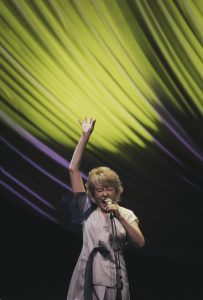
Photo by Seung Yull Nah
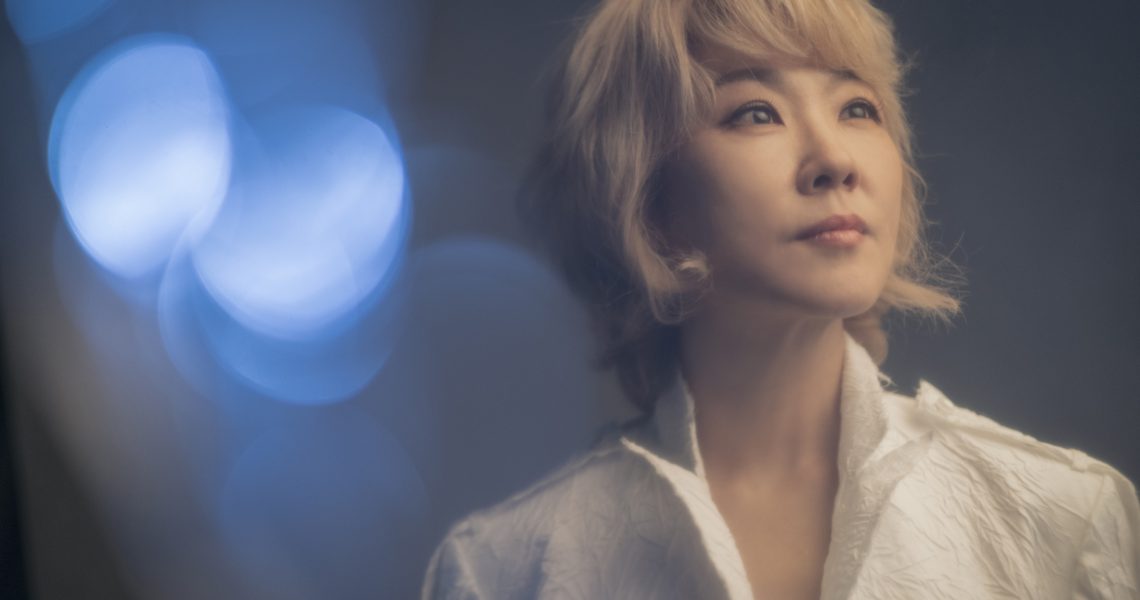
The award-winning singer, songwriter, and performer Youn Sun Nah performed at Union Chapel, London on October 6th as part of the K festival, marking her 30 year career. Performing with multiple award-winning pianist Bojan Z, this was a concert full of soul enriching music, astounding musicianship and a level of artistry I have truly never seen.
Youn Sun Nah magically combines strength, power and intense drama with a beautifully honest sense of vulnerability and lightness. I have never seen anything like it. The setting was perfect. Union Chapel is a stunning venue and despite the huge space, Youn brought us all in close, and made it feel like a truly intimate space where we were honoured to be. A space where she was free to be, free to express, free to share her immense artistry with us.
Youn has performed alongside a huge range of legends including Herbie Hancock, Regina Carter and Esperanza Spalding and was the first Korean vocalist to receive the Officier de l’ Ordre des Arts et des Lettres (Officer of Order of Arts and Letters) from France, one of the highest honours that can be given to an artist by the country.
Released in August of this year, Youn’s 12th album Elles is a stunning collection of interpretations of female led songs and songwriters who have a special place in shaping her artistry including Björk, Sarah Vaughan, Grace Jones, Roberta Flack and Edith Piaf. The impact of these influences are clear and like many of the artists who have inspired her, Youn cannot be put in a neat little genre box, thank goodness. She merges genre boundaries as if they were never there, combining many styles and genres from classical to jazz, rock to pop to musical theatre – you name it, it is gloriously all present. I’m not sure quite how she does it, but audiences across the globe are grateful she does. Youn connects with audiences in such a palpable way and having seen her live and speaking to her, I can honestly say she seems to possess some kind of truly magical presence. She is captivating. A beautiful contradiction.

Photo by Seung Yull Nah
Youn’s journey began in South Korea with piano lessons as a child, leading to singing gospel with the Korean Symphony Orchestra and an initial move into theatre. It was not long before she found her calling and established her own unique place. Growing up embedded in a beautifully rich world of music nurtured by her musical parents, her father Na Young-soo was a founder of the National Chorus of Korea and was known as the ‘godfather of Korean choir’.
I can say that I grew up in concerts. My father was a dedicated choir conductor and the founder of the national choir in Korea and so from a very young age I attended and I think that’s where I really found the beauty of the human voice. They have a great impact on me and still my mom (Mi Jung Kim) gives me some vocal lessons over the phone. She majored in Korean traditional instruments and at the same time she worked in classical singing and performed in musicals. I discovered The Sound of Music through her and I put an arrangement of ‘My Favourite Things’ with a Kalimba on my album Same Girl.
I was surrounded by music since my childhood but becoming a singer, a jazz singer never crossed my mind, and it was really by accident. I studied literature in university and worked for a fashion company and then realised that I was just not good at that, so after quitting my job I thought what can I do? What can I do in life? I met a musician friend, who told me about a musical that was looking for untrained actors, actors who can sing a little bit but I said no, this is not for me! But he knew that my mom was a pioneer of Korean musicals, so he just sent a demo tape off without telling me! They called me later and said they were interested in meeting me. I went and was tested and from that moment I thought maybe it’s singing that I really want to do, to do in life. I was asked to continue after a month of the play, but I said no, I’m not a trained actress and that’s not something I’m going to do. So, I stopped, to pursue my thing, and they respected my decision. So, my experience with musicals is really short.
Regardless of how she arrived, arrive she did! There seems to be something in her very DNA, a deep desire to communicate with people which is extraordinary. Youn possesses a deep connection with audiences. Her performance of the legendary Norma Winstone ‘Just Sometimes’ at Union Chapel was jaw dropping. The emotional intensity of this performance was remarkable, and I was not the only one who shed a few tears during this performance. Such a deeply emotive performance, it was truly Oscar worthy. The way she communicates with an audience cannot be taught.
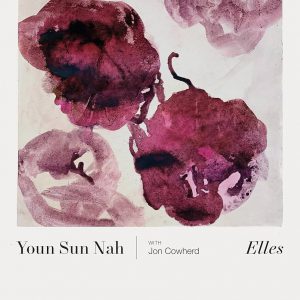 Your latest album Elles plays tribute to some formidable women that have inspired you in your career. How did this album initially take shape?
At first, I didn’t plan to include only female songs or female singer songwriters on my new album. I had wanted to record a jazz standards album for quite some time and as I started gathering songs, I realised that the ones that meant the most were sung by female singers, so I changed my plan and started listening to all the singers who influenced me and inspired me – the artistry of their voices. It was so amazing to go through these female singers that shaped my musical journey. Unfortunately, I could only pick 10 singers this time, but if I could include all the singers I love, the album would span more than 10 discs! For instance, Bjork, she’s a masterpiece and I saw her once, in concert and it was unbelievable. She didn’t say a word. Well, she only said one word at the end she only said ‘thank’. It was like a movie; she is a genius at self reinvention. I know I am kind of introverted and I’m not as brave and creative as them but somehow, I find courage on stage and it’s because of her, because of them.
Nina Simone for me is like music itself. I read somewhere that she’s a musical shaman. Everything she sang, became her own, became unique and that’s why I really respect her. At the beginning, when I wanted to record jazz standards, I realised that even contemporary songs resonated with me just as much as the classics so maybe that’s why these people, singers…they are timeless. Nina Simone was not afraid of picking songs; she made them her own.
It is fascinating to hear that she does not consider herself brave, until she steps on the stage, because just stepping on the stage is a sign of her fearlessness, especially when you consider she suffers from stage fright. You would never know this seeing her perform – fierce, courageous, powerful are all words I would use to describe Youn’s performance.
I very much suffer from stage fright. I decided I just have to live with it. I’ve tried everything but nothing works for me and the only solution is going on stage.
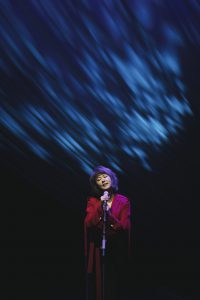
Photo by Seung Yull Nah
Storytelling is key to Youn’s artistry. The narratives that flow through her songs are exhilarating. Her masterful use of emotions, both through words and her body is incredible.
Yes, that element is really, really important to me. When I sing in French for example, performing in Korea or Ecuador or anywhere, the people, even though they don’t really understand it, they feel it. That’s unbelievable. That’s why I think for me it is very important that I have all these emotions, all these stories and hold these sensations and sincerity in songs.
Youn’s visit to London was part of the 11th edition of the K-Music festival, platforming an incredible range of Korea’s most important artists across London.
They want to show what Korean music culture really is. We don’t just have traditional music and K Pop! We have a very strong emotional and rhythmic core and Korean people are said to have long enjoyed dancing and singing. Growing up and going to friends’ or family gatherings, they used to turn into endless sing-alongs. We really love singing (and we like drinking as well!) the festival is wanting to showcase this not very well-known side of Korean music. All the Korean kids learn how to play piano, but not traditional music because it’s very complicated to learn. I didn’t learn traditional Korean music and I don’t incorporate traditional elements into my music, but I think there’s a little touch in it. I am very happy to be part of this festival.
30 years and 12 albums is a significant milestone. To end, I asked Youn if there was anything people should know about her, that perhaps we haven’t talked about or that she felt was important for people to know.
When I first started playing and singing on stage, we didn’t have any social media or anything, and there were a lot of people who’d never heard about me and were kind of surprised – she’s Asian, wow! I had to work hard but now you can google me and find me… Sometimes I played more than 200 gigs a year because I want physical contact with the audience. People ask me why we can’t find enough videos from you? I can’t say that I am against it, but I prefer to see people in person. I just want to spend time with people. I want to have a conversation with them. Every time I have a concert, I run out after the show to meet people. It’s not about signing or taking pictures; I want to have a conversation with them. Sometimes they inspire me, sometimes we cry together because I just shared my experience with them. I just want more chances to do this.
After seeing Youn’s incredible performance, I went over to see her and it was such an overwhelmingly touching scene. She was absolutely surrounded by people, with a beautiful sparkle in her eye, talking to her audience about their favourite songs and moments from the performance. Her warmth, kindness, honesty and sparkle in her eye was contagious and everyone in that moment was touched by her. It was incredible.
This interview was originally published in the December 2024 Women in Jazz Media magazine
Last modified: February 14, 2025