 Written by
 It’s not uncommon for us to receive numerous requests to cover new album releases. However, the story behind Ohad Talmor’s latest project, “Back to the Land,” releasing on Intakt Records this Friday, is particularly compelling. Despite a year-long delay due to licensing issues and the news reaching us too late for a comprehensive review, we felt this release deserved attention. The fascinating backstory of “Back to the Land” makes it a project that’s difficult to overlook, even if we can’t provide our usual in-depth coverage.
 With this in mind, this article is not a typical album review, but rather a deep dive into the fascinating story behind the creation of “Back to the Land” and its unique contents. As mentioned above, we receive numerous submissions for new releases, however when a project emerges with such an intriguing backstory that it demands attention. Talmor’s album falls squarely into this category, offering not just new music but also a window into jazz history. The project’s genesis lies in a remarkable discovery of unreleased Ornette Coleman compositions, which Talmor has woven into a tapestry that includes original works, tributes to jazz legends, and innovative interpretations. This piece explores the album’s conception, the challenges of bringing long-lost music to life, and the diverse musical elements that make “Back to the Land” a noteworthy addition to the landscape.
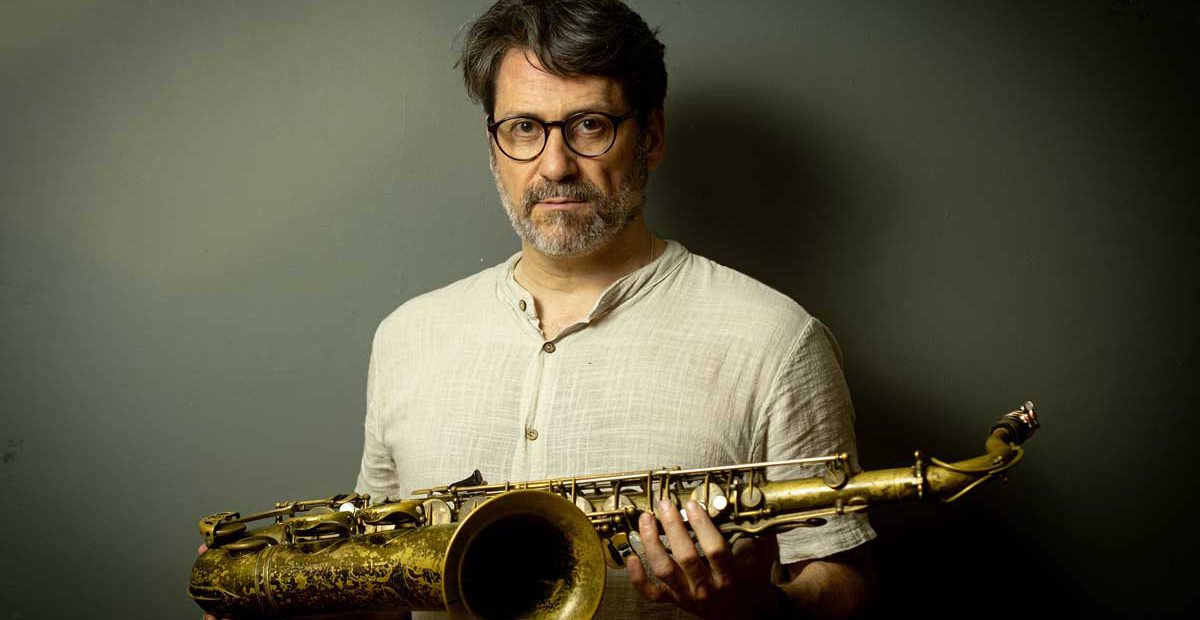
The project’s inception can be traced back to an extraordinary discovery. Talmor, while going through the personal collection of his late mentor and father figure, Lee Konitz, stumbled upon three DAT tapes. These tapes contained a musical treasure trove: recordings of rehearsals that took place at Ornette Coleman’s loft in May 1998.
The recordings featured Coleman and Konitz, along with Charlie Haden and Billy Higgins, working on new compositions by Coleman. These pieces were being prepared for an upcoming concert at the Umbria Jazz Festival. Talmor recalls the intimate nature of these recordings, which captured not just the music but also casual conversations about various topics, including reeds and women. What makes this discovery particularly significant is the rarity of the material. According to Talmor, this music was performed only once at the Umbria Jazz Festival and, to his knowledge, was never played again. None of the compositions had been published, making this find a true gem for jazz enthusiasts and scholars alike.
Armed with these recordings, Talmor embarked on the challenging task of transcribing ten unknown and unnamed Ornette Coleman tunes. He describes the process as difficult, noting the unique way Coleman wrote music and the fluid nature of the rehearsals. “Transcribing the way Ornette writes is difficult,” Talmor explains, “because you have to make some assumptions. Also, these were a work-in-progress – Ornette was trying them out, Lee was playing them but not necessarily the way Ornette heard them at first, and it was all very fluid.”
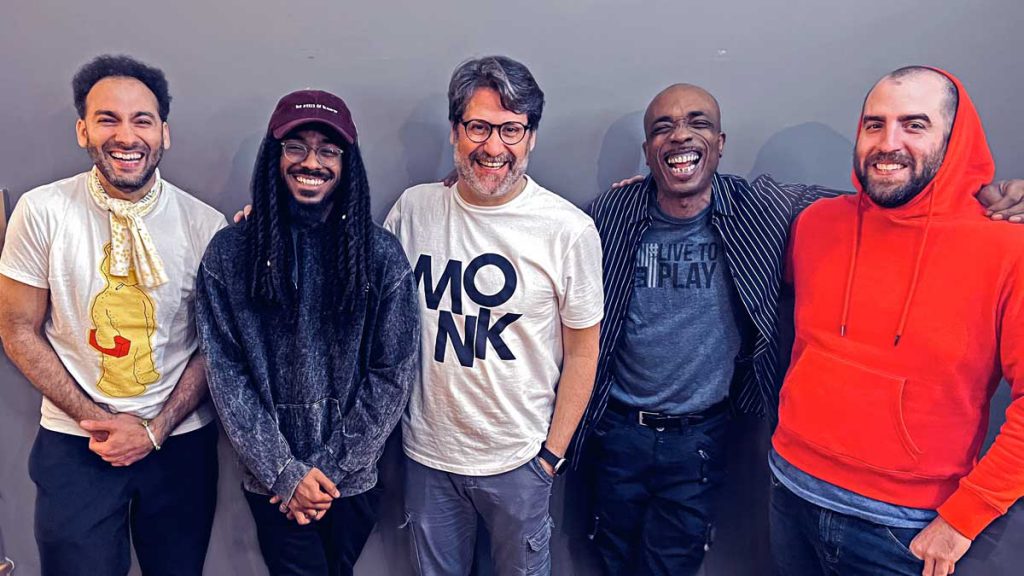
From Left to Right: David Virelles, Joel Ross, Ohad Talmor, Eric McPherson & Chris Tordini
Despite these challenges, Talmor managed to create what he considers faithful transcriptions. When he began playing these pieces with his trio, featuring bassist Chris Tordini and drummer Eric McPherson, the music took on a new life.
Ohad Talmor’s approach to this project is informed by his extensive experience in composition and arranging. His career has been marked by a willingness to cross boundaries between orchestral music and various forms of jazz. He has led several ensembles, including the Grand Ensemble, the Mass Transformation Nonet, and the Newsreel Sextet. Talmor has also been involved in trio projects with notable musicians such as Miles Okazaki, Dan Weiss, Steve Swallow, and Adam Nussbaum. For “Back to the Land,” he sought to showcase the newly discovered Coleman material in a variety of instrumental settings, all anchored by the core trio of Talmor, Tordini, and McPherson.
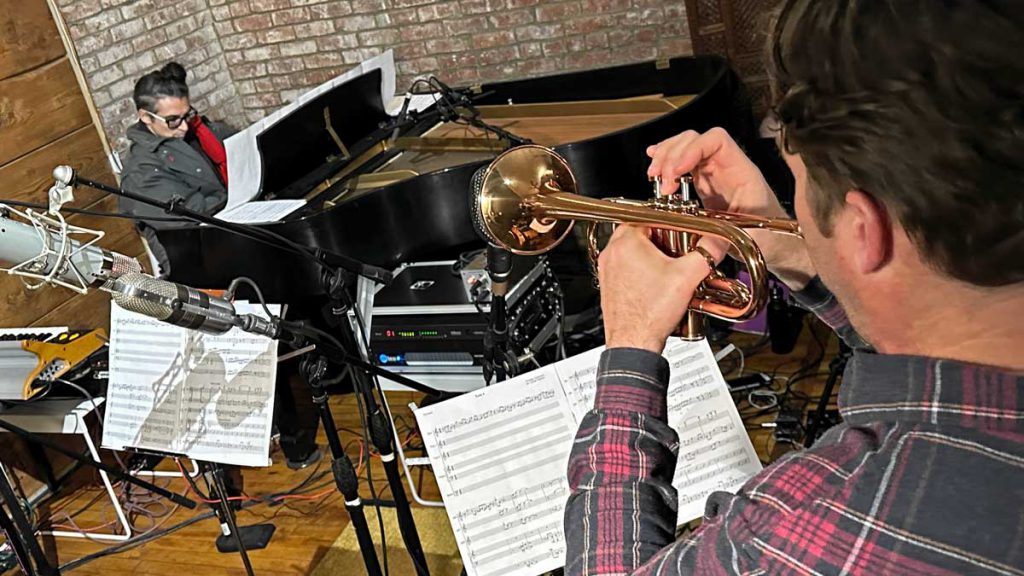
The structure of “Back to the Land” was inspired by one of Talmor’s early LP purchases: Ornette Coleman’s 1987 double album “In All Languages.” This album featured the classic Coleman quartet on one record and the electric Prime Time on the other. Talmor used this as a blueprint for his own double album. The first two sides of “Back to the Land” feature Talmor and his trio in various acoustic configurations. They are joined by vibraphonist Joel Ross and rotating pianists David Virelles and Leo Genovese. The second LP takes a more electronic approach, though the trio and its various augmentations remain prominent. Trumpeters Russ Johnson, Shane Endsley, and Adam O’Farrill contribute additional improvisational layers.
Talmor’s approach to the Coleman compositions is not about creating definitive versions. Instead, he and his collaborators interpret the themes through the lens of their shared playing experience. “All the pieces at some point are played trio in their purest form,” Talmor explains, “in very short three-minute versions, theme and variations.”
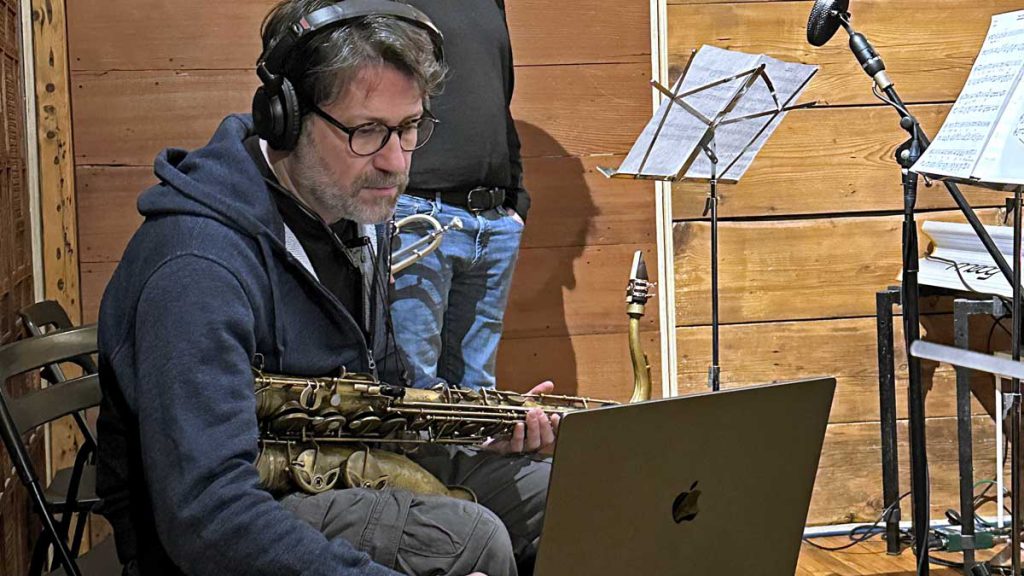
Some pieces, like “Tune 4” and “Tune 1,” are explored through multiple variations with different ensemble configurations. Talmor also took liberties with the original material, sometimes adding chords where he heard them or reinterpreting tunes in electronic environments. The use of electronics is a significant aspect of “Back to the Land.” Talmor, who has worked with live electronics and sound treatments for many years, describes two types of electronic sounds on the album. The first comes from Leo Genovese’s use of Moog and Sequential synthesizers on several tracks. The second involves pre-treated sounds, synths, and samples triggered through Ableton during the recording sessions.
Some tracks, such as “Astonishment” and “A Good Question,” feature these electronic elements prominently. Others, like “Back to the Land,” “Accords for Four,” and “Accords for Five,” underwent electronic post-production.
While the Coleman compositions form the core of the album, Talmor also pays tribute to other jazz legends. The trio performs “New York,” the main theme from Coleman’s 1986 work “Prime Design/Time Design” for string quartet and drums. This rendition showcases Talmor’s probing tenor sax work, Tordini’s lyrical bass playing, and McPherson’s subtle brushwork. Two pieces by Dewey Redman, Talmor’s first teacher, are also included: “Dewey’s Tune” from the Old and New Dreams repertoire, and “Mushi Mushi” from Keith Jarrett’s American Quartet period. Talmor shares a personal anecdote about Redman, recalling a private lesson in Geneva that had a lasting impact on his musical approach.
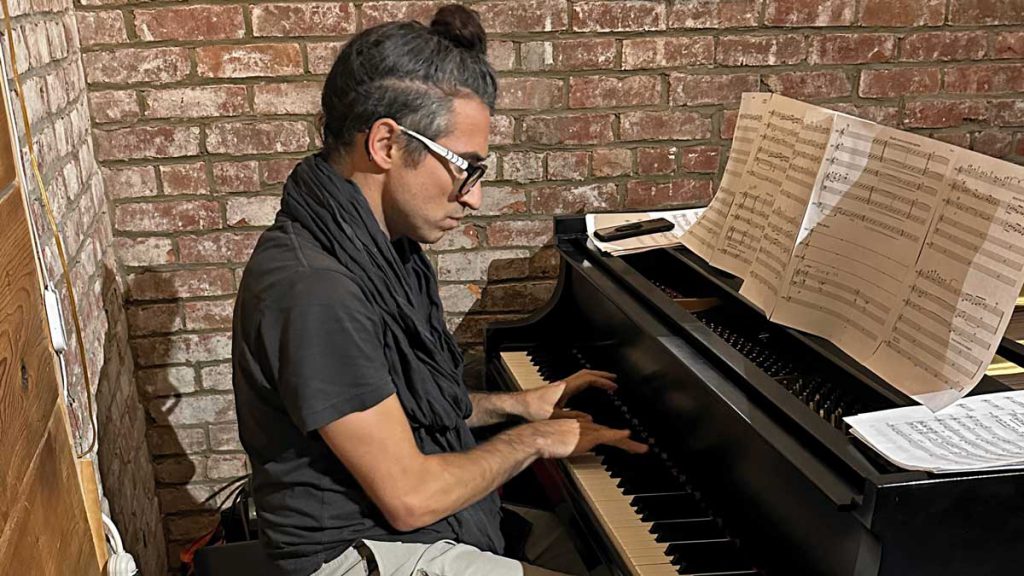
The recording of “Back to the Land” took place in an environment rich with personal connections for Talmor. The piano used on the album is Lee Konitz’s old Steinway, now housed at SEEDS, a Brooklyn indie jazz venue that is also Talmor’s home. “It’s this organic gesture of everything staying connected to my experience,” Talmor reflects, “with people I feel very close to, in my home environment at SEEDS. The music we’re playing has a history now – we’ve lived these pieces for a while[1].”
For Talmor, “Back to the Land” represents the most complete expression of his artistry to date. He sees it as a reconciliation of the dichotomy between his roles as a composer and an improviser. “This album is the most faithful representation of who I am and how I play,” he states. “Back to the Land is all in one – it’s the most complete and faithful image of what I do.”
The album features an impressive lineup of musicians. In addition to the core trio of Talmor, Tordini, and McPherson, the expanded ensembles include Joel Ross on vibraphone, David Virelles and Leo Genovese on piano and various synthesizers, Shane Endsley and Russ Johnson on trumpet, and Denis Lee on additional bass clarinet. Special guests Grégoire Maret on harmonica and Adam O’Farrill on trumpet also make appearances.
“Back to the Land” is not just a showcase of Talmor’s skills as a saxophonist and composer, but also a statement to his ability to bring together diverse musical elements and talented collaborators. The album stands as a unique contribution to the current landscape, bridging the gap between historical material and modern interpretations, acoustic and electronic sounds, composition and improvisation.
“Back to the Land,” set for release on September 27, 2024, through Intakt Records. More Information can be found on Ohad’s website.
Last modified: September 27, 2024