 Written by
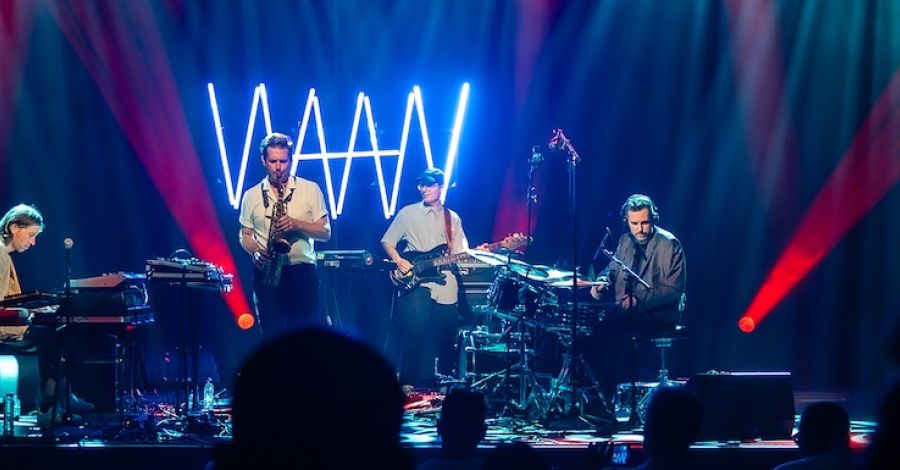
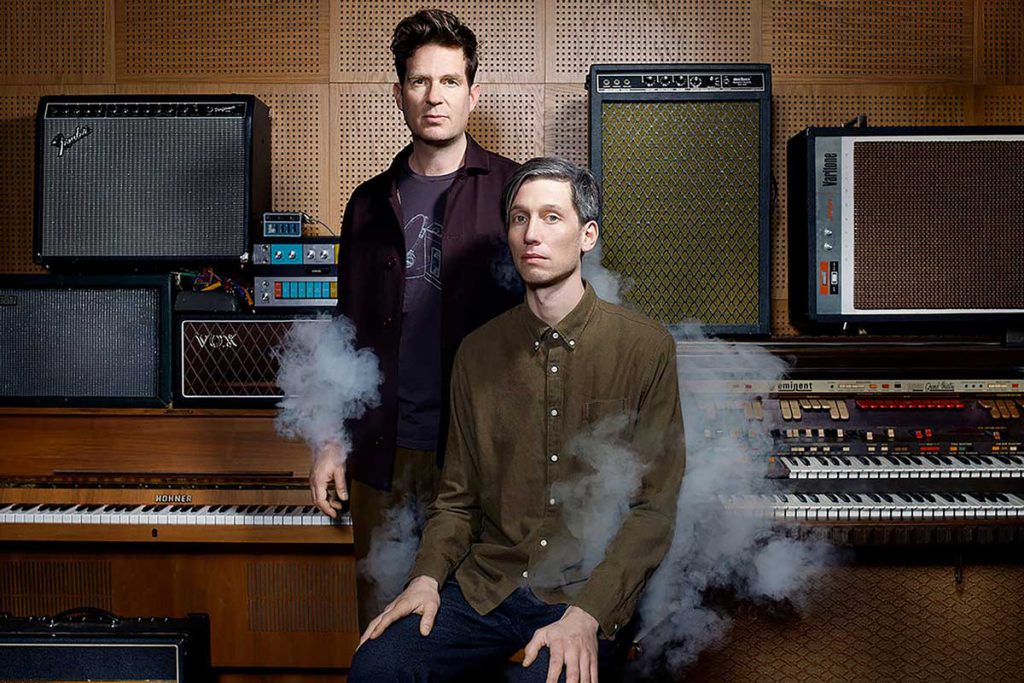
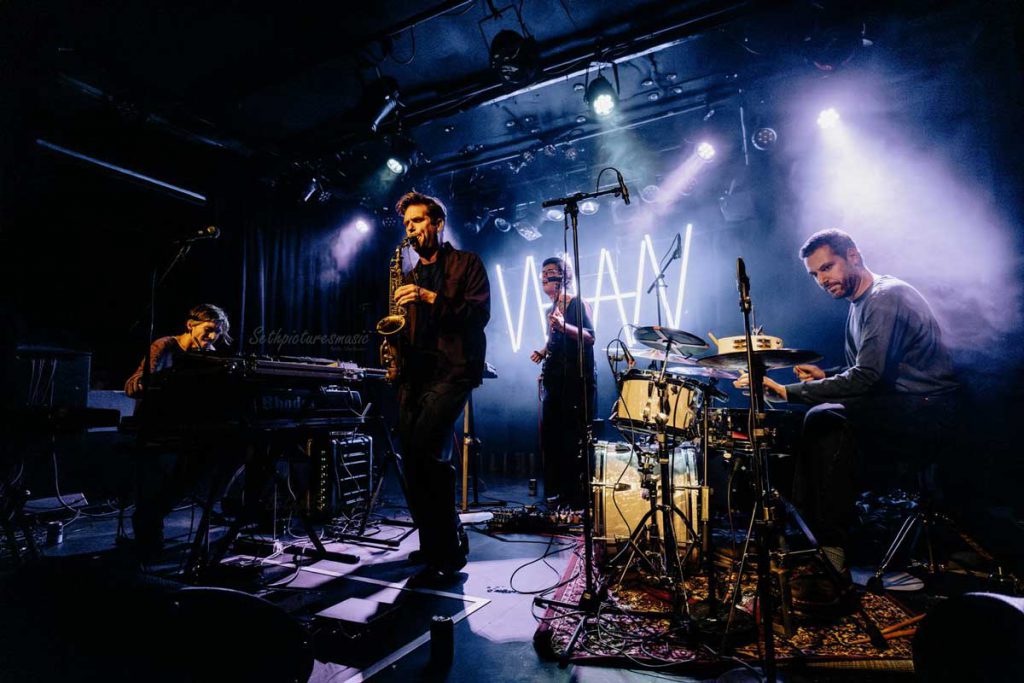
 One of the most exciting Dutch bands right now is WAAN, a creative partnership between seasoned alto saxophonist Bart Wirtz and keyboard wizard Emiel van Rijthoven. WAAN delivers a rich blend of electronically propelled grooves, atmospherically crafted melodies, and an eclectic mix of vigorous jazz, roots, funk, and dance.
Since releasing their debut album ECHO ECHO, which was nominated twice for an Edison Award, they have been in the pilot’s seat of a rocket whose destination remains unknown, making their journey always intriguing and surprising.
Marieke Meischke: Welcome, Bart and Emiel! Let’s start with the exciting news—a new album is coming out soon, and three tracks have already been released. Tell me more!
Emiel van Rijthoven: Yes, the album is called WE WANT WAAN and it will be released on January 23rd. We also have stickers!
MM: Excellent! Before we talk about the music, can you tell me about the label you’ve signed with? It’s quite an extraordinary one, I believe.
EvR: It’s SONAR Kollektiv, a German label based in Berlin. We’re grateful that a member of the Dutch band Kraak & Smaak introduced us to them. The label was founded in 1997 by the legendary collective Jazzanova, working on the edge of dance and jazz. We’re very happy with each other. They have recently leaned more towards roots and dance, which fits well with where we’re headed, but they really like our jazz perspective as part of their label.
MM: We’ll also discuss your first album, ECHO ECHO, released in 2023. I detect quite a different vibe on your new album. Does this relate to your collaboration with the label?
Bart Wirtz: We put a lot of thought into this and went deep to get to the core of this second record. We both strongly believe in progress, change, staying curious, and rediscovering ourselves continuously. That’s why, as mid-career artists, we started from scratch with a new band. This also meant years of investing without earning anything—just investing.
Indeed, the first album was a clear combination of jazz with electronic influences, which attracted the label’s attention—featuring afrobeat with synths and rootsy tracks with sound effects.
For the new album, after playing live a lot, we wanted to move towards more danceable music and let go of the traditional jazz structure: theme, solo, theme, etc.
We also noticed there was a lot to gain for us on stage—attracting a younger crowd, for example—and we are now performing at pop stages, with standing audiences. So we decided this would be our new framework and the two of us retreated to the Dutch island of Texel, isolated in a little shack for a week, to really focus on this. There, we also decided to produce each track separately, which explains why the album is quite diverse.
EvR: May I add something? Going back to your question, Marieke, about working with the label. I think we really lay out our own path. It’s truly our own movement.
Bart and I have worked together since 2016, and WAAN sprouted from there with a clear idea of where we wanted to go. That’s also why we started working with producer Oscar Jong—a founding member of Kraak & Smaak—and then SONAR Kollektiv came into the picture.
But we really do our own thing and are not influenced by what the label might want.
Anyway, we’re happy together. Or do you disagree, Bart?
BW: No, I don’t.
MM: Do you always agree?
EvR: Fortunately, no.
MM: Bart, what do you like most about Emiel musically?
BW: Musically, we are brothers. The first time we were thrown together on stage—some kind of jam at Paradox jazz club in Tilburg—I thought, “Ooh, this is really nice.” Pure chemistry.
It can work with others too, but it’s a process and it takes time. So I invited Emiel to collaborate on my project Beneath the Surface. I made some jazz albums but became really curious about crossover styles. Emiel isn’t just an amazing keyboard player; he’s also at home in pop music. He’s been part of the live band for the very successful country pop singer Waylon, but he’s also a wizard when it comes to electronics. All these qualities come together in him.
Then we talk and disagree on some things, but the moment we play together… everything makes sense.
MM: As long as you do your own thing.
 EvR: Yes, when I was studying at the Utrecht Conservatory, I did a masterclass on Brazilian music with guitarist Leonardo Amuedo (from the Ivan Lins Band). While playing my own stuff, he said, “You are doing this really well!” That was when I decided to start my own band. That encouragement was very important at the time. Making your own music, in this case with Bart, is the most beautiful thing there is.
MM: So, getting to the core of WAAN—you’re the Lennon and McCartney of the band.
BW: Yes, that’s exactly how I see it too, hahahaha!
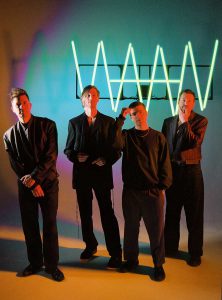
MM: But you also have two steady members, Matteo Mazzù on electric bass and Mark Schilders on drums. They’re always part of the quartet, but your first album was recorded with eleven musicians, live in the studio! A completely different approach.
BW: We looked around and played with many musicians for years, and these two came out of that. Mark really loved our vibe and offered to be part of the live show. His friend Matteo came along, and the rest is history. We’re a real band now.
MM: But who do we hear on one track of your new record? Philadelphia-based rapper and producer Ivy Soul. How did you find them?
BW: We made a badass track that didn’t make the album, and in my mind, I heard a female rap voice on it. We thought of many voices—big names, smaller names—but with Ivy, we all felt the vibe was right. They had a feminine, warm voice that really connected with our music. So, we sent a DM on Instagram… didn’t hear back for a long time, but then a positive reply came.
We sent the track, which was in three-four time, by the way, haha—that’s not the usual rhythm for rappers or spoken word artists. Ivy tried some ideas, but we had to say goodbye to that track for this purpose. They asked if there was something else we could offer. Ironically, we had just finished another track the week before, not written for rap, but that worked. After a while, Ivy messaged us about some vocals they had added, but felt insecure about them due to taking hormones during their transition, which changed their voice. In the end, the sound is lower, but we’re very happy with the recording, which also touches on the transition process—making it very personal and very cool.
MM: Will you be aiming for more pop venues and festivals now?
BW: That would be great, but it won’t be so easy. The industry is tough.
EvR: Yes, we’re definitely looking for that. We’re building a show with a great light plan.
MM: That works well for you, since graphically you’re very expressive. It all comes together that way—your overall identity.
BW: Yes, and I really want to mention our graphic designer, Braulio Amado, who did the album cover design again. He draws inspiration from punk and is very adventurous.
MM: Since you work with guest artists, if you could choose anyone to work with on your third album, who would it be?
EvR: Ah, yes, let me get the vinyl… I think she’s amazing. Do you know her? Yukimi Nagano, the lead singer of…
BW: Little Dragon!
MM: And you, Bart, who is your dream musician to work with?
EvR: It can’t be Toots Thielemans, unfortunately.
MM: No, we’d have to sample him then.
BW: Mine would be Floating Points when it comes to electronics.
EvR: Oh yes, badass!
BW: He’s a DJ and keyboard player from the UK.
MM: Not replacing Emiel, I hope.
BW: No, no, he’s more of a DJ, creating great music. But we have so many artists we love—the Belgian jazz harpist Nala Sinephro, and we listen a lot to LCD Soundsystem from New York. Can you arrange for us to play their support show?
MM: Consider it done. I have another question for you, Bart. We know Emiel has been working with country pop artist Waylon for years, but you’re a founding member of the illustrious Artvark Saxophone Quartet, now celebrating 20 years. You’ve just released an album with music by Sweelinck, Andriessen, and Escher, including a piece performed on slide saxophones! We’re talking about some 16th-century compositions arranged by the quartet. How do you switch from that to the futuristic sounds of WAAN?
BW: The older you get, the harder that becomes, but it’s fun too! I experience it as going into more depth. So, for two months this summer, we were in the studio nonstop recording WE WANT WAAN. Then we went to a Japanese restaurant, drank champagne to celebrate, and I moved on to the next album of the saxophone quartet, which is more acoustic. I like the variety, and the two projects feed each other in some way.
MM: And you, Emiel, how do you switch from country to WAAN?
EvR: Yes, well, to mirror what Bart said earlier about me—what I find really cool about Bart is that his playing also has that side. We meet in the middle, and this makes our collaboration so precious and rich. I come up with some ideas for a track, and then Bart brings in melody lines that still baffle me.
MM: Is that the distinctive sound of WAAN? Caused by the many layers?
BW: I guess, but I don’t think we’ve found the WAAN sound just yet. I mean, I know it’s there but, with the risk of sounding arrogant, because of our versatility in musical styles that we hold and like, our boundless curiosity and urge to explore, we keep finding new ways. And there’s the multidisciplinary aspect, including our light show, tuning into our onstage logo, for example.
MM: So you’re still and always echoing?
EvR: Yes!
BW: But even if this new album becomes a mega hit, that doesn’t mean we will continue on this road. We have the relentless desire to always look further.
Recently someone we work with said, “You sound as if you’re coming from the Belgian scene.” That was a huge compliment.
I mean, we all know the UK jazz scene has had an enormous boost for perhaps a decade now. That’s a particular sound that’s crossed the channel to Europe, influencing many artists here, which is really cool because it draws a new generation to this jazz-related music.
And when you dig into the Belgian scene, you think of an authentic, quirky, and free sound of the future.
MM: So, I expect this is the vibe we will also experience on your new album WE WANT WAAN, which will be released with a hypnotizing and danceable show in the Amsterdam music temple Paradiso on January 23rd, 2026. Have fun!
Last modified: May 4, 2026