
 Written by
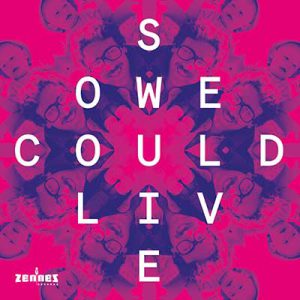
 Zack Lober’s new album, “So We Could Live,” offers a clear example of how a chord-less quartet can function with both flexibility and clarity, focusing on interplay, melodic development, and rhythm. After receiving the album, I decided to withhold detailed listening until after experiencing the group live at Orange Jazz Days Festival, where Lober and his band delivered a set full of energy and discipline that strongly aligns with the album. On record, the group’s commitment to forward motion and group cohesion remains just as evident.
 The album’s opener, “Joe Type Tune,” is designed as a tribute to Joe Henderson’s chord-less trio. The piece’s structure rests on a descending two-bar bass line, setting up an immediate sense of propulsion. Jasper Blom’s first solo on tenor saxophone is focused, sharp, and sets the tone for the group dynamic. Without a harmonic instrument such as piano or guitar, Lober’s bass anchors the progression, freeing the horns to interact and improvise within a more open environment. The energy heard during this track closely mirrors the live atmosphere.
“Behind A Myth,” written by Blom, is distinctly thematic, built around counterpoint and harmonic ambiguity. The group’s performance gives structure a priority, allowing tension to grow as the horns move through tightly arranged lines. The balance between atonality and more familiar tonal centers is carefully handled, and the musicians invest in the clarity of transitions—a key feature throughout the album.
In “The Loose End,” another Blom composition, there is a late-night, understated character. Suzan Veneman stands out here, using silence and spacing effectively in her trumpet solo. The absence of a chordal instrument gives her phrasing added significance, and the remaining band members contribute by listening attentively and supporting her melodic direction. The composition’s conclusion, left unresolved, fits the piece’s title and design.
“Vignette” adds a different energy. The piece draws from the influence of Wayne Shorter’s “Etcetera,” especially in its reduced thematic material and open structure. The band opens with assertiveness, creating room for dialogue between horns and drums. Each player’s contributions focus on development and collective response—there is a sense of structure even when lines diverge. A central and personal moment comes with “Dad / Besame Mucho.” This solo bass track references the classic Latin standard and his family history with some interesting use of Double-stops to add a harmonic basis .
“Landscape,” also by Blom, returns with a stronger rhythmic focus and shuffle groove. Sun-Mi Hong’s drumming here is precise and directs the shape of the tune. The band’s tight alignment reinforces the groove, with solos that reference the theme without losing momentum. The ensemble’s dynamic balance is a highlight, with no single element dominating unnecessarily.
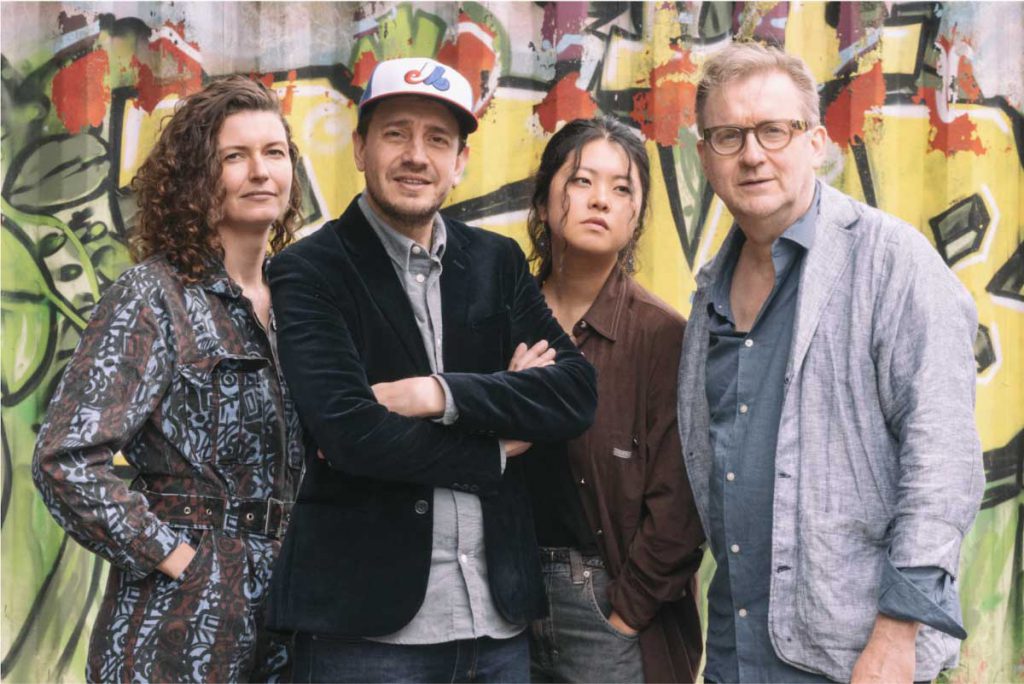
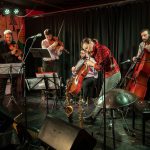
Veneman, Lober, Hong, Blom (l to r) © Govert Driessen
With “Feathered Head,” the album accelerates into an up-tempo, neo-bop setting. Both Blom and Veneman offer solos that are technically strong and conceptually clear. The group stays close to the central theme, using precise entrances and exits instead of loose jams. This attention to structure gives the music a clear path, even as the tempo and complexity increase.
The album finishes with the title track, “So We Could Live.” Its character is slower and more meditative, but the form is tightly managed, leading to an extended drum solo from Sun-Mi Hong. Rather than dispersing, the energy gradually builds, providing a sense of closure that matches the rest of the album’s discipline. The composition avoids overstating its point, respecting the album’s established approach.
Throughout this session, the collaboration between Blom and Veneman is well-judged allowing collective decisions to emerge naturally. The result is an album characterized by transparency, structural clarity, and well-rehearsed ensemble playing. The decision to work without piano or guitar means more space for horns and bass giving an open soundscape that, in my opinion, still provides substantial harmonic context. Often an album loses the energy and intensity of the live performance however having seen the band live at the Tivioli in Utrecht last weekend I can say this is not the case here, this recording fully preserves the vitality and driveof the band live.
Lober’s experience as a sideman is evident in how he sets parameters for the music and leaves space for the group. The album does not rely on extended displays or grandstanding; rather, it focuses on detailed, attentive interaction. Tracks are concise, themes are well developed, and group interplay is held to a high standard throughout.
While some listeners may prefer a fuller harmonic foundation, the benefits of space and group transparency are clear in this setting. For listeners interested in contemporary music that values interaction and structured arrangements, this album offers much to appreciate, confirming Lober’s position as both a capable leader and strong ensemble player.
Line-Up
Zack Lober – Bass | Jasper Blom – Tenor Saxophone | Suzan Veneman – Trumpet | Sun-Mi Hong – Drums
Track Listing
Joe Type Tune – 06:53 | Behind A Myth – 07:38 | The Loose End – 06:14 | Vignette – 07:00 | Dad / Besame Mucho – 06:30 | Landscape – 07:22 | Feathered Head – 06:45 | So We Could Live – 07:52
Release Details
Release Date: 3 October, 2025
Format: CD | Digital Download | Streaming
Label: Zennez Records


Last modified: October 6, 2025