
 Written by
 As I prepared for this interview with Cyrille Aimée, I couldn’t help but reflect on how much has changed since our last interview in Jazz In Europe a number of years ago. Back then, she had just relocated to New Orleans, a city that remains close to her heart. Now, she has embraced a new chapter of her life, having designed and built a house in the lush jungles of Costa Rica. This serene environment has become her creative sanctuary, allowing her to connect deeply with nature and draw inspiration from its tranquillity. Her journey through these vibrant locales has not only enriched her life but also profoundly influenced her music.
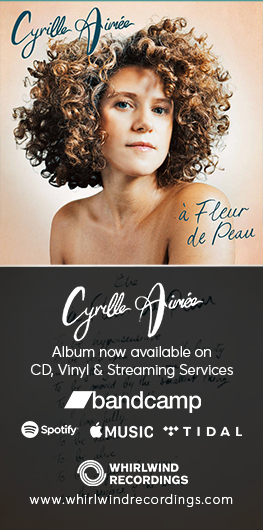
With the release of her new album “à Fleur de Peau”, it’s evident that Aimée’s artistic evolution is both personal and transformative. Each song reflects her experiences in the jungle, showcasing a departure from the jazz standards she once focused on. This shift marks a significant milestone in her career as she embraces her identity as a songwriter. During our conversation, it became clear that the creative process behind this album was deeply intertwined with her life experiences, revealing a blend of emotions and stories that resonate with authenticity. As we explored the themes of her music, it was exciting to witness how Aimée continues to evolve as an artist, ready to share her unique perspective with the world.
Andrew Read: Welcome Cyrille, before we dive into discussing your new album, I’d love to catch up on what you’ve been up to lately. Last time we spoke for Jazz In Europe, you mentioned you had just relocated to New Orleans.
Cyrille Aimée: Wow, it’s hard to believe that was six or seven years ago! I still think of New Orleans as one of my homes; in fact, my main home is my suitcase.
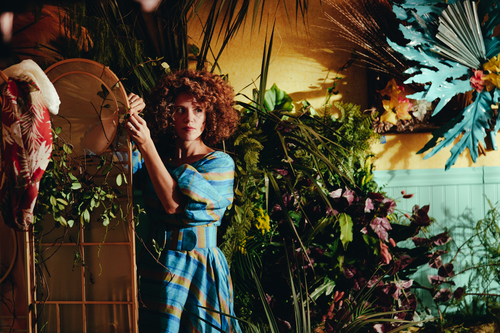
Since then, I’ve designed and built a house in the jungle of Costa Rica, where I love to spend a lot of my time. It’s a beautiful escape and allows me to connect with nature in a way that’s incredibly fulfilling. Balancing my life between these two vibrant places has been an enriching experience for me.
AR: I actually read about that in the notes for your new album. It must have been an amazing experience! So, that brings up the obvious question: why did you decide to do that?
CA: I’d been visiting that particular jungle for about eight years, every winter. It became a ritual for me to disconnect, put my phone away, and just absorb the silence. I wouldn’t even listen to music; I’d just try to soak in the tranquillity. Over time, I realized how inspiring this environment was, and I found myself writing a lot of music while I was there.
Just before the pandemic hit, I decided to buy a piece of land next to my friend’s property. Initially, I thought I’d build a small cabin gradually, working on it a bit each year when I visited. But then the pandemic happened, and suddenly I found myself down there with a lot of time on my hands. So I figured, “Well, I might as well start building something.”
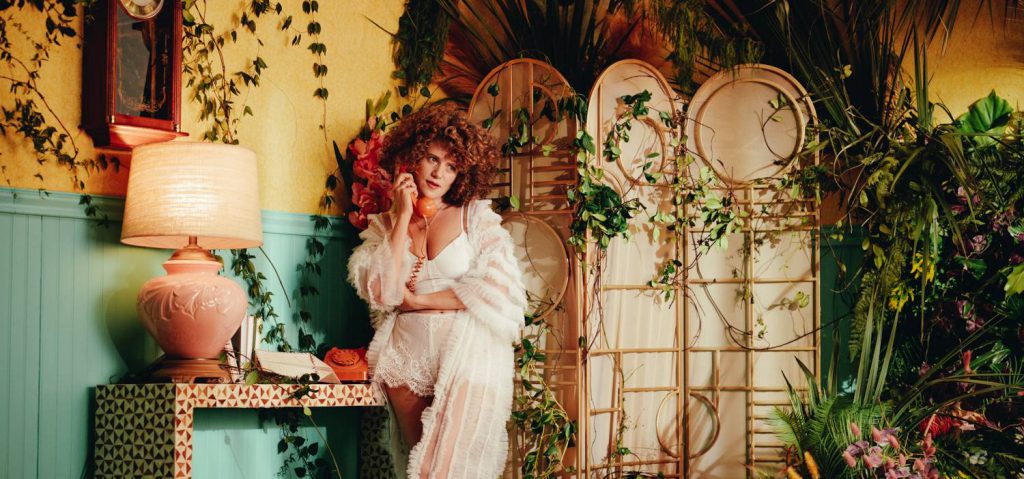
Photo Credit: Noe Cugny
I didn’t hire an architect because I thought I was just going to construct a simple four-wall cabin with a roof. But as the pandemic dragged on, I began to think, “Hey, maybe it would be cool to have more than just a little cabin here.” Especially since the world was going to shit.
As my design grew larger and more creative as time went on. It really became my primary creative outlet during a period when we couldn’t perform any shows. I poured my heart and soul into designing this house, and now it’s truly a work of art – a sculpture, really. It’s turned out to be something quite beautiful and unique.
AR: Did you build it yourself?
CA: I had the assistance of a carpenter and his three sons, but I designed the entire house myself.
AR: I’ve been fascinated by Central America for a long time. I really have to get there.
CA: Yeah, it’s a very beautiful place. It’s one of the most biodiverse regions on Earth. The nature is so alive and thriving there, and it feels amazing to be there.
AR: You mentioned the silence. Maybe it’s just me, but it’s hard to imagine that the jungle can be silent, given the amount of wildlife.
CA: It’s a different kind of silence. It’s very loud in terms of sounds, but it does leave a space in the mind that the hustle and bustle of the city doesn’t.
AR: Are you thinking of doing some workshops or recording there?
CA: Yeah, that’s kind of my plan. With this house that I built – I mean, you’ll see in the video when you watch the Jungle House tour – it’s really big, and my plan is to organize workshops and music retreats and have events there.
AR: Fantastic idea. Maybe even build a studio in there?
CA: Yeah, actually, there is. I’ve already started building one.
AR: Wow, that’s very cool indeed. So are you near the coast or are you more inland?
CA: I’m in the mountains by a river, about 40 minutes from the Pacific coast.
AR: Let’s shift our focus to your new album. I imagine your Costa Rica experience had a profound impact on the music.
Absolutely. Every song on the album was either written in the jungle or directly inspired by it. This place had an enormous influence on the material. You know, I’ve lived in these incredible cities with vibrant music scenes, like New York and New Orleans, where there’s an abundance of music and inspiration. But I felt a need to retreat and process all of that, to really tap into what I wanted to create. The jungle provided that perfect space for reflection and creativity.

AR: I can imagine that process took some time.
CA: It did take time for everything to synthesize, you know? My songwriting is really a blend of all my experiences, encounters, and everything that moves me emotionally.
AR: That’s actually a great point. I wanted to discuss this because the music on this album is quite different from your previous work. You had a couple of albums where you were really focused on American Songbook standards, but this is completely different.
CA: Yeah, well, these are my own songs. So it can’t be like anything else because it’s 100% me. It’s a pure expression of my creativity and experiences.
AR: When I listen to the album, stylistically it’s quite eclectic.
CA: For sure, it is eclectic. Actually, it’s all over the place.
AR: What was your process in writing the material? That is, of course, if there was a process!
CA: The writing and producing were two very different things. A lot of the writing was done on my guitar or ukulele. Some songs were written with my feet in the river, others back in New York, reflecting on my experiences. The album touches on various subjects. One song was inspired by an abortion I had, another by living without a phone. Each song represents a meaningful time in my life.
When I contacted Jake Sherman, the producer, the songs started to take shape. He turned them into these beautiful nuggets – gold nuggets, really. He believed in my songs more than I did initially.
You know, as a musician who built her career singing songs that have had decades of approval, it was challenging to believe in myself as a songwriter. Having someone like Jake tell me, “This song is awesome, let’s record it,” was crucial. It was really the first step towards this album because it wouldn’t have existed without him.
AR: How did you go about arranging the songs?
CA: The way we worked was that I would bring a song and play it on the guitar for Jake, teaching it to him. He would take his time to really understand the song, and then we’d figure out the form together.
I’d start by laying down the guitar track with a click track, like a shaker or something. Then Jake would play all the keys and bass. After that, he’d have me scat over the entire song. We’d listen back, and he’d point out parts where my scat could be turned into a horn line or a string part. We’d then send my scat recordings to horn players and have them play those parts.
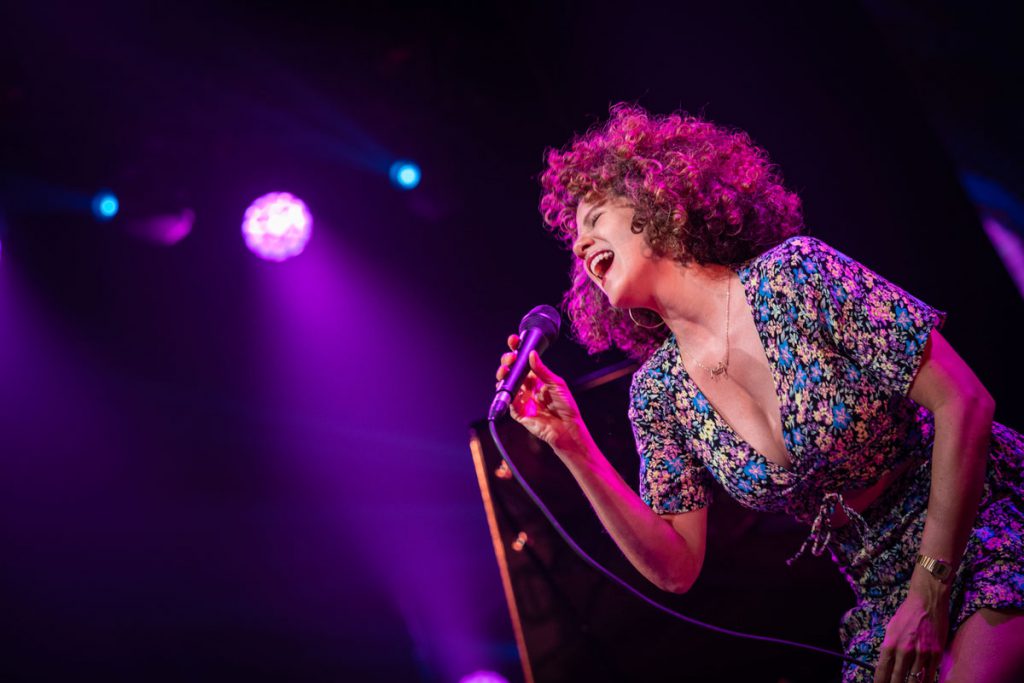
As a producer, Jake is amazing because he really tries to draw out all the ideas from the artist. He had me write all these arrangements without me even realizing I was doing it.
At the very end, we recorded the drums, which was quite different from what I’m used to since I sang all the songs without drums initially. It was interesting because this approach is not typical. Normally, you do the arrangements, lay down the rhythm tracks, and then record vocals last. Especially coming from a jazz background where my previous albums felt more horizontal, this one was very vertical in its process—guitar, then keys, bass, voice, horns, strings, and finally drums.
We spent hours in his living room studio searching for the perfect sound for each transition. It was like being painters, and I learned so much from that experience.
AR: So it was actually a really layered approach, in fact.
CA: Yes, it was very detail-oriented, but at the same time, quite organic. For example, all the vocals on the album were my first takes. When I was recording them, I thought they were going to be scratch vocals, but that’s Jake’s trick. He’d say we’d re-record, but then he’d decide the first take was perfect.
AR: I’ve always believed that when it comes to recording vocals, often the first take is the best. Many producers do multiple takes and comp a final, which can sound perfect but unnatural.
CA: Absolutely. I’ve experienced that approach before too. It doesn’t always work, but there’s something special about those initial, spontaneous takes.
AR: I’d like to come back to the scatting thing. I think that’s really cool, especially for generating ideas. Even though it ended up layered and detailed, it all comes from improvisation, right?
CA: Exactly. As a songwriter, it’s challenging for me because I’m so used to composing on the spot and letting ideas go. One of my biggest challenges is deciding to set something in stone as a song. It was interesting to just improvise without knowing what would happen, and then have Jake say, “That’s a horn line.” At first, I’d think I could do better, but he’d insist it was perfect as is.
AR: That really is the thing about how we produce more pop orientated singer songwriter music these days, that it’s often too non-spontaneous, particularly in the studio.
CA: You’re right. There’s a tendency to over-produce and lose that natural, spontaneous element. But working this way, we managed to keep that organic feel while still creating a detailed, layered sound. It’s about finding the right balance between spontaneity and refinement.
AR: I grew up in the 80s when producers like Trevor Horn and Stock Aitken Waterman were treating the recording studio as an instrument itself. Their work was amazing, but it felt very manufactured. Even today, to a lesser extent, there’s still that artificial feel in some productions. Don’t you think we need to move away from that overly manufactured sound?
CA: Absolutely. I think there’s a place for both studio magic and live performance, and I love that they can be approached differently. There are some incredible things you can do in the studio that aren’t possible live, and vice versa. When we perform these songs live, it’s a completely different experience – much more open and spontaneous. I appreciate that we’re not trying to replicate the record exactly.
I’ve always found it strange when bands try to reproduce their studio album sound perfectly on tour. You end up needing tons of samples, click tracks, and backup vocalists just to mimic the record. It seems a bit pointless to me because, well, you already have the record.
Instead, I prefer to use the stage as an opportunity to expand on the songs and see where I can take them. It’s about creating a unique live experience that complements rather than copies the studio version.
AR: Had you worked with Jake before this project?
CA: We had been in a jazz recording session together for a friend of mine, Michael Valianou, a guitar player. Jake was playing organ, and I was singing. But we had never actually recorded together as a duo before this album.
 AR: How did you decide to work together? It sounds like Jake was very instrumental in the production of the whole album.
CA: It wasn’t a planned collaboration at all. We were hanging out one day, and I showed him a song I had written. He loved it and asked if I had others. I went to his house, and we recorded “Inside and Out,” “Back to You,” and “Here.”
Then I moved to New Orleans, which put the project on hold. We weren’t even planning to make an album at that point – we were just recording songs because Jake loved them. I didn’t have much confidence in myself as a songwriter, so I kind of forgot about it.
In the meantime, I recorded a Sondheim album, which didn’t exactly boost my confidence as a songwriter. Then the pandemic hit, and I started spending time in the jungle, writing more songs.
After the pandemic, I reached out to Jake and said, “Hey, I have more new songs. Let’s finish what we started and make an album.” I went back to New York, and we recorded “Beautiful Way,” “Historia de Amor,” and “For the Love of You.” The old songs and new ones came together beautifully, and suddenly we had an album.
AR: So it took six years, basically?
CA: Yes, it was about six years from recording the first song to the album’s release. It’s funny how these things can evolve over time, isn’t it?
AR: So you’re obviously touring now. What’s the plan? Are you heading back to the jungle after the tour? What are we looking at moving forward?
CA: Well, I was in the jungle in June for a couple of weeks during the rainy season to plant trees – I planted 40 of them. But right now, I’m focused on touring with this music. I have an incredible band that’s really on fire. I don’t think I’ve ever had such a tight group. It feels amazing to be on stage singing my own songs.
It’s a different experience now. There’s a new channel that’s opened up where I can truly share myself. I’m able to convey my perspective on life through my songs, and I can feel the audience connecting with it every night. It’s very different from how it used to be.
AR: There’s something very powerful about being vulnerable, isn’t there? These songs are like your private diary that you’re sharing with the audience.
CA: Absolutely. It’s like opening up my diary and saying, “Here’s me.” By being so open and vulnerable, I think it allows the audience to connect on a deeper level. When I’m not afraid to be 100% myself, it gives the audience the courage to be themselves too.
AR: Did you bring the band with you or did you pick them up over here?
CA: It’s a mix. The bass player is based in Paris, but I like to travel with my drummer. I have a group of really talented musicians that I rotate depending on who’s available.
AR: Where’s the rest of the tour going?
CA: I’m heading to Spain tomorrow – playing in Cadiz and Barcelona. Then it’s off to Greece and Sweden. After that, I’m taking a break for the month of August, staying with my parents in the south of France.
AR: So what’s next for you?
CA: Well, my challenge is to write more songs. I’ve taken a break due to touring, but I plan to spend more time in the jungle writing music. I also want to explore the Latin repertoire more deeply. It’s a style I’m really drawn to but haven’t fully delved into yet. The goal is to keep growing and expanding.
AR: I think the last time Jazz in Europe spoke with you, you were with Mack Avenue Records. Now you’re with Whirlwind Recordings, right? What prompted the change?
CA: I had already completed my three-album contract with Mack Avenue. Given how different this new music is, I wanted a fresh perspective. I didn’t want to be in the same press circles with the same connections. The change in my music necessitated a change in representation.
AR: I always like to finish by asking what’s on your bucket list? And I’m not talking musically.
CA: I think for the first time in my life, I’m considering having kids. I also want to explore this project of creating retreats in the jungle. I was inspired after taking a permaculture design course there. I want to find a way to fuse nature and music, bringing nature lovers and permaculturists to discover their voices, and bringing musicians to learn about nature. There are so many parallels between nature and music, and nature has inspired my music so much. I want to share that inspiration with others.
AR: Brilliant. It sounds to me like you’ve already found it.
CA: I have, but I want to share it now.
AR: Well thanks Cyrille for taking the time to speak to us again. It was as always a great pleasure and good luck with the rest of the tour.
CA: Thank you Andrew, I was great to speak.
Photos: Viktor Hlavatovic, Noé Cugny, Colville Heskey & Drew Boudreaux

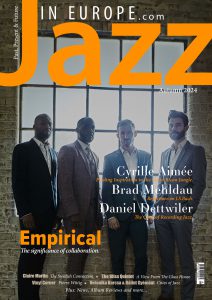 This article is featured in the Autumn 2024 edition of the Jazz In Europe Magazine. This edition features in-depth interviews with notable artists such as UK band Empirical and Brad Mehldau. Readers will find insightful pieces on the craft of recording jazz with Daniel Dettwiler, and explorations of the jazz scenes in Budapest and Sweden through conversations with artists like Veronika Harcsa, Bálint Gyémánt, and Claire Martin.
The magazine also includes a special “Vinyl Corner” segment featuring Pierre Wittig, an audio technician specializing in high-quality amplifier restoration. Additionally, readers can enjoy album reviews, a thoughtful editorial on jazz’s response to corporate consolidation in the music industry, and a feature on Cyrille Aimée and finding musical inspiration in Costa Rica.

Last modified: June 27, 2025